
Colleges across the country have reopened for the fall semester, and according to one rhetorician who studies how institutions mark solemn occasions, they are walking into a two-day rhetorical trap of their own making.
In a commentary for American Thinker, Ben Voth — a professor of rhetoric and director of debate at Southern Methodist University — argues that September 10 and September 11 present campuses with back-to-back commemorations they are structurally unwilling to handle honestly. The first marks the one-year anniversary of the assassination of Charlie Kirk on a Utah college campus. The second marks the 25th anniversary of the 9/11 attacks.
Voth frames both as “epideictic” problems — the classical term for ceremonial rhetoric, the language of praise and blame that communities use to define what they honor and what they condemn. His charge is that universities have lost the ability to perform that function when the subject matter cuts against the prevailing ideological grain. His verdict on how higher education reads the two dates is blunt: the collegiate interpretation of both is “hopelessly absurd.”
The September 10 problem
Kirk, per Voth’s account, was killed while debating members of a campus community in Utah. Voth describes the killing as an act of extreme incivility, and notes that the alleged shooter reportedly said he could no longer reason with Kirk’s public arguments — a detail Voth treats as evidence that the debate itself, not merely the man, was the target.
What makes the anniversary awkward for universities, in his telling, is not ambiguity about the crime but the identity of the victim. Kirk’s Christian faith and conservative politics sit uneasily with the dominant culture of most campuses, which Voth says harbors an “implicit and often explicit bias” against those views. Administrators, he writes, are reluctant to mourn him — yet they know assassination is a category of act that cannot be quietly tolerated.
The likely result, Voth predicts, is a minimal response: universities will “quietly urge as small a response as possible” to a hateful crime committed against the very practice of free inquiry they claim to champion. He reads Kirk’s death as exposing an uncomfortable truth about campus life — that conservative viewpoints are excluded to the point of radical political exclusion and, at the extreme, violence.
The September 11 problem
The next morning brings a different difficulty. For most current students, Voth notes, 9/11 is not memory but curriculum: they were born after 2001 and depend on professors to tell them what happened. That transmission problem is compounded, he argues, by the fact that the attack’s religious premises are inseparable from its political ones — a combination campuses find difficult to address without discomfort.
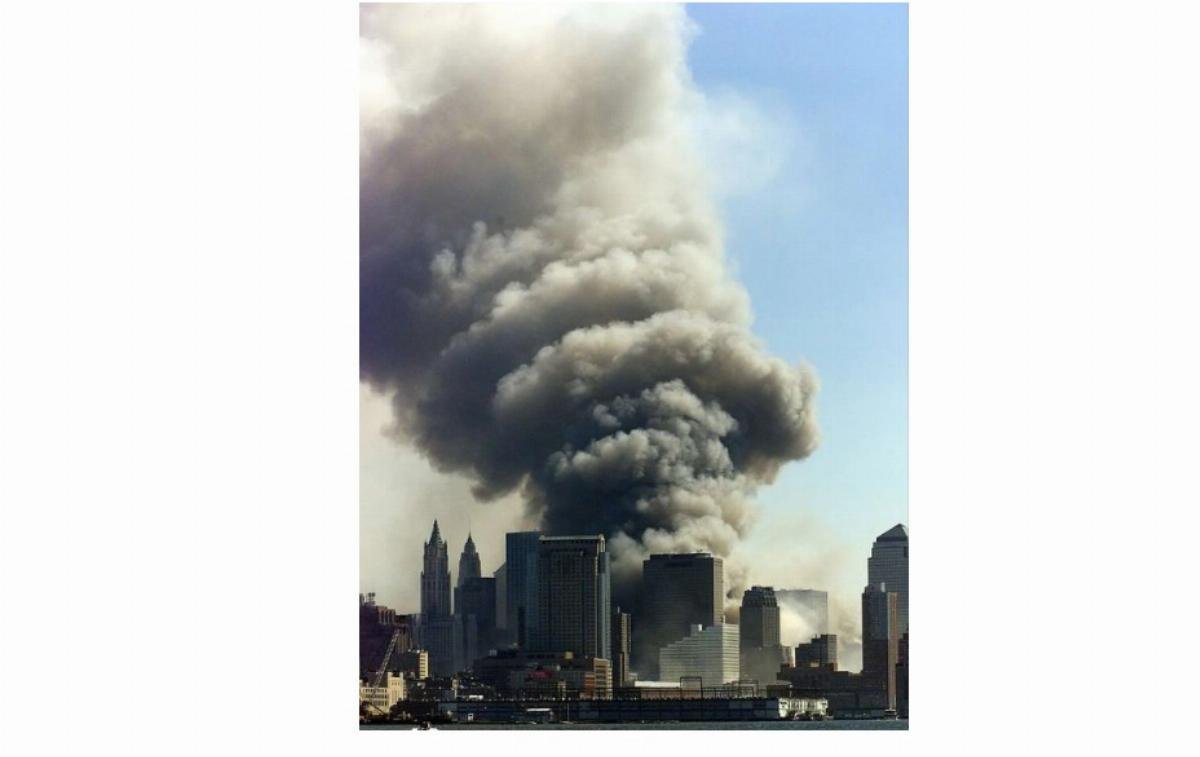
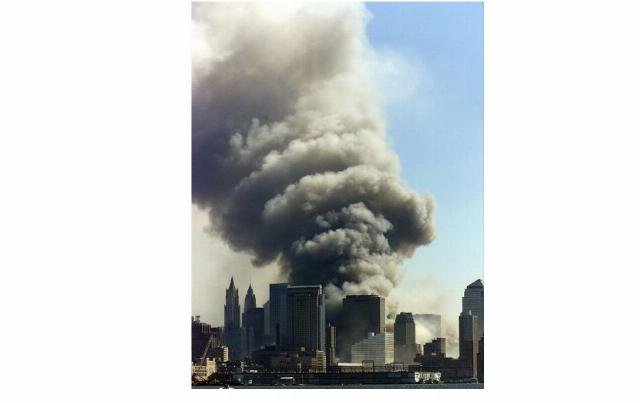
Voth recounts the basic facts as he sees them: a sect of Islamic ideology, nurtured by Osama bin Laden as an outcast from Saudi Arabia, hijacked four domestic airliners, crashing two into the World Trade Center towers, a third into the Pentagon, and a fourth into a rural area of Pennsylvania after passengers including Todd Beamer overwhelmed the hijackers.
He contends that the agency and purpose behind the attack have become hard to state plainly 25 years on, in part because the Iranian government’s radical Shia supremacism still echoes a rhetoric of “Death to America” from state-run mosques in Tehran. That rhetorical world, he writes, has not faded — and the American political sphere, in his account, now tolerates the claim that the country deserved those roughly 3,000 deaths and more.
Voth also takes aim at how the wars that followed are taught. He argues that the war on terror was rhetorically constructed in a way that deflected the underlying religious motives of the attacks, and that it produced massive military occupations of Afghanistan and Iraq. The Afghanistan chapter ended abruptly in August 2021, he writes, with troops withdrawn to avoid a 20th-anniversary presence there — leaving women, in his description, under the subjugation of the Taliban’s sectarian branch of Islam.
On Iraq, Voth presses a contested point. He writes that the second prong of the war is now treated as a disgraceful failure despite what he calls the overwhelming reality recounted by Samantha Power, Obama’s national security advisor, that Saddam Hussein used weapons of mass destruction to kill thousands of Muslims in Iraq. Academic renderings, he complains, now require students to “admit” falsely that Saddam never had such weapons.
A failure of moral coherence
The through-line of Voth’s argument is that both anniversaries are already wrapped in what he calls ideological mystique — a set of attitudes almost no one will defend openly but which he insists are politically viable: the notion that “Kirk and America both got what they deserved.”
That claim is the source of his frustration with campus commemorations. It is not that universities will say something wrong on these dates so much as that they will avoid saying anything at all, and that the avoidance itself constitutes a moral statement. Until institutions can stand at what he calls the epideictic pulpits of the nation and state plainly that neither Kirk nor America deserved these acts, he argues, higher education will struggle to achieve moral educational coherence.
His closing note is a call for a kind of courage he associates with both men at the center of his essay. The time for bravery like that shown by Charlie Kirk and Todd Beamer, he writes, is now.
Voth is a professor at SMU in Dallas and the author of several academic books on political communication, presidential rhetoric, and genocide. His argument lands amid a broader national argument over how — or whether — institutions should mark painful anniversaries, and whether silence is neutrality or a verdict. Readers will find plenty in his essay to dispute, particularly on Iraq and on the motives of university administrators. But the underlying question he raises is hard to dodge: if a community cannot say out loud that murder and mass terrorism were wrong, what exactly is it teaching?
Source: www.americanthinker.com — https://www.americanthinker.com/blog/2026/09/the-rhetoric-of-september-10-and-september-11/