
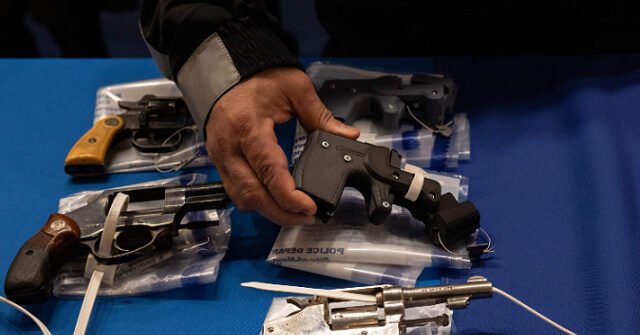
A federal court in Delaware has struck down the state’s prohibitions on making and possessing so-called “ghost guns,” ruling that the bans violate the Second Amendment. The decision, issued Thursday by the U.S. District Court for the District of Delaware, delivers a significant win to gun rights advocates who challenged the law in a case known as Rigby v. Jennings.
The Firearms Policy Coalition, one of the plaintiffs in the suit, announced the outcome on X, calling it a “major Second Amendment victory” and confirming that the court held the state’s bans on possessing and self-manufacturing the firearms to be unconstitutional. The case had been closely watched as part of a broader national legal fight over homemade firearms that lack serial numbers.
The Law at Issue
At the center of the dispute was H.B. 125, a measure Delaware Democrats advanced in 2021 to criminalize the possession, sale, and manufacturing of ghost guns. The term refers to firearms without serial numbers or other identifying marks, which supporters of the law described as untraceable by law enforcement and often undetectable by metal detectors.
According to Breitbart, as the bill moved through the Delaware legislature, state Sen. Nicole Poore (D) framed the proposal as a preemptive public safety measure. “These homemade weapons can be just as deadly as other types of firearms and are potentially easier to obtain for people legally barred from owning a gun,” Poore said at the time. She added that “untraceable, undetectable guns present obvious public safety dangers” and expressed support for outlawing them “early in their evolution.”
The Court’s Reasoning
The district court’s opinion focused on the practical effect the law had on lawful gun owners. According to the ruling, “Plaintiffs have been forced to dispossess themselves of firearms they lawfully owned before Delaware passed the Possession and Manufacturing and Assembly Bans.” The court continued that the only thing now preventing those owners from reclaiming their property is “an unconstitutional statute,” and that such a deprivation “for even minimal periods of time, unquestionably constitutes irreparable injury.”
That language echoes a standard frequently invoked in constitutional litigation, where courts weigh whether a challenged law inflicts ongoing harm on plaintiffs while a case proceeds. Here, the court concluded that the loss of access to previously lawful firearms met that threshold.
A National Fight Over Homemade Firearms
The Delaware ruling arrives amid a sustained legal and political battle over unserialized firearms at both the state and federal levels. Republican-led challenges have targeted state bans similar to Delaware’s, while the Biden administration’s efforts to regulate ghost guns through the Bureau of Alcohol, Tobacco, Firearms and Explosives have also faced courtroom pushback. Gun rights groups have argued that self-manufacturing has long been part of American firearms culture and that sweeping bans penalize lawful hobbyists and owners.
The plaintiffs in Rigby v. Jennings included the Firearms Policy Coalition, which has been active in Second Amendment litigation across the country. In its social media post, the group characterized the Delaware decision as part of a wider effort to dismantle what it views as unconstitutional restrictions on firearm possession and manufacture.
For supporters of Delaware’s law, the ruling represents a setback in efforts to keep up with a category of weapons that lawmakers say are difficult to trace when used in crimes. The court’s decision does not resolve every question raised in the litigation, and further proceedings or appeals could follow. For now, the district court’s order means the state’s bans cannot be enforced against the plaintiffs who brought the challenge.
The case is one of several Second Amendment disputes working their way through federal courts, with outcomes that could shape how far states may go in regulating firearms that owners assemble themselves. The Delaware decision adds to a growing body of rulings that courts are weighing as they interpret the scope of the right to keep and bear arms.
Source: www.breitbart.com — https://www.breitbart.com/2nd-amendment/2026/09/10/u-s-district-court-delaware-ban-making-possessing-ghost-guns-unconstitutional/