
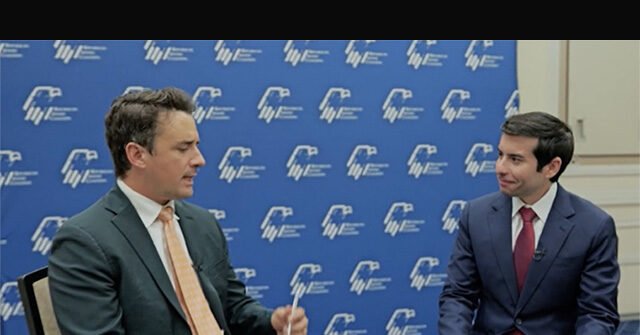
Acting U.S. Labor Secretary Keith Sonderling says the four-year college degree is failing American workers, leaving them buried in debt without the practical skills employers actually need. He made the argument during an exclusive interview with Breitbart News Editor-in-Chief Alex Marlow at the 2026 Republican Jewish Coalition National Leadership Summit on August 31, according to Breitbart.
Sonderling, who has served as acting secretary since April 20, 2026, after Lori Chavez-DeRemer resigned, told Breitbart that the Trump administration is focused on creating pathways to high-paying, high-skill jobs that do not require a bachelor’s degree. The conversation centered on the 900,000 new private sector jobs created during the Trump administration and what Sonderling described as a “renaissance in manufacturing” that could launch young people into the workforce without debt.
A Push for Skills Over Degrees
At the heart of Sonderling’s message was a critique of the traditional college pipeline. He said a four-year degree “does not lead to the skill for your first day of work.”
“It leads to debt, and that’s what we’re changing,” he said, according to Breitbart’s report.
Instead, Sonderling pointed to the Department of Labor’s work with workforce boards and community colleges to align curriculum with industry demands. He said employers are being brought in to identify the jobs that are actually available and the positions being re-industrialized in the United States.
“We’re having employers come in saying, ‘Here’s the jobs that are actually available. Here’s the jobs that we’re bringing back, [that] we’re re-industrializing in America,'” Sonderling said.
He cited two examples: Toyota moving its Tacoma production line from Mexico to San Antonio, and Harley-Davidson bringing motorcycle production back from Thailand to Wisconsin and Pennsylvania.
The acting secretary stressed that the country needs “workers on the ground who are able to take those jobs and have the skills for those jobs.” He added that companies must tell the government where those jobs are so that relevant courses can be offered immediately, ensuring that upon graduating high school, a person has a high-skilled, high-paying job available that does not require a four-year degree.
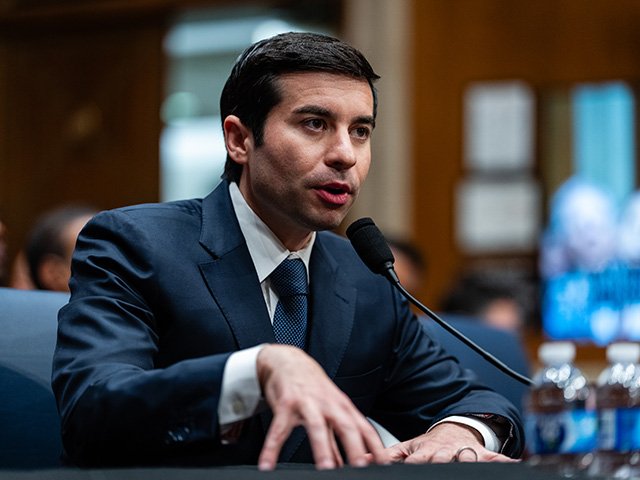
“But that’s not going to work if we don’t know where that’s going,” he said.
The Manufacturing Renaissance
Sonderling tied the administration’s workforce strategy to a broader economic shift. He said President Trump promised two things on the campaign trail: high-paying, high-skilled private sector jobs. Trillions of dollars of investment are now flowing in, he said, from foreign and domestic companies alike that want their products “built in America and built by Americans.”
The investment, however, is only one piece of the puzzle. Sonderling pointed to 83,000 new manufacturing construction jobs—positions building the factories that will eventually house actual manufacturing work in critical areas that had left U.S. shores. He listed automobile manufacturing, shipbuilding, and critical infrastructure such as pharmaceutical manufacturing as sectors that suffered supply chain disruptions during COVID.
“As we re-industrialize that, the most important thing we can do at the Department of Labor is making sure that American workers have the opportunities to get these jobs, and they need the skills to be able to get these jobs,” he said.
The interview reflects a broader push by the Trump administration to reframe the national conversation around education and workforce development. With many Americans struggling under student loan debt, the administration is betting that alternative pathways—apprenticeships, community college programs, and industry-driven training—can fill the gap left by a traditional college system that critics say has become too expensive and too disconnected from the labor market.
Sonderling’s comments come as the Department of Labor works to strengthen ties between employers and educators. By having industry dictate curriculum, the hope is that graduates will emerge with skills that are immediately transferable to available jobs, rather than degrees that leave them searching for work while servicing loans.
The acting secretary’s remarks at the RJC summit are part of a larger effort to sell the administration’s economic agenda to key constituencies. The event, held annually, draws Republican leaders and activists from across the country.
Whether the strategy will meaningfully shift the trajectory of American higher education remains to be seen. But for Sonderling, the choice is clear: practical skills and debt-free pathways over what he characterizes as an outdated and costly credential.
Katherine Hamilton is a political reporter for Breitbart News. You can follow her on X @thekat_hamilton.
Source: www.breitbart.com — https://www.breitbart.com/politics/2026/09/10/exclusive-acting-u-s-labor-secretary-keith-sonderling-a-4-year-degree-leads-to-debt-not-practical-job-skills/