
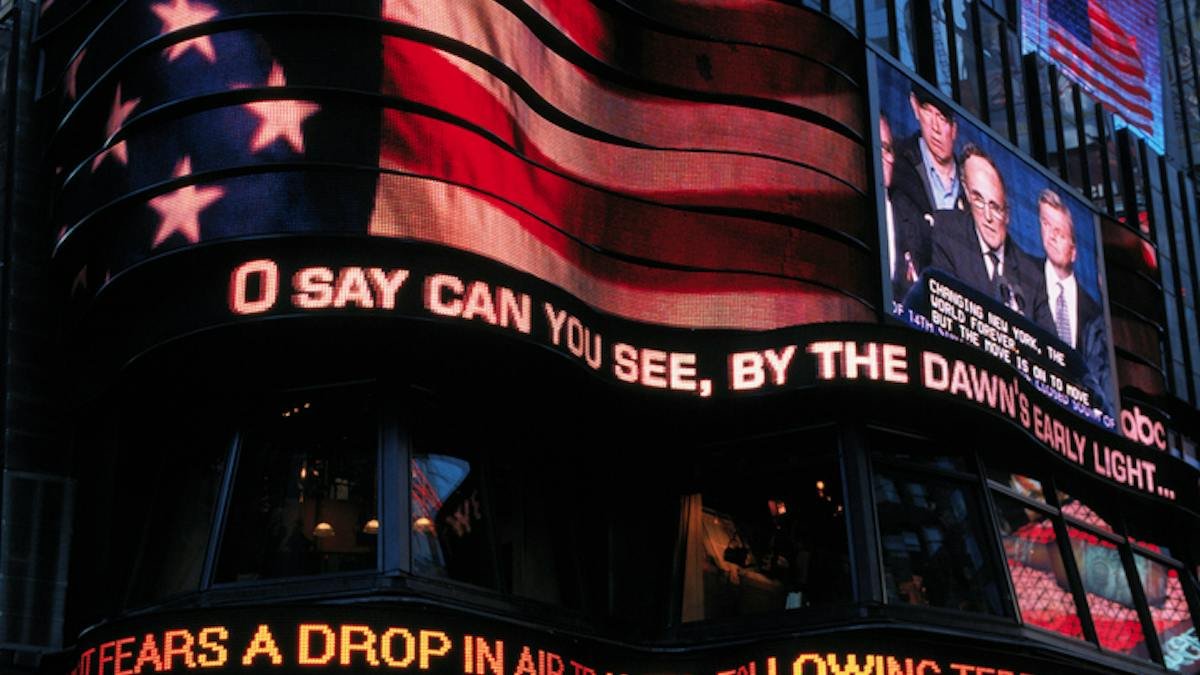
Twenty-five years after the September 11, 2001 attacks, Americans are being asked to remember not just the fear of that morning but the extraordinary — and, by today’s standards, almost unrecognizable — wave of national unity that followed. In a piece republished this week by The Daily Wire and originally published in his newsletter The Intersection, pollster Patrick Ruffini argues that the weeks and months after 9/11 represented “the last moment of American unity,” a stretch of consensus that has no modern parallel.
Ruffini, a pollster at Echelon Insights and author of Party of the People, anchors his argument in the numbers. In the immediate aftermath of the attacks, 72 percent of Americans told pollsters the country was heading in the right direction, while just 11 percent said it was on the wrong track. That sunny outlook, he notes, was not a blip. The post-9/11 period was “the last sustained stretch” in which a majority of Americans felt optimistic about the country’s direction. Smaller rallies followed the start of the Iraq War and the capture of Saddam Hussein, but by 2004 the “wrong track” number had overtaken the right-direction figure — and, in Ruffini’s telling, it has not looked back since.

A rally that reached deep into the opposing party
Perhaps the most striking data point in Ruffini’s piece is the collapse of partisan opposition to President George W. Bush. Democratic approval of Bush’s job performance surged well into the 80s in September 2001 — a figure that would be nearly inconceivable for any president of either party today. The conventional explanation for the end of that unity is the Iraq War, but Ruffini argues the timeline is more forgiving than most people recall. Bush’s overall approval was still above its pre-9/11 baseline when the invasion began 18 months later, and the war’s opening phase triggered yet another rally. Partisan divisions had already started to return even before the invasion, Ruffini writes, and the prolonged insurgency deepened them until, by Bush’s second term, the country had settled into the extreme polarization that persists now.
Context makes the Democratic rally around Bush even more remarkable. Before 9/11, in ordinary times, his approval among Democrats sat at nearly 30 percent — roughly where it returned before the Iraq War, before briefly spiking to close to 50 percent. Ruffini points out that those kinds of cross-party approval numbers would be unheard of for a president of any party in the current era. The 2000 election, he suggests, had already produced the modern partisan alignment that 2016 would later ratify. The 9/11 attacks interrupted that trajectory, producing a unity that was, in his words, a “great anomaly, born of something nobody would have wished for.”

Congress, trust, and the press all surged
The rally extended well beyond the White House. Congressional approval, which stood at 42 percent in the days before the attacks, doubled to 84 percent a month later — one of the most dramatic swings in the history of modern polling. Trust in the federal government to do what is right, meanwhile, jumped from 31 percent in January 2001 to 60 percent by October of that year.
Even before the attacks, Ruffini notes, both parties were viewed more positively than negatively, and both improved afterward. Republicans held a 56-22 favorability rating in December 2001, with Democrats at 48-23. The news media benefited too. The share of Americans saying news organizations generally got their facts straight rose from 35 percent in early September to 46 percent in November. The share who believed the press stood up for America climbed from 43 percent to 69 percent, and the share who viewed the media as protecting democracy rose from 46 percent to 60 percent.
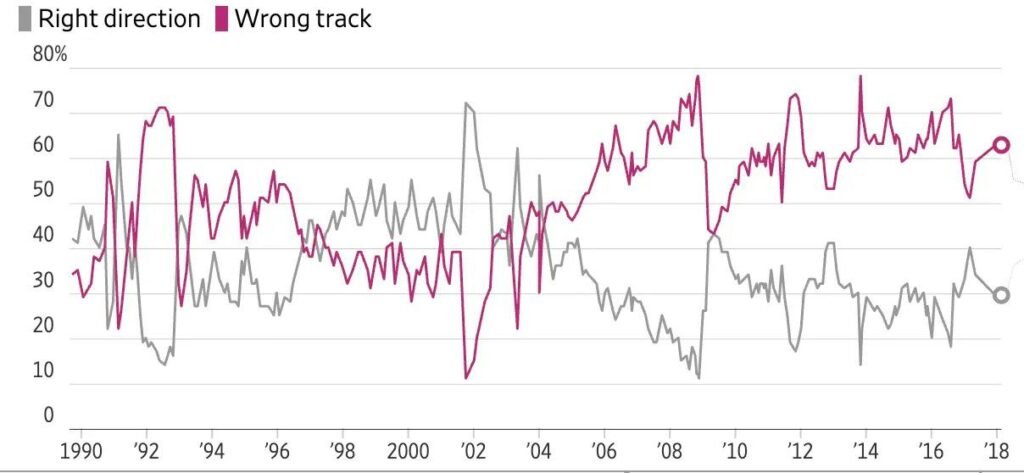
Ruffini credits a simple reality for the durability of that goodwill: the country was not attacked again in the quarter century that followed. “Thankfully, America hasn’t faced an attack like 9/11 in the quarter century since,” he writes. “Amid today’s doomerism, it’s worth remembering that the worst fears about what comes next don’t always come to pass. America bounced back.”
Why Covid and political violence produced no comparable unity
The contrast with more recent crises is where Ruffini’s argument sharpens. Covid-19, the most prominent national emergency since 9/11, produced only a modest and short-lived rally. Donald Trump’s overall approval ticked up a few points in March 2020, and a Gallup poll recorded 60 percent approval of his handling of the coronavirus, including 27 percent of Democrats. But by the summer of 2020, 77 percent of Americans believed the country was more divided than before the outbreak.
Ruffini attributes part of that divergence to Trump’s own conduct, noting that other world leaders enjoyed longer-lived rallies that faded as the pandemic dragged on and inflation took hold. The comparison with Bush is pointed: 9/11 arguably guaranteed Bush’s reelection, even as the Iraq War grew more difficult.
Recent political violence, Ruffini adds, has done nothing to restore that sense of shared purpose. The assassination attempt on Trump and the killing of Charlie Kirk a year ago, he writes, did not produce any lasting change in public opinion.
Some of the difference may simply come down to scale. 9/11 was the first mass-casualty attack on U.S. soil since Pearl Harbor. But Ruffini also argues it landed in a country that was already more trusting and optimistic than the one Americans inhabit today. His conclusion is a sober one: “If the same thing happened today, I suspect the grief would be just as great, but the sense of shared purpose and unity nowhere close.”
Source: www.dailywire.com — https://www.dailywire.com/news/echoes-of-unity-from-a-pre-polarized-america