
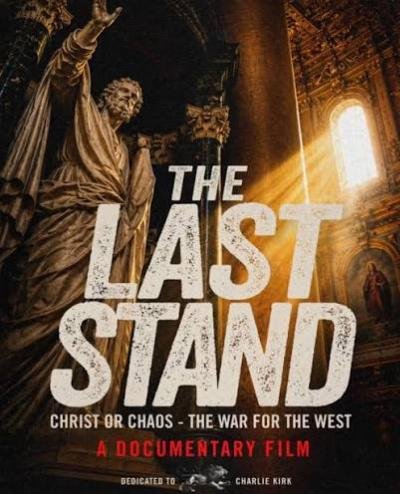
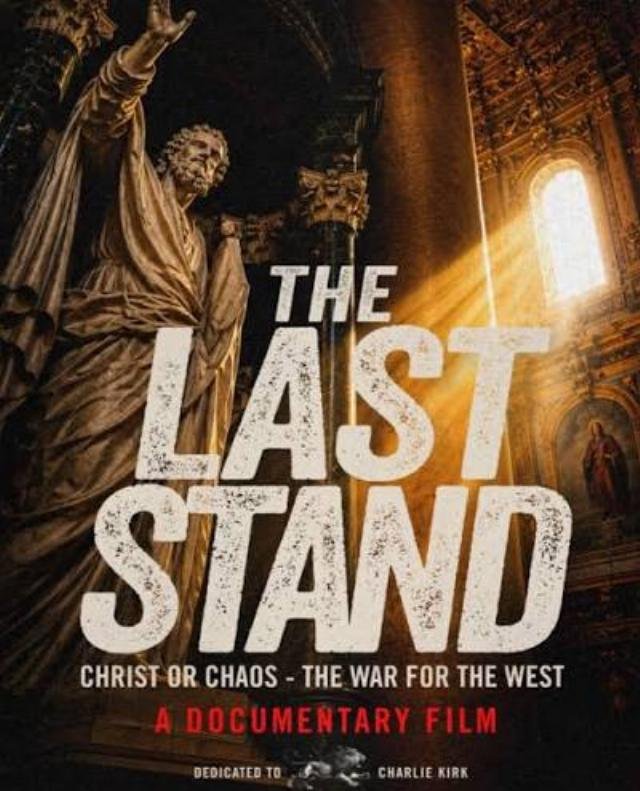
Seth Gruber’s book and documentary The Last Stand: Christ or Chaos: The War for the West is winning praise from conservative commentators not for its entertainment value but for its confrontational approach to questions of culture, morality, and human life. In a review published by American Thinker, writer Greg Maresca describes the work as “undeniably bold, a masterpiece that refuses to whisper when shouting is essential.”
The project pairs a book with a companion documentary, both written and narrated by Gruber. Rather than pursuing a conventional theatrical release, the filmmakers are instead concentrating on screenings at churches, campuses, and community venues around the country, according to the review. The book is available through major booksellers.
A Case Built From History and Interviews
Maresca’s review credits Gruber with assembling historical footage, interviews, and commentary into an argument that America’s institutions have walked away from the moral principles that once grounded them. The film, in this telling, traces what the review calls the country’s “pagan moral drift” by drawing parallels between past and present morality.
Central to Gruber’s case, according to the review, is the role of language. Maresca writes that Gruber shows how language, media, and political rhetoric have reshaped public perception, and how technology and convenience have influenced moral decision-making. The review argues that while the broader culture has become skilled at sanitizing uncomfortable truths, Gruber works to strip that veneer away.
The review places the project in a long-running historical frame. Debates over abortion, the family, and poverty, Maresca writes, have been waged since ancient Rome, when the Church stood alone against a society that had bowed to prevailing norms. That dynamic, as Gruber presents it, has now inverted: the review says Gruber argues that the Church and most Christians have instead conformed to and retreated from the surrounding culture.
Maresca quotes Gruber making that point directly: “While the enemy and his schemes are not new,” Gruber writes, “the silence and forgetfulness of the blood-bought bride of Christ is. In fact, I’ll go as far as to say that the first 1,900 years of Church history stand as an indictment against the last 100.”
Abortion as a Symptom, Not an Isolated Issue
One of the review’s central contentions is that Gruber refuses to treat abortion as a single-issue topic. Instead, the work frames it as the foremost symptom of a deeper civilizational unraveling — one that Maresca says also includes the loss of belief in objective truth, the rise of radical individualism, and a cultural numbness that leaves many people indifferent.
The review notes that Gruber moves from the intellectual roots of what St. Pope John Paul II called “the culture of death” to the practical consequences of policies that flow from it. In Gruber’s account, language is weaponized to dull the public conscience, institutions conceal themselves behind claims of neutrality, and political leaders dress up moral abandonment in rhetoric that masquerades as compassion.
Underlying all of it, per the review, is Gruber’s contention that human conflict is ultimately theological in nature.
Maresca praises the book’s prose as “crisp, direct, and undaunted,” arguing that Gruber treats moral truths as things that require no apology and that he is not writing to impress academics or win political arguments. Instead, the review says, Gruber is trying to awaken a nation that has grown comfortable with triviality and needs to refocus what the reviewer calls its “failed memory bank.”
Decline as a Slow Process
The review’s historical argument extends beyond the Church. Western erosion, Maresca writes, did not arrive suddenly but accumulated through countless small compromises, each one justified by convenience, comfort, or complacency. To support the point, the review invokes British anthropologist J.D. Unwin, who concluded in 1934 that societies which abandon sexual restraint experience decline within roughly three generations. Starting the count in 1973, Maresca argues, the current generation is the third.
That framing is paired with a call to action rather than despair. The review insists people are not powerless, and that cultural renewal begins with moral clarity — seeing reality as it is rather than as one might wish it to be. Gruber, in this telling, challenges Americans to reclaim what the nation once believed about human dignity and to live as though those beliefs still matter, provided they want a country worth handing to their children.
The review also draws on the Founders to reinforce its sense of urgency. Some political philosophers have argued a republic lasts about 250 years before collapsing as voters eventually vote themselves benefits from the public treasury, Maresca notes. The Founders themselves offered no timeline, but they did issue warnings — Ben Franklin’s “A republic, if you can keep it,” John Adams’s fear of democratic self-destruction, and James Madison’s warnings about political divisions.
A Closing Argument About Consequences
Maresca’s review closes on a dark note about what societies allow. He writes that Gruber’s work challenges the intellect in a way that rarely happens in a world saturated with memes and soundbites, and that history will judge the country not by its intentions but by what it permits. A nation that abandons the morality that once defined it, the review argues, cannot survive.
When a society loses the ability to call insanity what it is, Maresca writes, it should not be surprised when insanity takes charge. Recovery, in his view, begins only when fashionable delusions are dismissed as foolishness and speaking truth to power becomes the norm again.
The review closes with a cultural reference: forty-seven years ago, Martin Sheen starred in Apocalypse Now, and today, Maresca writes, the rest of us are living in it. The fight, as he frames it, is not a policy dispute between conservatives and leftists but a struggle over the future of America’s creed, culture, and soul.
For readers who find the argument compelling, Maresca’s recommendation is simple: find a local screening and watch the film. The review positions The Last Stand as less entertainment than alarm — a work that, in the reviewer’s words, refuses to treat the moment as anything less than a defining one.
Source: www.americanthinker.com — https://www.americanthinker.com/blog/2026/09/seth-gruber-s-the-last-stand-is-a-masterpiece/