
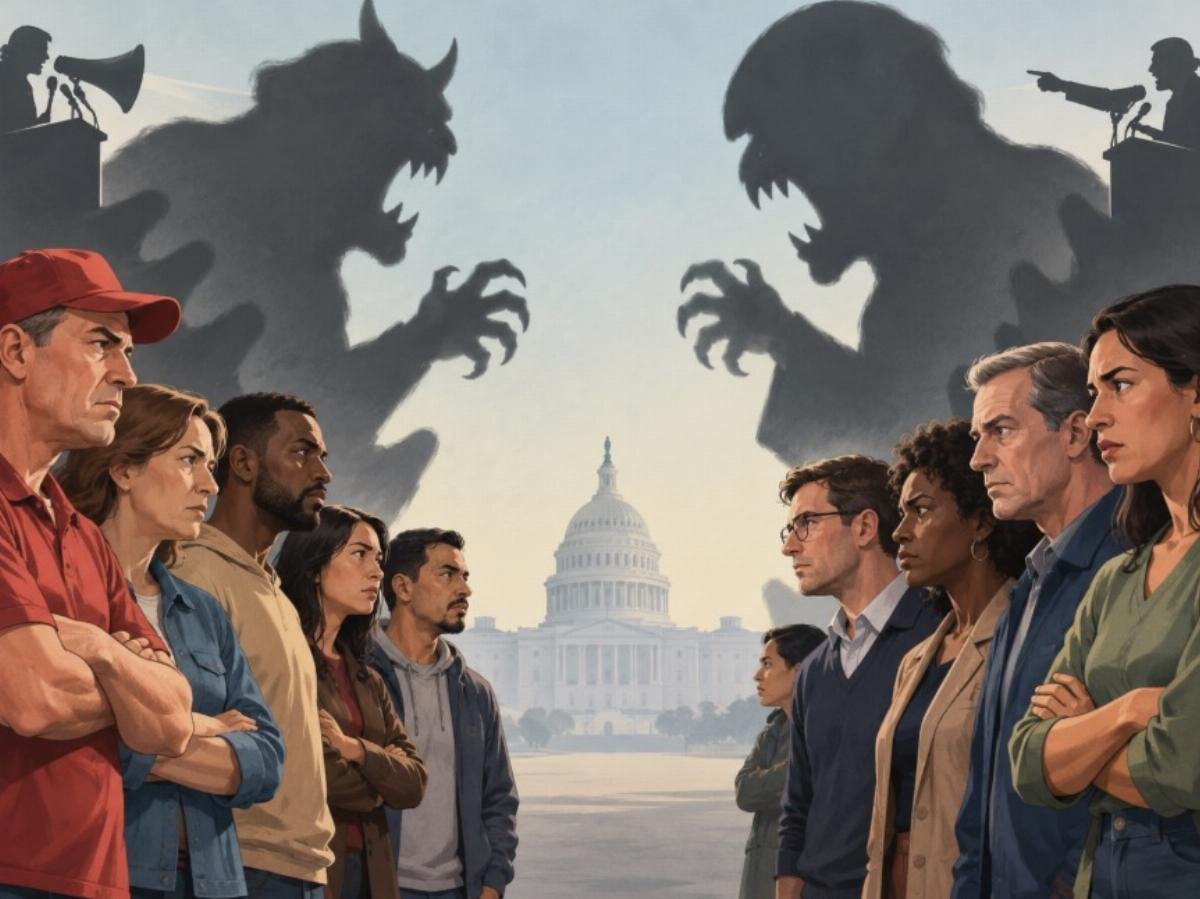
Political violence in America is no longer a sporadic horror but a recurring feature of national life. That is the central claim of a new commentary in American Thinker by Susan Quinn, who argues that the country is caught in an escalating cycle of assassination attempts, political shootings, and violent protests — and that the people with the power to slow it down are, in many cases, making it worse.
Quinn’s piece is less a data-driven investigation than an argument about cause and effect, drawing on legal scholars, academic research, and government threat assessments to make the case that the nation’s political rhetoric has crossed a line from disagreement into something more dangerous. Her conclusion is grim: before Americans can figure out how to reduce political violence, they may first have to figure out how to live with it.
The Turley Thesis
Quinn leans heavily on Georgetown law professor Jonathan Turley, whom she describes as a trusted voice on the subject. Turley, she writes, saw the current breakdown coming years ago, when he observed conditions in the United States beginning to mirror the lawlessness of the French Revolution.
As Quinn relays it, Turley’s diagnosis is that politicians, pundits, and professors have spent years telling Americans that their political opponents want to end democracy, restore the Confederacy, or reduce ordinary citizens to slaves of oligarchs. That kind of apocalyptic framing, he argues, grants people a sense of permission to throw off social and moral restraints — allowing them, in Quinn’s paraphrase of his words, to hate completely and unreservedly.
It is a familiar argument in conservative commentary, but Quinn situates it within a broader definition of political violence: the use of force by a group or individual for a political purpose. Crucially, she notes, that definition is not limited to attacks on the state. Political violence can come from any direction.
Small Groups, Lone Wolves, and a Rising Threat
What has changed, according to Quinn, is the shape of the threat. Large, well-organized movements are no longer the primary concern. Instead, she points to rioters, lone-wolf attackers, and small groups such as Antifa that can strike with little or no warning. Individual attacks, she writes, are appearing with increasing frequency.
She lists a series of incidents as evidence: an assassination attempt on Charlie Kirk, two assassination attempts on President Trump, the murder of a Minnesota state lawmaker, and attacks on CDC headquarters and its officers. According to the Department of Homeland Security, she writes, the risk is high and escalating.
Quinn does not pretend the causes are simple. She identifies several overlapping drivers. When citizens believe their votes do not matter, or that lawmakers are ignoring their needs, extreme action can start to feel necessary — sometimes the only recourse left. Political disagreements, meanwhile, can harden into dislike, then distrust, and eventually into outright hatred of the other side.
She also broadens the lens beyond electoral politics, warning that democratic institutions are crumbling, universities are being debased, the media infrastructure is compromised, and long-standing scientific truths and public health regimes are being challenged. The cumulative effect, in her telling, is a society whose foundations are eroding on multiple fronts at once.
The Phantom Enemy
Perhaps the most striking element of Quinn’s piece is her use of research that cuts against the simplest narrative. She cites an associate professor at Dartmouth College whose data suggest that fewer than 2 percent of Americans believe political murder is acceptable. The real problem, according to this research, is not a widespread desire for violence but a profound misperception of the other side.
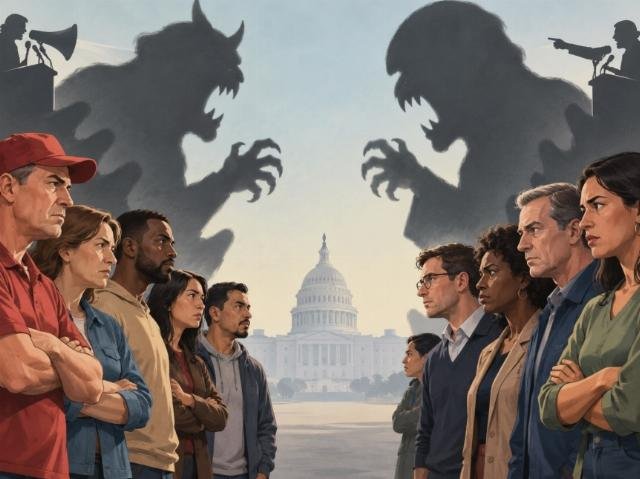
Americans, the data show, estimate that nearly a third of their political opponents support partisan murder. That gap between reality and perception creates what the professor calls a phantom enemy — the sense that one is facing a vast, murderous faction rather than a handful of isolated extremists. That illusion, Quinn writes, makes the country feel far more dangerous than it actually is.
Her own assessment of that finding is notably pessimistic. The misperception may be factually wrong, she allows, but it is highly unlikely to be corrected anytime soon.
What Would It Take to Turn Down the Heat?
Quinn does identify a possible path forward, though she presents it as difficult and unlikely. The strategy would require lawmakers to take responsibility not only for avoiding inflammatory rhetoric themselves but also for condemning those who use it — including, presumably, on their own side.
She quotes an expert on political violence who notes that experiences elsewhere show how hard it is to slow such cycles, but that it is not impossible. Two things are likely to matter most. First, political and civil society leaders across the spectrum need to work together to re-establish norms that inhibit violence, with robust criticism and condemnation of all such violence regardless of political affiliation or stated cause. That is especially difficult, the expert acknowledges, in a context where criticism of political violence has for some time run along partisan lines.
Second, it is crucial to recognize that the violence is not confined to one segment of society. This is not the problem of a single violent movement, the argument goes, but of a social and political system that as a whole is becoming more conducive to violence.
The Accountability Question
Quinn’s piece ends where many such arguments do: with a question rather than an answer. Will lawmakers and other leaders recognize their own role in inflaming the rhetoric and step back from it? For years, she notes, both sides of the aisle have called for toning down political speech, and little has changed.
Her closing line is a warning about what is at stake in that failure. Now more than ever, she writes, the ability to speak our minds is crucial to the republic we cherish.
It is a striking note to end on — an argument that the very freedom being invoked on all sides is precisely what is under strain. Whether the diagnosis holds, Quinn’s commentary reflects a broader unease that has taken hold across the political spectrum: that the country’s disagreements have become something more dangerous than disagreements, and that no one with the power to stop it has yet shown the will to try.
Source: www.americanthinker.com — https://www.americanthinker.com/blog/2026/09/the-rise-in-political-violence-in-america/