
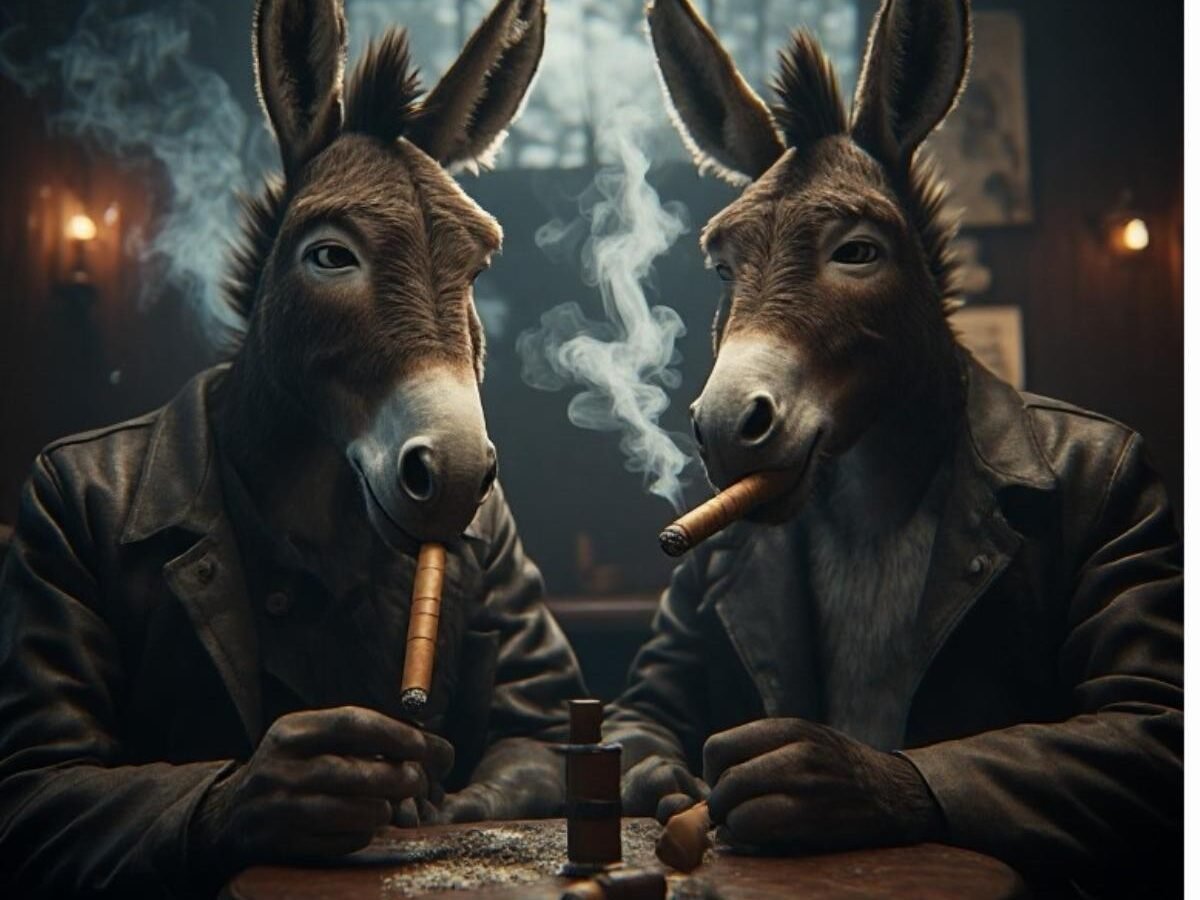
In an essay for the conservative outlet American Thinker, columnist Silvio Canto, Jr. makes a case that many party operatives have muttered privately for years: the primary system, he writes, “stinks.” His proposed fix is deliberately provocative — bring back the backroom deal-making of the old “smoke-filled rooms,” only now with vaping instead of cigars.
Canto’s argument, published on September 19, 2026, is less a policy proposal than a lament. He contends that modern primaries elevate ideological purists who win over a small, motivated slice of the electorate and then struggle when they face a broader, more moderate voting public in November. The parties, in other words, keep nominating candidates who can win a primary but not a general election — and they know it.
The old system, reconsidered
The column opens with a bit of generational nostalgia. Canto recalls the era when a handful of cigar-smoking men in a closed room sized up candidates and picked one. That process, he concedes, was not especially democratic. But it did produce nominees who could actually win, and he argues that this was no small virtue. “No one smokes anymore,” he writes, but perhaps the mysterious men and women of today’s political class — puffing on vapes instead — could be given another shot at picking the candidates.
His target is not one party alone. Canto traces the current primary-centric system back to the Democratic reforms of 1972, which followed the disastrous McGovern nomination, and suggests Democrats might want to rethink the whole arrangement. But he is equally willing to blame Republicans, noting that the GOP made a comparable mistake in 2022 in Arizona and elsewhere by nominating candidates who appealed to the party’s base but not to the wider electorate. The purpose of a primary, in his telling, is to produce winners, not to certify ideological purity.
Michigan as Exhibit A
The column’s most detailed example is Michigan, where Canto describes El-Sayed as having “eked out” a primary win. He frames the general election matchup as a study in contrasts: El-Sayed, who he says disparaged football, Mackinac Island and Ford trucks — all touchstones of Michigander identity — against Republican Mike Rogers, a 14-year veteran of the House who chaired the House Intelligence Committee and who, in Canto’s telling, quickly established himself as a normal, pro-American candidate with mainstream appeal.
Canto also notes that El-Sayed attempted to scrub the name of Hasan Piker from his campaign biography, apparently without success. The problem, as Canto describes it, is that voters had already seen Piker campaigning with El-Sayed on the final day before the primary — and that Piker has described himself in terms that would not play well with a general electorate. Canto calls it an advantage for Rogers, especially with early absentee voting opening in Michigan the following week.
A national pattern?
From there, the columnist runs through a set of states where he sees the same dynamic at work. In Texas, he points to James Talarico, whom he dismisses as someone who “misspoke about everything I said.” In Maine, he argues that the effort to deny Senator Susan Collins another term has become a debacle for the party behind it. In Minnesota, he calls Lieutenant Governor Flanagan — describing her as a female counterpart to Talarico — now locked in a dead heat with a newcomer who he says speaks common sense, including on the question of whether men and women should compete in sports. And in New Hampshire, he writes, Representative Chris Pappas was expected to cruise to victory, but a “common-sense” Sununu has emerged as a real contender heading toward election day.
Canto then invokes Robert F. Kennedy, Jr., now serving as Secretary, who he says has remarked that his father and uncle would not recognize today’s Democratic Party. The broader lesson Canto draws is that a primary process dominated by a small group of extremists will keep producing nominees who are out of step with the general electorate — a mismatch that becomes obvious only after the primary is over and it is too late to change course.
A modest proposal — or at least a prompt for debate
The columnist is careful to say he has never been fond of the current primary system, precisely because it prioritizes ideology over electability. The goal of a nominating contest, he repeats, is to field candidates who can win. His suggestion is not to abolish primaries entirely, but to keep a handful of them so candidates can be tested in front of actual voters — while reserving the final decision for “people who know what they are doing.”
He notes that the old smoke-filled rooms produced, by his reckoning, a number of very good presidents. And he offers one additional benefit: contested conventions. If delegates had to negotiate and compromise to settle on a nominee, the quadrennial gatherings would be far more interesting to watch. That is, after all, how the Republicans ended up with Abraham Lincoln on the third ballot in 1860.
Whether either party would ever voluntarily surrender the nominating power that primaries put in the hands of voters is another matter. But Canto’s column lands as a pointed reminder that the debate over how parties choose their candidates — and who gets to decide — is far from settled, even within the parties themselves.
Source: www.americanthinker.com — https://www.americanthinker.com/blog/2026/09/maybe-we-should-go-back-to-the-vape-filled-rooms/