
Turkey’s government has spent years cultivating an image as a bridge between the West and the Muslim world — a NATO member with a secular constitution, a tourist economy, and ambitions to buy America’s most advanced fighter jet. But a commentary published in American Thinker argues that the country’s recent treatment of its LGBTQ+ citizens tells a very different story, and that Washington should pay attention before handing over F-35s.
Writing for the outlet, Mike McDaniel points to a series of police raids across Turkey that resulted in dozens of detentions, framing them as evidence that the “moderate Muslim nation” label is wishful thinking on the part of Western observers. His argument draws heavily on the words of Turkey’s own president to make the case.
The Raids and the ‘My Family is Safe’ Campaign
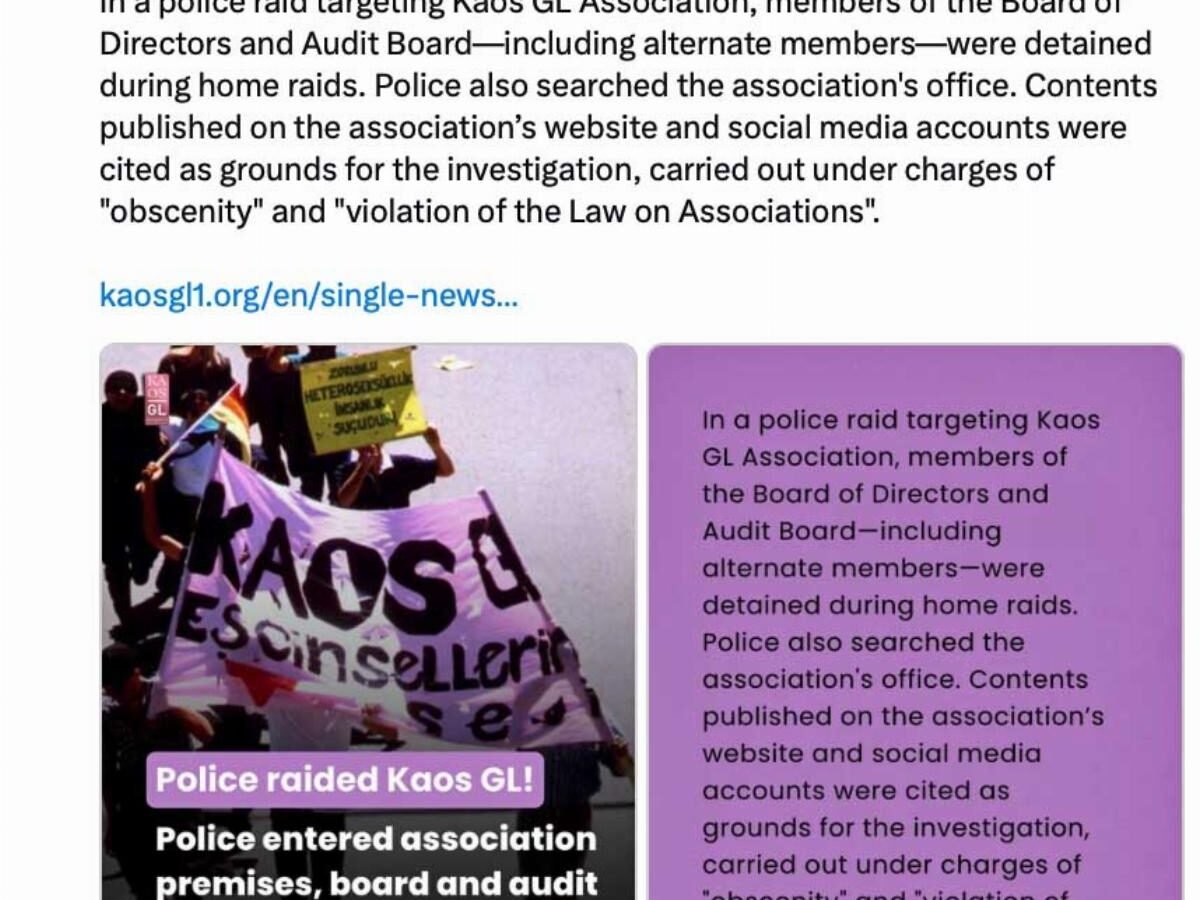
The focus of the commentary is a Turkish government operation carried out in 12 provinces, described by authorities as a campaign called “My Family is Safe.” According to the account cited in the American Thinker piece, police detained 47 people in raids on gay bars and the homes of LGBTQ+ activists.
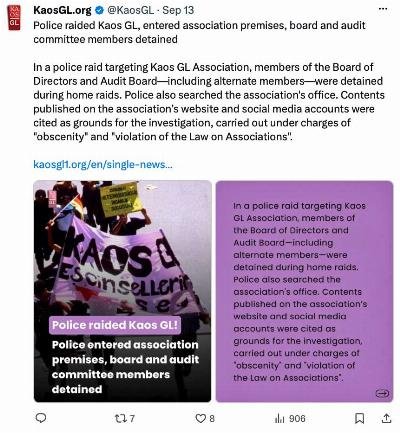
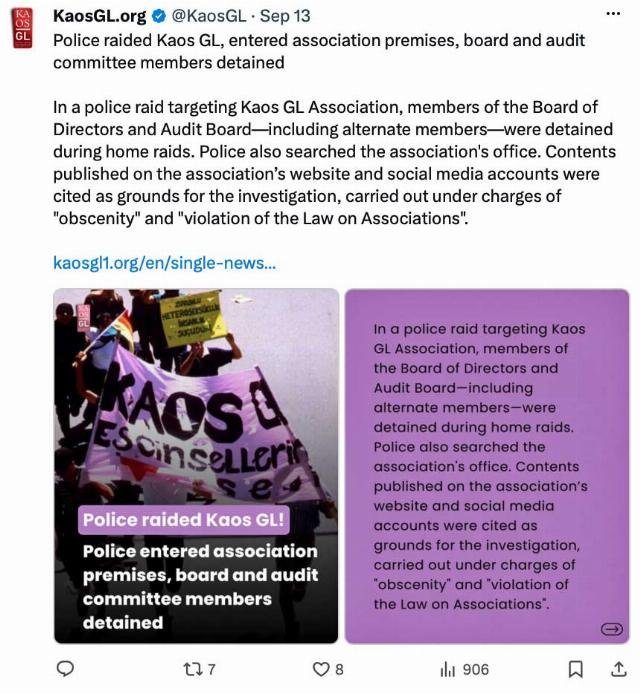
The Istanbul chief prosecutor’s office said officers detained 26 people and seized drugs, digital equipment, smuggled alcohol, and a firearm, while the Ankara chief prosecutor’s office said another 21 people were detained as part of an investigation into Kaos GL, a prominent LGBTQ+ association. The organization itself offered a different count, saying 50 activists had been taken into custody, with more than 10 arrested after police searched their homes.
Authorities also reportedly blocked several websites and social media accounts connected to LGBTQ+ organizations. Turkey does not recognize same-sex marriage, and the piece notes that pressure on gay couples has been mounting. Human rights groups in the country have accused the government of using the family-values campaign as cover to target the LGBTQ+ community — an accusation the government rejects.
The raids are not an isolated development, according to the commentary. The ruling Justice and Development Party, a religious conservative party, has grown increasingly vocal against LGBTQ+ groups as it works to shore up its more conservative base. In 2015, the party banned Istanbul Pride, which had drawn tens of thousands of attendees in earlier years. Since then, authorities have violently dispersed attempts to hold Pride gatherings. This summer, an LGBTQ+ cruise ship that tours the Mediterranean and had docked in Turkey multiple times in the past was refused permission to dock there.
Erdoğan’s Own Words on ‘Moderate Islam’
McDaniel’s central argument is not really about the raids themselves but about what they reveal. He rejects the entire premise of “moderate Islam” as a meaningful category, and he uses Turkey’s president to make the point. Citing President Recep Tayyip Erdoğan’s 2007 remarks, the piece recalls that Erdoğan called Western descriptions of his party as an example of “moderate Islam” deeply offensive. “These descriptions are very ugly,” Erdoğan said at the time. “It is offensive and an insult to our religion. There is no moderate or immoderate Islam. Islam is Islam and that’s it.”
For the author, that quote is the whole ballgame. If the leader of a NATO ally rejects the very distinction Western policymakers rely on to justify the relationship, then the relationship rests on a foundation that doesn’t exist. The commentary goes further, asserting that Muslims who treat their female family members with the kindness Western societies expect, or who decline to harm non-believers, are not living according to the text and intent of their faith — while those the author calls “Islamist savages” are.
That is a sweeping and contested theological claim, and it sits at the heart of the piece. It is also the kind of claim that Muslim scholars and many Western analysts would dispute vigorously, drawing distinctions between scriptural interpretation, historical context, and the political ideologies that claim religious sanction. But the argument the commentary makes is that whatever distinctions exist in theory, the observable behavior of Turkey’s government — a government that presents itself as the moderate alternative — tells a more reliable story.
The Comparison to American Religious Conservatives
Part of McDaniel’s argument is aimed squarely at an American audience, and specifically at the tendency to lump religious conservatives in the United States together with religious conservatives abroad. He argues the comparison collapses under scrutiny.
To make the point, he contrasts American Protestant denominations — including offshoots of Methodism, Presbyterianism, and Lutheranism that he says have largely traded the Gospels for left-of-center politics — with a faith he describes as demanding conquest, the enslavement of non-believers, and the replacement of civil and criminal law with religious law. He singles out the Presbyterian church of James Talarico, a Democratic candidate for the Texas Senate, as an illustration of how far some American denominations have drifted from traditional doctrine.
The implication is that when Americans hear “religious conservative,” they picture something like the Bible-believing congregations down the street, and that this mental image distorts how they assess governments like Turkey’s. The commentary insists the two have almost nothing in common, and that treating them as equivalents is a category error with real consequences.
McDaniel also takes aim at American LGBTQ+ activists and their allies who, he says, routinely claim that the kind of state repression seen in Turkey is happening in the United States. His position is blunt: it is not. Americans, he writes, disapprove of such treatment, while the Turkish government arrests and does worse. The contrast, in his telling, is the entire point.
He does concede one grim caveat, suggesting that Turkey’s only plausible claim to moderation may be that it apparently is not executing those it has arrested. The word “yet” hangs over that sentence. Turkish prisons, he adds, are not known for enlightened treatment of inmates.
The F-35 Question
The commentary’s policy conclusion is unambiguous: Turkey should not receive F-35s or other advanced American military hardware. The author describes Turkey as a NATO member in name only, while describing its observant Islamist population as entirely genuine. The suggestion is that alliance membership is a legal formality, not a reflection of shared values, and that arming a country whose government behaves this way carries risks that outweigh the benefits of the partnership.
The piece notes that President Trump has been holding off on the F-35 sale — a decision the author characterizes as wise.
Whether one accepts the commentary’s broader theological framework or not, the underlying factual thread is worth registering. A NATO ally’s government detained dozens of people in raids targeting gay bars and activists’ homes, blocked associated websites and social media accounts, refused docking permission to a cruise ship, and has spent a decade suppressing Pride gatherings. Those are the actions of a state, not an abstraction, and they are the reason the F-35 debate exists at all.
The American Thinker piece is, by its own framing, an opinion column, and its harshest claims about the nature of Islam fall well outside any scholarly consensus. But its argument about the gap between how Turkey is described in Western capitals and how it governs at home is one that will keep resurfacing — in weapons-transfer hearings, in NATO strategy sessions, and in the ongoing debate over what the alliance is actually for.
For American readers, the more immediate question may be simpler. When a government says, in the words of its own leader, that there is no such thing as moderate Islam, and then arrests dozens of people in the name of family values, which of those two facts should shape policy? The commentary has an answer. The debate over whether it’s the right one is not going away.
Source: www.americanthinker.com — https://www.americanthinker.com/blog/2026/09/turkey-shows-lgbtq-believers-how-it-s-done/