
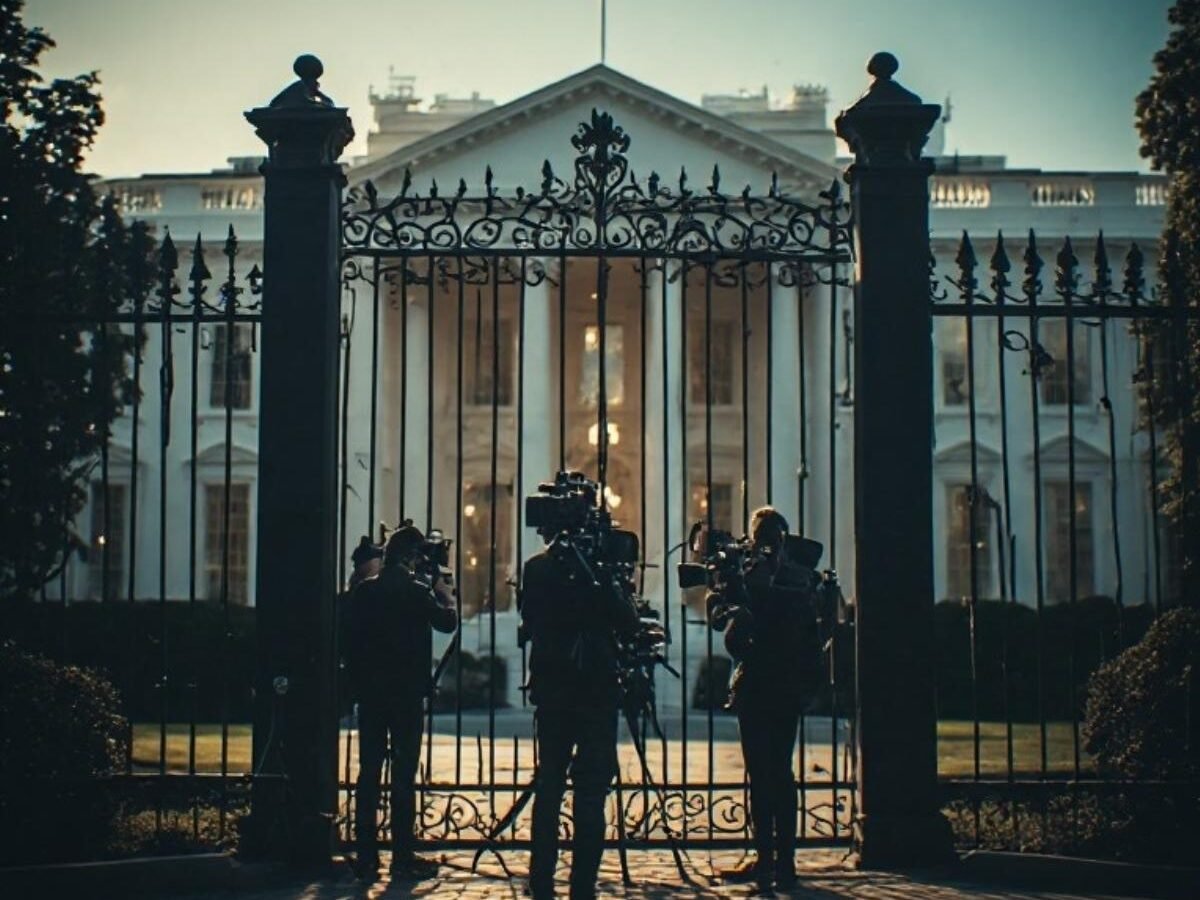
President Trump’s decision to bar CNN and a handful of other outlets from the White House briefing room amounts to an unnecessary fight, according to a commentary published in American Thinker — even as the same piece argues that the furious reaction to it is wildly out of proportion.
Writing for the outlet on September 22, 2026, Silvio Canto, Jr. concedes the point up front: the president “picked an unnecessary battle” by banning CNN and “a couple of other networks” from the White House. But Canto’s complaint is not really with the ban. It is with how the press and its defenders have framed it.
The ratings argument
Canto’s case rests on a simple claim about audience behavior. Voters, he writes, have already figured out that CNN and its peers are not fair, and they express that judgment by changing the channel rather than by storming the barricades. As evidence he points to the numbers: no CNN program, in his telling, cracks the Top 15.
That framing matters because it reframes the fight as a business story rather than a constitutional one. If viewers have already voted with their remotes, Canto suggests, the White House action is less a blow against a free press than a formal acknowledgment of a decline that was already underway.
‘No one is shutting down TV networks’
From there, Canto turns to what he calls the “self-righteous reaction” from critics who say they are losing their rights. His response is blunt: no one is shutting down television networks or websites. The comparison he reaches for is Fidel Castro’s Cuba, where newspapers and TV stations were shuttered and their assets “nationalized.” Whatever else is happening in Washington, Canto writes, it does not resemble that.
The distinction is the crux of the piece. A press credential to the White House is a privilege extended by an administration, not a license to operate — and denying it does not silence a network, it simply removes its seat from a specific room. Critics who describe the move as an existential threat to journalism, in Canto’s view, are conflating access with existence.
Obama weighs in
The sharpest passage targets former President Obama, whom Canto identifies as the purest embodiment of what he calls the hysteria. Quoting reporting by Matt Margolis, Canto relays Obama’s reaction to the news.
Obama said his imagination could not have foreseen “some of the stuff that’s going on right now,” describing an announcement that CNN, MS NOW and perhaps the New York Times had been told they could no longer attend White House press briefings because they give the current president unfavorable coverage.
Obama then posed a hypothetical about his own tenure: what would have happened, he asked, if he had told Fox News to get out? He called the idea “unimaginable.”
The counterargument
Canto’s answer is that it was not unimaginable at all — because, in his account, it happened. He cites the Obama Justice Department’s seizure of phone records belonging to Associated Press reporters and editors, and surveillance of Fox News’s James Rosen and the New York Times’s James Risen. He also recalls the period’s recurring talk about banning Fox News on the grounds that it was not a real news network.
He adds a second line of attack: transparency. Was Obama, he asks, answering questions everywhere? His own answer is no.
The implication is a kind of consistency test. If the standard being applied to Trump is that a president must never punish outlets for unfavorable coverage, Canto argues, that standard was not met by the president now invoking it.
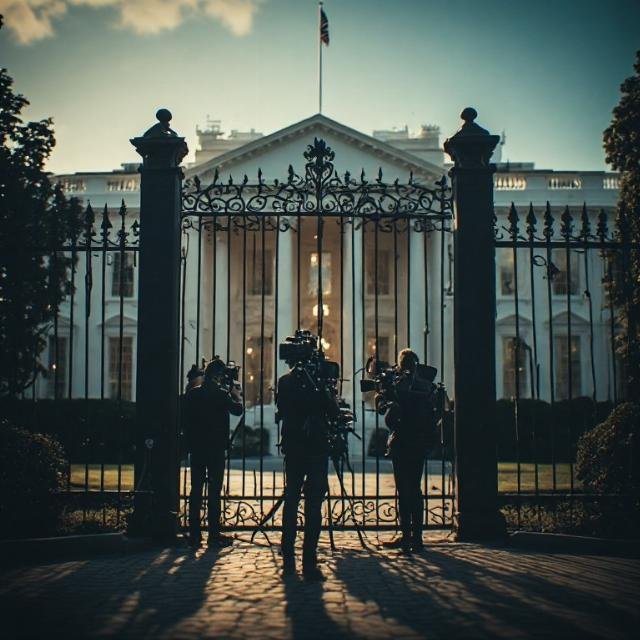
A needless fight that proves a point
Even so, Canto does not let Trump off the hook. He repeats his view that the president chose a battle he did not need to fight — a concession that gives the piece its unusual shape. It is not a defense of the ban so much as an argument that the ban’s critics have handed Trump exactly what he wanted.
The “other side,” Canto writes, “always reacts in such hysterical fashion that it makes his point.” In other words, the overreaction becomes the story, and the overreaction validates the underlying complaint about media behavior. That is the rhetorical move at the heart of the column: the ban may be unwise, but the response to it is the better evidence.
What is actually at stake
Strip away the partisan framing and the dispute is narrower than either side tends to admit. A White House press pass governs physical access to a building and a briefing room. It does not govern a network’s ability to report, publish, broadcast or maintain a website. CNN can still air its programming; the New York Times can still publish. What changes is who gets to sit in the room and ask questions directly of the administration.
That is precisely why the episode generates so much heat. Access is not the same as freedom, but access is power — the power to question, to follow up, to be seen asking. Defenders of the ban frame the loss of that seat as a minor logistical matter. Critics frame it as an attempt to shape which questions get asked in public.
Canto’s position sits between those poles. He thinks the fight was avoidable, that the networks have earned their declining audiences, and that the loudest objections come from people whose own records do not survive scrutiny. Whether or not readers accept that last claim, it is the argument he is making — and it is a reminder that in this particular fight, both sides are describing very different stakes.
The commentary closes with a note promoting the author’s own blog, podcasts and videos, and an appeal from American Thinker for reader donations to support its staff and keep its voices heard.
Source: www.americanthinker.com — https://www.americanthinker.com/blog/2026/09/a-word-about-the-ban/