
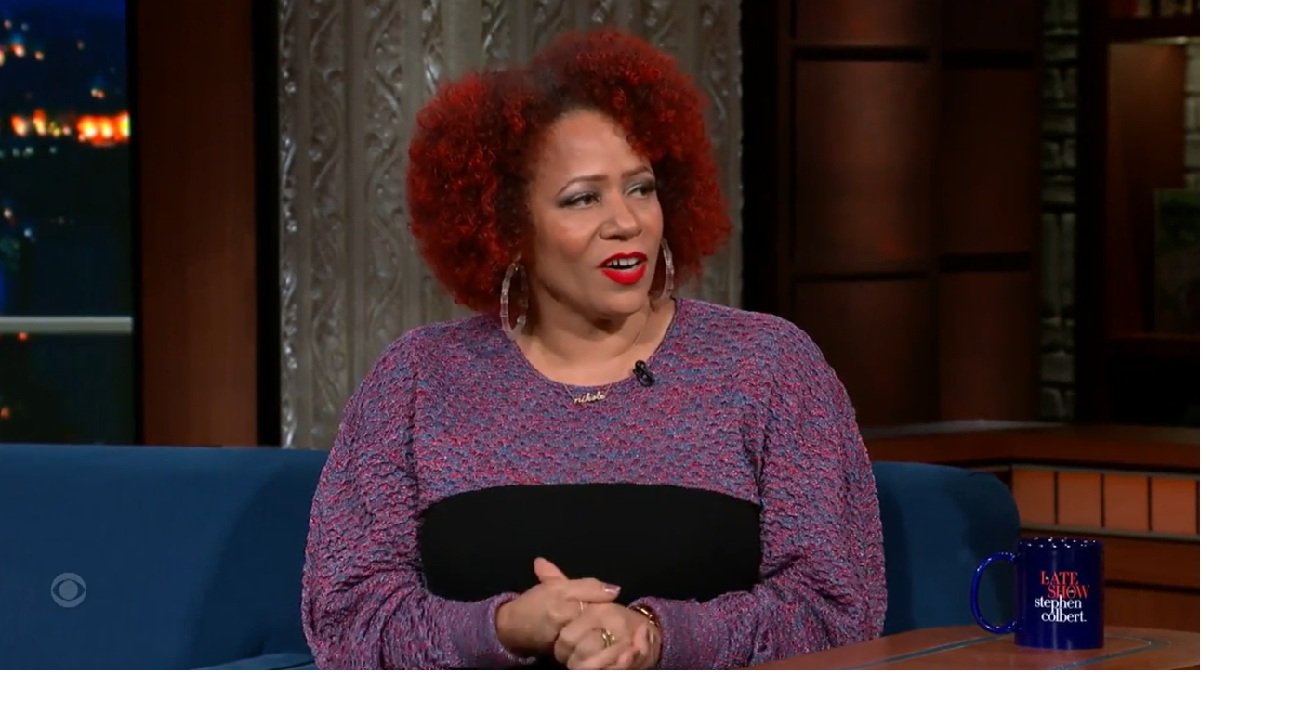
Nikole Hannah-Jones, the journalist behind the 1619 Project, has published a deeply personal essay in The New York Times Magazine describing how her own educational choices affected her daughter — and the piece has quickly become a flashpoint on the right.
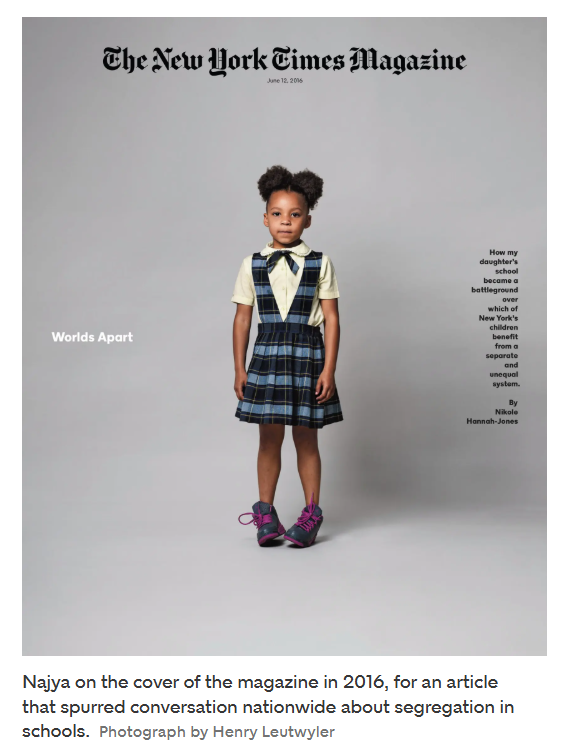
The essay, titled “In Fighting for Every Black Child, Did I Betray My Own?”, centers on Hannah-Jones’ decision to enroll her daughter, Najya, in what she describes as a poor Black public school in New York City, and the academic fallout that followed. According to The Federalist’s coverage of the essay, Najya went from earning A’s in algebra and a spot on her middle school honor roll to “barely keeping up” after transferring to a more demanding high school.
What Hannah-Jones Wrote
In the essay, Hannah-Jones recounts a meeting with the director of an assessment center who told her that Najya “knew very little algebra and had huge gaps in many of the building blocks of math that she should have learned in elementary school, like mastery of long division and fractions.”
The essay also describes conditions at Najya’s elementary school that Hannah-Jones found troubling, including what she characterized as unsupervised and violent lunch periods in which “children were running wild, chasing, hitting and pushing each other while the teacher’s aides and cafeteria workers stood by looking bored.” She writes that similar problems continued into middle school, with no homework assigned, violence interrupting instruction time, and fights breaking out in hallways.
Rather than painting her choice as vindicated, Hannah-Jones writes that “in the outside world, my choice had earned me valor” — but that it came at a cost to her daughter. She also describes discovering, after requesting math assignments for weeks, a folder of ungraded work in Najya’s backpack shortly before winter break. Checking the answers herself, she found most were wrong. Because the teacher wasn’t marking the work, Najya believed she was performing well in what was her favorite subject. Writing assignments similarly went uncorrected for punctuation, capitalization, and grammar.
The Federalist’s Response
The Federalist’s article, by contrast, frames the essay as an indictment of Hannah-Jones and the diversity, equity, and inclusion framework it associates with her career. The outlet argues that the problem in underperforming schools is not racism in the way Hannah-Jones describes it, but a refusal to hold students and staff accountable.

The essay’s account, The Federalist writes, illustrates how students can be passed along with inflated grades — A’s and honor roll placement — while missing foundational skills, and how that gap only becomes visible through the standardized testing and school choice options that Hannah-Jones has elsewhere criticized.
The outlet pointed to the racial composition of school staff, noting that federal statistics show schools with the highest percentages of Black students also tend to have the highest percentages of Black teachers and staff, and that state data indicates more than half of the staff at Najya’s elementary school were Black. From that premise, The Federalist argues that blaming the adults’ conduct on racism misdirects responsibility away from leadership, training, and character.
The Federalist also ties the low quality of instruction in majority non-white schools to the elimination of New York’s teacher certification test in 2017, which the outlet says was done to diversify teaching ranks. Its broader argument is that DEI doctrine, as it describes it, shields members of designated victim groups from the same standards applied to everyone else — a framework it calls a form of bigotry in its own right.
A Wider Debate About Accountability
The Federalist’s commentary extends beyond the Hannah-Jones family, arguing that the values its author associates with “cultural Marxism” insulate people from the constructive criticism needed to improve — and that false accusations of racism have made teachers and administrators afraid to discipline unruly students.
The piece closes by asserting that it was the very testing instruments Hannah-Jones has criticized as tools of white supremacy that ultimately revealed Najya’s gaps and led her parents to seek tutoring and a more challenging school. The outlet argues the episode should be read as evidence that early, accurate — if painful — feedback serves students better than unearned praise, and that the essay’s real lesson is about individual responsibility rather than structural racism.
Hannah-Jones has not publicly responded to The Federalist’s critique. Her essay, meanwhile, continues to draw attention for its unusually candid account of how a mother’s principles collided with her child’s day-to-day experience in the classroom — and for the sharp disagreement it has surfaced over what that account ultimately demonstrates.
Source: thefederalist.com — https://thefederalist.com/2026/09/22/nikole-hannah-jones-racism-is-why-her-daughter-cant-do-math/