
When a racially diverse Mississippi grand jury reviewed the evidence in the death of 18-year-old Nolan Wells and returned a “no true bill” — the formal finding that no evidence warranted criminal charges — it effectively closed the book on a case that had already been tried in the court of public opinion. Writing in American Thinker, James Zumwalt argues that the rush to frame Wells’s death as a modern-day racial killing says far more about the people doing the framing than it does about the state where it happened.
The facts, as Zumwalt lays them out, are these. On July 4th, Wells, who was Black, traveled with three white teenage friends and others on a ten-mile boat trip in three vessels to Horn Island, off the Mississippi coast, where hundreds of holiday revelers had gathered. Later that day, the three friends headed back to the mainland; Wells stayed behind to keep enjoying the scene with other people. He was last seen at 3:00 PM and did not return home that evening. His mother reported him missing, prompting a two-day search. His body was eventually discovered at the northwestern tip of the island. The grand jury concluded he most likely died by accidental drowning.
Crump and Sharpton raise questions the DA says were already answered
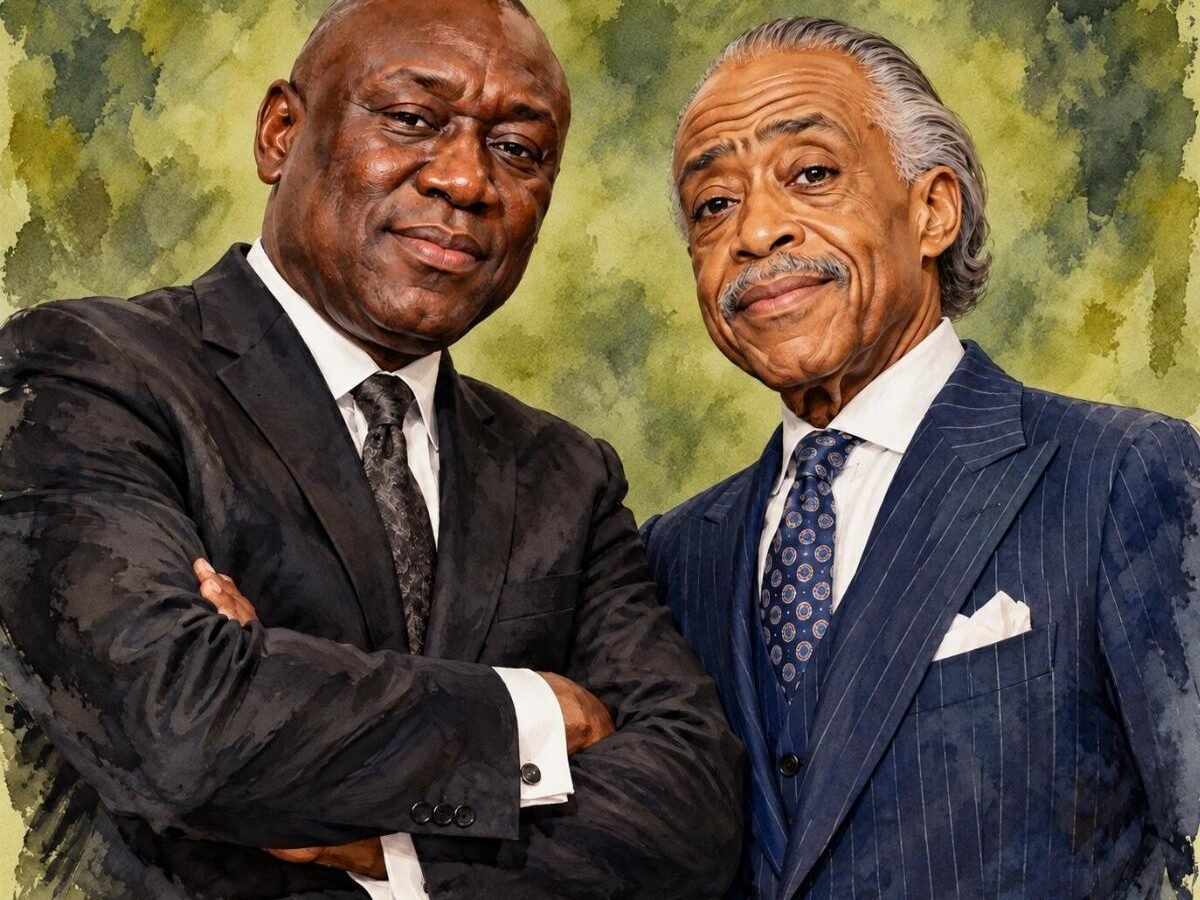
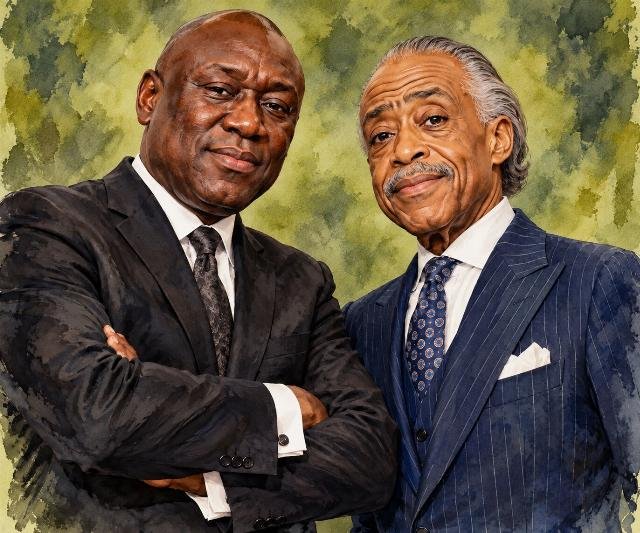
That finding did not sit well with the family’s representatives. Civil rights attorney Benjamin Crump criticized the outcome, insisting that unresolved questions about the death still needed answers. He was joined by the Rev. Al Sharpton — a figure Zumwalt notes has built a national profile in part on racial controversies, beginning with his representation of Tawana Brawley in 1987, who falsely claimed she had been raped by a group of white men including a prosecutor. Sharpton was found guilty of defamation in 1998 over statements against that prosecutor; the judgment was ultimately paid off by supporters rather than from his own funds, Zumwalt writes.
Zumwalt’s read of the Crump-Sharpton posture is that while neither man comes right out and says it, both seem to imply that if a Black man dies under mysterious circumstances in Mississippi and the last people to see him were white, those friends must have had a hand in it. In 1964 Mississippi, Zumwalt concedes, that suspicion would have been warranted.
The case arose in Ocean Springs, roughly a hundred miles from Philadelphia, Mississippi, the town where — 62 years earlier — one of the most flagrant racial crimes in American history unfolded. In June 1964, James Chaney, Andrew Goodman, and Michael Schwerner, civil rights workers organizing in the wake of the Civil Rights Act, disappeared. A massive search followed, with dozens of additional FBI agents dispatched from Washington to infiltrate the Ku Klux Klan and local police, and to build cases against both. An informant eventually revealed the bodies had been buried in a large dirt earthwork, and an out-of-state construction crew with heavy equipment was brought in to excavate it. FBI accounts of the search describe the agent in charge sticking a stick into the ground at random — then abruptly moving it before digging began. Crews started where the stick had been repositioned and immediately found the bodies. Those convictions, Zumwalt writes, marked a turning point in the civil rights fight.
The district attorney’s rebuttal
District Attorney Myers McIlrath pushed back directly on the racial framing. “Nolan chose to stay on the island that day, and there is not a scintilla of evidence to contradict that,” she said. “The family, the Crump team, and anyone close to Nolan knew that his disappearance and death were not the result of racial hate or violence, yet the flames of that narrative, set against the backdrop of Mississippi’s terrible history, were fanned by both people who knew the truth and those who didn’t.” McIlrath also said she had offered the Wells family a chance to present whatever evidence it wished to the grand jury, and that on August 13 the Crump team admitted to her it had no evidence a crime had been committed.
Zumwalt also takes aim at “The View” co-host and attorney Sunny Hostin, who told her audience she saw “a lot of discrepancies” and “inconsistencies” around Wells’s cellphone, phone records, and social media accounts. Hostin suggested the three friends might not have been questioned separately and called the circumstances around Wells’s phone “very strange,” invoking what she described as “racial undertones” — all, Zumwalt notes, without checking with the police who conducted the investigation.
As a result, Zumwalt writes, the three friends have had to retain legal counsel to “prove” their innocence in the court of public opinion, victimized by what he calls racial hatred in reverse.
A second case, and a familiar pattern
The Wells case is not the only recent flashpoint Zumwalt cites. Earlier this month, a Black woman was found hanging in a Mississippi home. Leftists immediately speculated it was a modern lynching and a crime of white supremacy; Rep. Ayanna Pressley’s office amplified the moment with a release announcing that nearly 60 lawmakers were demanding an investigation into Black people found hanging, invoking the legacy of lynching. “Inaction by the federal government is tantamount to complicity,” the statement read. “This is part of the legacy of racial terror in the United States, and this neglect has long-term consequences.” After an investigation, two Black men were charged. Once again, Zumwalt argues, racial flames were needlessly fanned.
He points to crime statistics from 2017 to 2021 showing that 84% of violent crimes against Black Americans are committed by Black Americans — a figure he offers as context for what he calls the rush to judgment about whites killing Blacks. And he draws a contrast between the two eras: in 1964, Blacks would never have been seated on a grand jury in Mississippi. In Wells’s case, they were seated — and found no racism or criminal activity.
Zumwalt’s conclusion is blunt. Mississippi in 2026 is not Mississippi in 1964, but Crump, Sharpton, and Hostin want the public to believe the more things change, the more they stay the same. For them, he writes, white racism is simply an implicit bias — a starting assumption rather than a proven fact. If they have contrary evidence, he says, they should reveal it rather than merely suggest it.
The opinion piece closes on a broader note about the cost of self-censorship, arguing that the ability to speak one’s mind is more essential to the republic than ever.
Source: www.americanthinker.com — https://www.americanthinker.com/articles/2026/09/an-implicit-bias-of-white-racism/