
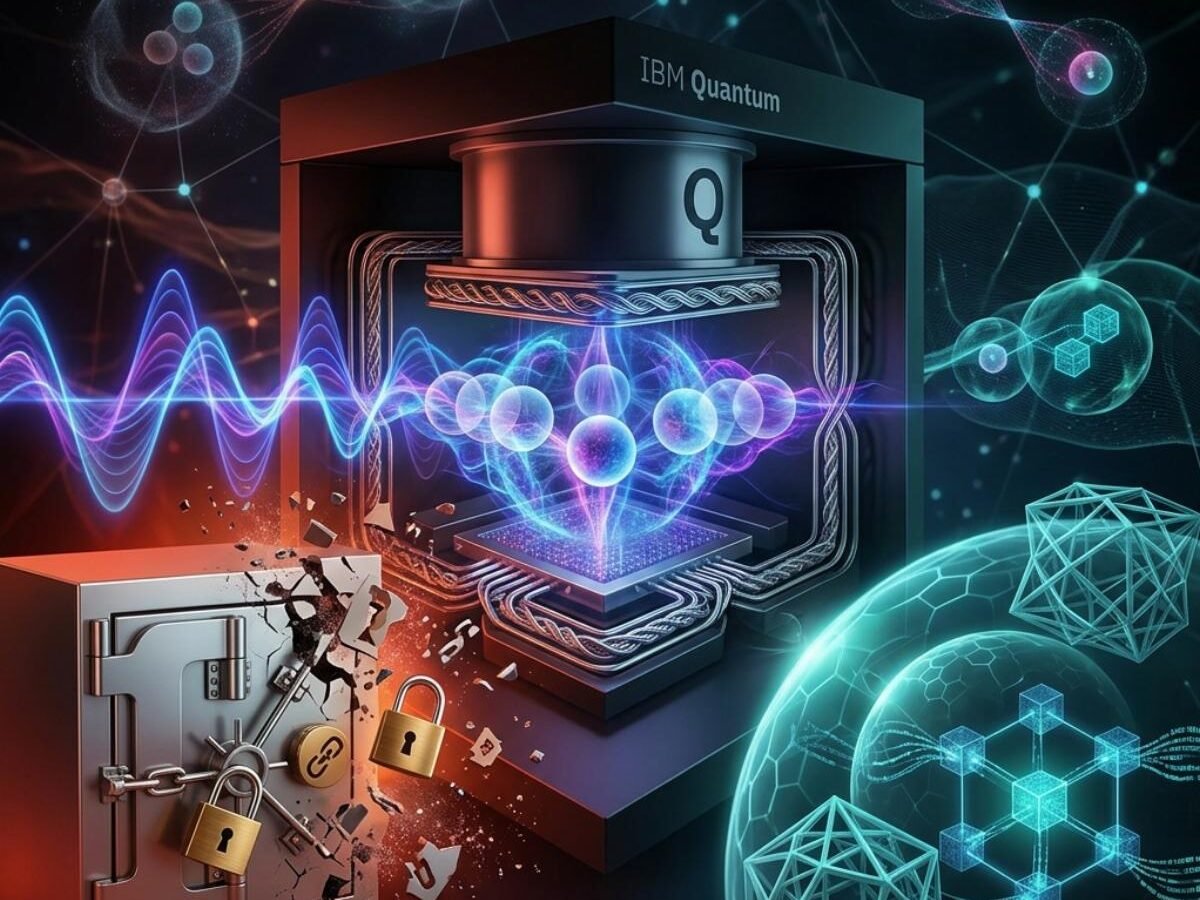
Europe’s quantum-computing champions are leaving, and this time it is not a rumor or a leak. According to commentary published in American Thinker, two of the continent’s most closely watched quantum firms — Finland’s IQM and France’s Pasqal — have each moved toward the U.S. public markets through mergers with American shell companies, redirecting capital, control, and strategic decision-making across the Atlantic.
The pattern, the outlet argues, is neither accidental nor isolated. It is the predictable result of a European policy mix that treats energy-intensive industry as a cost to be managed rather than a foundation to be defended. In the author’s framing, the continent’s tech exodus is being met with a shrug rather than an alarm.
IQM’s Nasdaq Debut
Start with Finland. IQM builds superconducting quantum computers and the quantum processors that power them, with systems aimed at research institutions, high-performance computing centers, and industrial users. Rather than going it alone, the company merged with Real Asset Acquisition Corp., an American special-purpose acquisition company, and in early July began trading on the Nasdaq under the ticker IQMX at a valuation of roughly $1.8 billion.
The structure matters. This was not a straight sale in which founders and early backers walked away with cash. Existing owners stayed invested. But as the source notes, that detail changes little about the trajectory: capital, market power, and an increasing share of control over strategy will now be anchored in the United States. European ingenuity, in other words, with American ownership of the upside.
That a Finnish deep-tech firm would look to New York rather than Helsinki or Frankfurt for its public listing is a signal in itself. It suggests where founders believe the deepest pools of patient capital, the most informed analysts, and the most credible strategic partners now reside.
Pasqal’s Atomic Bet
France tells a similar story. Pasqal, spun out of the Institut d’Optique in 2019, took a path distinct from the superconducting approach favored by IBM and Google. Its team traps individual rubidium atoms inside vacuum chambers using tightly focused laser beams — optical tweezers — and arranges them into precise two- and three-dimensional lattices.
That architecture, the source reports, appears to have allowed Pasqal’s researchers to sidestep the production errors that have hampered other qubit technologies, and it makes scaling toward larger qubit counts considerably easier. The nuance is that such an innovation is legible to only a small circle of specialists — which is precisely why the intellectual property built around it is so valuable, and so portable.
Pasqal’s systems are headed to data centers including the Jülich Research Centre in Germany and to Saudi energy giant Aramco. Its applications reach from EDF to Crédit Agricole, spanning logistics optimization, materials simulation, and risk analysis. One of its co-founders was Alain Aspect, the French physicist who shared the 2022 Nobel Prize with John Clauser and Anton Zeilinger for verifying quantum entanglement of photons — the experimental work that underlies modern quantum technology.
On August 28, the source reports, Pasqal’s path across the Atlantic was cleared by its acquisition by Bleichroeder Acquisition Corp. II, another American shell vehicle. The company is currently valued at around $2 billion — a figure the outlet treats as a snapshot rather than a ceiling.
Why Quantum Matters So Much
The stakes are not abstract. Conventional computers process bits that are either on or off, like tiny lamps lit or dark. Quantum machines use qubits, which can be on, off, both at once, and an infinite range of states in between until the system is measured. Entangled qubits correlate in ways that hold regardless of distance, and where a classical machine tests one path at a time, a quantum computer can explore thousands — theoretically millions — of paths simultaneously.
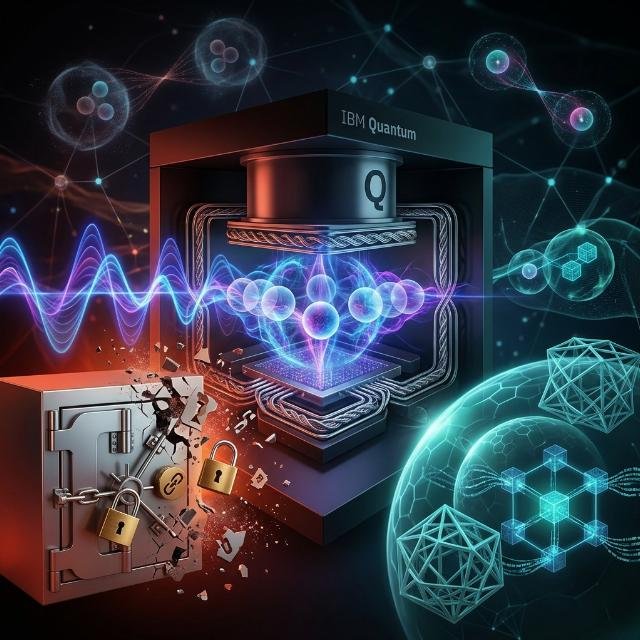
That does not make quantum machines better at spreadsheets or video streaming. It makes them fundamentally advantaged at finding the right combination among astronomically many possibilities: simulating new molecules, optimizing logistics networks, and breaking encryption. Strategy documents in Washington, Beijing, and Brussels all identify quantum computing as a key technology for materials research, pharmaceuticals, and cryptography — and whoever controls the key technologies of the future, the source argues, controls markets and gains geopolitical leverage.
A Continent Bleeding Capital
Set against that backdrop, the departure of IQM and Pasqal looks less like a pair of corporate decisions and more like a symptom. The source points to Germany’s record number of insolvencies in the first half of the year — the highest since 2013 — and the industrial jobs disappearing with them. Expensive climate policy, restrictions on fossil-fuel energy supplies, and rising regulatory costs are described as an accelerant on the euro economy’s businesses. Those who can leave, do.
The outlet is unsparing in its political reading. It argues that there has been little resistance — politically or from within the business community — to what it calls ideologically driven, technology-hostile policies. In its account, the EU now lacks almost every condition needed to attract top minds, encourage new company formation, and enable investment in future-oriented clusters such as robotics, quantum computing, and artificial intelligence. Europe, the author concludes, has specialized in saving the climate while much of the continent seems indifferent to deindustrialization and a slow impoverishment.
It is worth being precise about what this reporting does and does not establish. The transactions are matters of public record: IQM’s SPAC merger and Nasdaq listing under IQMX, and Pasqal’s acquisition by Bleichroeder Acquisition Corp. II. Whether those deals represent a durable trend, or whether Europe’s quantum base can still be anchored on the continent through public investment, procurement, and targeted deregulation, is a live policy question rather than a settled one.
Still, the direction of travel is difficult to dispute. European academic research produced both companies’ core science; European laboratories, universities, and taxpayers incubated them. The commercial and strategic rewards are now increasingly coordinated from the United States. The continent keeps the memories — the Nobel Prize, the Institut d’Optique lineage, the research papers — while the equity and the strategic control migrate westward.
That is the deeper grievance in the source’s argument: not that Europe cannot build world-class technology, but that it has arranged its energy, regulatory, and capital markets so that it cannot keep it. Quantum computing is the test case. If the pattern holds, it will not be the last.
Source: www.americanthinker.com — https://www.americanthinker.com/articles/2026/09/quantum-computing-flees-europe/