
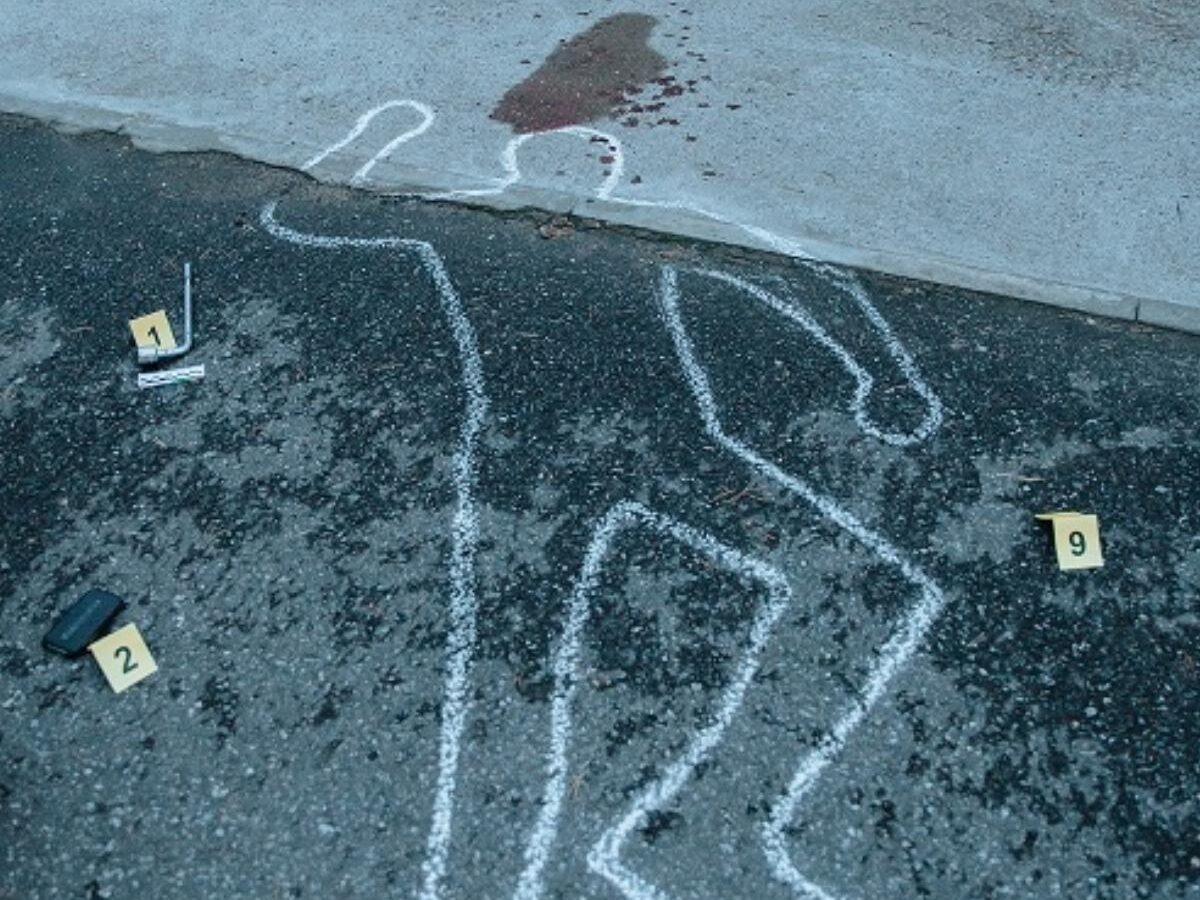
Nine shootings in two weeks. Two people dead. Twenty-five more wounded. That is the tally an American Thinker columnist is putting on Macon, Georgia, after a stretch of violence that culminated in a Sunday afternoon shooting at Carolyn Crayton Park.
According to the outlet’s account, last Wednesday, September 23, five men between the ages of 18 and 24 were shot in Macon. All five were expected to survive. Four days later, on Sunday, September 27, twelve people were injured at Carolyn Crayton Park — ten teen boys and two teen girls. The columnist notes that hospitals receiving shooting victims are routinely placed on lockdown afterward, because police treat the possibility of rival gang members arriving to finish the job as a real one.
The violence was not confined to a single part of the city. Beyond the park shooting and another in Unionville, the American Thinker piece says gunfire was reported in Bloomfield, Fort Hill in east Macon, and the Baconsfield neighborhoods. Two of the dead were identified by name: LaKendrick Jamari Banks, a 15-year-old high school freshman found on Grosso Avenue on September 19, and Jeremiah Quantez McCrary, 21, found the following day inside a vehicle at 2300 Pio Nono Avenue. The columnist describes the victims as predominantly young Black men in what he calls the gangbanger age range — roughly 12 or 13 to 27 or 28 — though several young Black women were also among the wounded.
On the question of apprehension, the piece actually credits the Bibb County Sheriff’s Office with solid work. The columnist’s reasoning is unflattering to the perpetrators: people who shoot each other and then brag about it on social media while sporting easily identifiable facial tattoos are not difficult to find. Where the process breaks down, in his view, is the district attorney’s office. He calls Anita Howard perhaps the most incompetent DA in Georgia and suggests, without producing evidence, that some believe she is corrupt — the argument being that Macon crime victims frequently do not see justice because cases stall once they reach her desk. That is the columnist’s characterization, not a finding by any court or oversight body.
Then comes the part of the essay that functions as its real thesis. The writer catalogs the familiar post-shooting ritual: neighborhood peace marches, calls for unity, demands for youth curfews, assertions that the victims did not deserve this, pastors preaching against violence. His verdict on all of it is dismissive. These are, he writes, do-nothing, feel-good moves that let people believe they are responding while avoiding what he considers the actual problem in the Black community.
The Numbers He Leans On
To make that case, the American Thinker columnist draws on figures from the America First Policy Institute. Quoting AFPI, he writes that the United States has the highest rate of children in single-parent households of any nation in the world, with more than 18 million fatherless children. The same source holds that fatherless families are four times more likely to live in poverty than married-couple families, and that children without fathers are more likely to deal with psychosocial development problems, abuse drugs and alcohol, show delinquent behavior, engage in school violence, drop out, and end up in the juvenile justice system.
The quoted material goes further on the question of violence specifically: absent fathers predict violence for both boys and girls, 70 percent of juveniles in state-operated institutions come from single-parent homes, 71 percent of teachers and 90 percent of law enforcement officials say a lack of parental supervision at home is a major factor in school violence, and 75 percent of adolescent patients in substance abuse centers come from fatherless homes. On the other side of the ledger, the piece cites a finding that children who feel close to their fathers are 80 percent less likely to spend time in jail.
Those statistics come from AFPI, an advocacy organization, and are presented in the column as the evidentiary backbone of its argument rather than as independently verified figures. The columnist’s own framing of the trend line is stark: about 70 percent of Black children today are born to unmarried mothers, compared with 15 percent of Black births out of wedlock in 1940 and roughly 25 percent by 1965. For context, he puts out-of-wedlock birth rates at about 52 percent for Hispanic children and about 28 percent for white children. He concedes that not every child born out of wedlock is raised without a father or in a single-parent home, but argues that the correlation with worse outcomes is strong enough to matter.
The Argument Against the Racism Explanation
The column’s sharpest turn is aimed at those who attribute Black-on-Black violence to racism. He labels that view the position of ultra-leftist liberals — that hateful whites and Hispanics are the reason Black people are killing each other — and then tries to dismantle it on its own terms.
His first challenge is chronological. If racism explains the violence, he asks, why did violent crime in the Black community increase after the civil rights legislation of the mid-1960s, after discrimination based on skin color became illegal? His answer is that Black violent crime began rising in the late 1960s and peaked in the early to mid-1990s. His second challenge is historical: if racism is the driver, why was the Black violent crime rate not far higher in the 1930s, 1940s, 1950s, and 1960s, when lynchings were a reality and anti-Black hatred was open and widespread? He adds that over the past 25 years, most young gang members doing the shooting have never known racism, and he waves off complaints about ugly looks from store clerks as not amounting to racism. Playing the victim card, in his telling, is a way of never having to take responsibility.
The columnist’s causal story lands on the welfare state. Starting in the 1960s, he writes, government welfare checks replaced Black fathers as the household income earner. Mothers no longer needed fathers to provide, and in his account were effectively paid for having children out of wedlock. Uncle Sam became Big Daddy and stayed there. From this he draws a political conclusion: Black voters keep electing Democrats who maintain that arrangement, keeping Uncle Sam in place and themselves, as he puts it, in fatherless households.
He acknowledges he is speculating about the shooters themselves, writing that he is sure most of these huckleberries — his term, borrowed from nineteenth-century slang meaning roughly I’m the guy you’re looking for — come from fatherless homes, while conceding that no one has checked. That is where the argument rests: a strongly asserted causal claim, supported by advocacy-group data and historical pattern-matching, with the final link to the specific shooters left admittedly untested.
Source: www.americanthinker.com — https://www.americanthinker.com/articles/2026/09/macon-s-huckleberries-have-returned/