
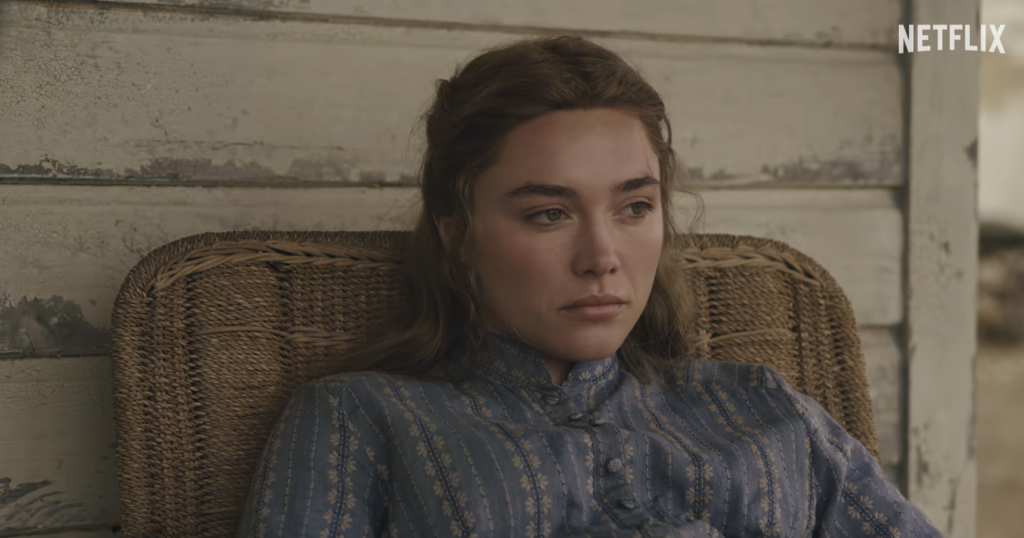
A new Netflix adaptation of John Steinbeck’s “East of Eden” is drawing fire from literary purists after its star described an approach to the novel’s infamous villain that critics say softens one of the most unambiguously evil characters in American fiction.
In a clip from an interview with The Atlantic that has circulated widely online, actress Florence Pugh — who plays Cathy Ames in the upcoming series — said the production deliberately avoided portraying her character as monstrous. Pugh, seated in a gray-and-white collared dress against a dark backdrop, described the role as an exercise in making audiences empathize with a killer.
The new series “doesn’t try to make the character Cathy Ames ‘a monster,'” Pugh said, adding that it was “my job to try and get you guys to sympathize and maybe fall in love with her a little bit.” She also credited writer Zoe Kazan with wanting to understand the character rather than merely condemn her, calling that reinterpretation “thrilling.”

The viral video, viewed more than 1.6 million times on X, drew fewer than 400 likes — a ratio that The Federalist, in an essay published Tuesday, seized on as evidence of broad discontent with the creative direction. “This new Hollywood trend of ‘every villain is sympathetic’ is the worst,” one commenter wrote, according to the outlet. Another asked, “Did she even read the book?”
Netflix has not publicly responded to the reaction, and the streaming service has not announced a premiere date for the series. Representatives for Pugh and Kazan did not immediately comment.
Steinbeck’s Cathy: ‘A Malformed Soul’
The Federalist’s central objection is not merely aesthetic. In Steinbeck’s novel, Cathy is introduced with an authorial judgment that leaves little room for ambiguity. At the opening of the book’s eighth chapter, the narrator — a fictional stand-in for Steinbeck — writes, “I believe there are monsters born in the world to human parents,” and describes Cathy as a woman who “was not like other people, never was from birth,” born with a “malformed soul.”

The essay notes that Steinbeck went further in a letter to a family friend, describing Cathy as “representative of Satan.” The novelist also characterized her particular brand of wickedness as an embodiment of “the most disturbing impulse humans have.”
That impulse, as The Federalist reads the text, is fundamentally sexual. As a 10-year-old, Cathy is discovered by her mother in a carriage house with two teenage boys, lying on the floor half-undressed with her wrists bound. The boys claim Cathy paid them and tied herself up; Cathy refuses to speak and feigns trauma. The narrator declines to settle the question, but the implication — that a child has just framed two boys for rape — hangs over the scene.
Later in the novel, Cathy becomes a prostitute and brothel keeper, taking over Faye’s establishment and turning it into what the essay describes as “a sort of sadistic wasteland,” where men are bloodied with “little knotted whips” and beg to be abused. When Faye learns what Cathy does to her customers, she flees screaming.
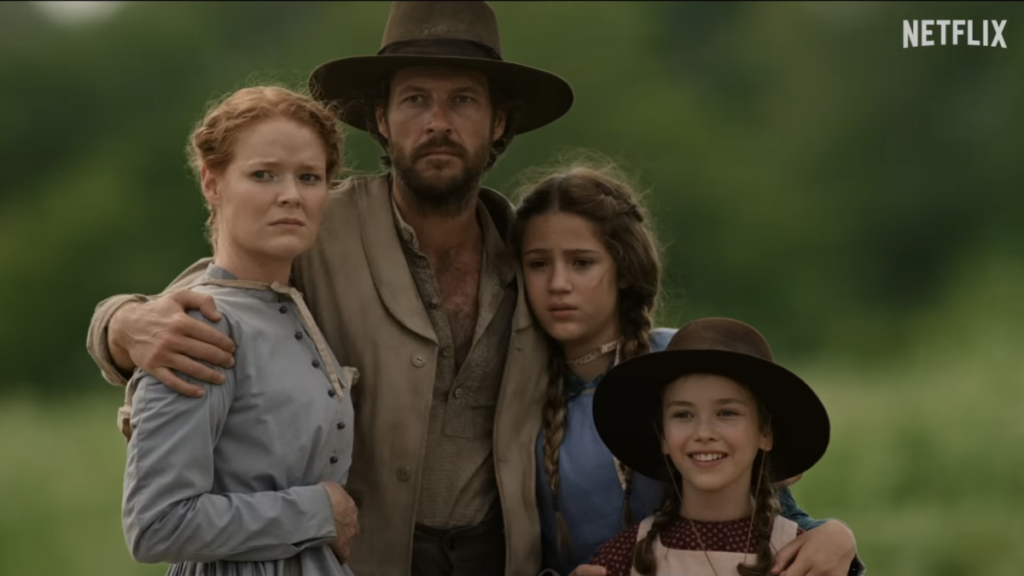
The Federalist contends that this dimension of Cathy’s evil has gone largely unexamined in contemporary discussion, arguing that a culture that has rebranded prostitution as “sex work” and sexual sadism as “kink” no longer registers the horror Steinbeck intended. In that reading, a character who once read as demonic now strikes modern adapters as merely complicated — and therefore ripe for redemption.
A Broader Pattern of Adaptation Debates
The controversy lands amid a broader run of disputes over Hollywood’s treatment of canonical literature. The Federalist cites Emerald Fennell’s forthcoming “Wuthering Heights,” which it says turns Emily Brontë’s Gothic novel into a “bizarre BDSM fantasy,” as well as Christopher Nolan’s adaptation of “The Odyssey,” which divided fans over its portrayal of the hero and its casting, and an HBO “Harry Potter” remake that the essay says no one requested.
But the piece frames the “East of Eden” case as more consequential than those squabbles, arguing that it undermines the novel’s moral architecture rather than merely altering its surface. Steinbeck’s message, as the essay describes it, is the opposite of therapeutic: origin and circumstance do not determine destiny, and the capacity to choose good over evil remains universal. Cathy, by that logic, is not a victim whose cruelty was manufactured by trauma but a person who chose her path.
The essay anticipates that the Netflix series will foreground Cathy’s early hardships, framing her later cruelty as a response to childhood abuse. It argues that this reading inverts Steinbeck’s intent, converting a story about moral agency into one about determinism — and that the impulse to explain evil away reflects a culture uncomfortable with the idea that some things simply are evil and should not be excused.
Whether audiences will embrace a sympathetic Cathy remains an open question, and the early engagement metrics on Pugh’s interview suggest skepticism. Netflix has not indicated when the series will debut, leaving the debate to play out largely on social media and in the pages of outlets like The Federalist — where, as the essay bluntly puts it, viewers who know the novel are not waiting for the premiere to register their objections.
Source: thefederalist.com — https://thefederalist.com/2026/09/30/east-of-eden-villain-is-a-netflix-hero-because-she-has-no-sexual-mores/