
The United States has experienced a dramatic reversal in migration trends under President Donald Trump’s economic policies, with new data from the U.S. Census Bureau showing the foreign-born population barely grew in 2025 and declined significantly in early 2026.
According to an October 30 analysis by the Center for Immigration Studies, the total migrant population — including both legal immigrants and those in the country illegally — reached 50.4 million in 2025, up only slightly from 50.2 million in 2024. This represents an increase of just 174,000 people, a stark contrast to the 2.4 million surge recorded between 2023 and 2024.
The shift becomes even more pronounced when examining interim 2026 data. From March 2025 to March 2026, the resident migrant population dropped by approximately 790,000, according to the CIS report. The analysis notes that without Trump’s policies, the migrant population would have jumped by 2.4 million in 2025 alone.
Sharp Break from Decades-Long Policy
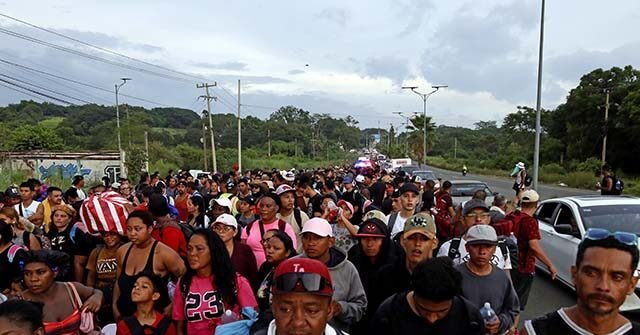
The decline marks a significant departure from federal immigration policy dating back to 1965 and 1990, when Congress passed laws that expanded immigration pathways. More recently, the Biden administration welcomed at least 8 million migrants during its tenure, contributing to record population growth in 2023 and 2024.
For decades, the federal government pursued what critics call an “Extraction Migration” economic model — importing consumers, workers, and renters from poorer countries to fuel economic growth. This annual inflow typically included many unauthorized migrants, roughly 1 million temporary workers, and approximately 1 million legalized immigrants, all on top of the nation’s 3.6 million births per year.
This mass migration policy created what the CIS describes as a “bubble of cheap labor” that benefited many employers and investors, particularly in real estate, restaurants, hotels, entertainment, and more recently in white-collar sectors like banking, insurance, and technology. The steady stream of new arrivals also bolstered Democratic Party political organizations in urban areas.
Economic Rationale Behind the Shift
Since Trump’s 2024 election victory, his administration has implemented policies that curbed both airport arrivals of legal migrants and border crossings of unauthorized migrants. The reduced labor supply has reportedly pressured employers to invest in productivity-enhancing technology and raise wages for American workers.
Trump himself outlined this economic vision in an August interview with Breitbart News, stating: “We’re going to need robots … to make our economy run because we do not have enough people.” He added that the country would need to “get efficient” and expand the workforce “robotically” rather than through immigration.

“We don’t [have] enough people to do it. So we have to get efficient … we’ll probably add to [the existing workforce] through robotically—it’s going to be robotically … we’re going to streamline things. We need efficiency,” Trump explained.
Costs and Benefits Debate
The CIS report argues that the previous high-migration policy imposed substantial costs on American citizens and their families. These alleged costs include suppressed wages, reduced workplace investment, more expensive housing, increased government debt, strained schools and hospitals, and what the organization characterizes as a loss of political power for citizens.
Supporters of the new approach contend that limiting immigration forces businesses to invest in automation and productivity gains while potentially benefiting workers in developing countries. The CIS notes that reduced U.S. reliance on migration could help poor countries expand their own skilled workforces and attract wealth-generating investment that might otherwise flow to the United States.
The Trump administration has framed its immigration restrictions as part of a broader “low-migration/high-productivity” economic strategy designed to shift the economy away from dependence on cheap foreign labor toward greater automation and higher wages for domestic workers.
Enforcement Changes
The population decline reflects both stricter border enforcement and reduced legal immigration pathways. Administration officials have emphasized the contrast between current border security measures and those implemented during the Biden years, when migrant encounters at the southern border reached record levels.
The Census Bureau data tracks the foreign-born population regardless of legal status, providing a comprehensive picture of migration trends. The 290 million U.S.-born Americans counted alongside the 50.4 million foreign-born residents means the migrant population represents approximately 14.8 percent of the total U.S. population.
The dramatic slowdown and reversal in migrant population growth represents one of the most significant demographic shifts in recent American history, breaking from a pattern of steady increases that had persisted for more than three decades. Whether this trend continues will depend on the administration’s ability to maintain current enforcement levels and any potential legislative changes to immigration law.
The long-term economic impacts of this policy shift — including its effects on labor markets, economic growth, wage levels, and productivity gains — remain subjects of intense debate among economists, policymakers, and advocacy groups on all sides of the immigration issue.
Source: www.breitbart.com — https://www.breitbart.com/politics/2026/10/30/trumps-policies-shrink-migrant-population/