

A growing number of major technology companies have stopped treating a prestigious diploma as a guarantee of competence and started building their own training pipelines instead, according to a report from the New York Post that American Thinker’s Olivia Murray highlighted this week. The reason, executives say, is simple: the graduates arriving at their doors — including those from the most selective schools in the country — often aren’t prepared for the jobs actually waiting for them.
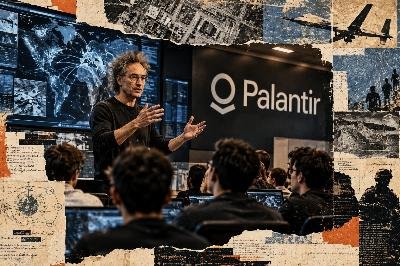
The most striking example comes from Palantir, which runs a semester-long intensive called the Meritocracy Fellowship. The program takes high school graduates, not college graduates, and puts them through a four-month course of study. According to Jordan Hirsch, who runs the fellowship, the old assumption that an Ivy League or Ivy-equivalent degree signaled a reliably excellent candidate no longer holds.
“It used to be the case that you could rely on somebody who went to an Ivy or Ivy-equivalent to be top notch,” Hirsch said. “But that’s not the case anymore… we suspected that there was a lot of talent being missed.”
What the Fellowship Actually Teaches
What makes the Palantir program noteworthy isn’t just that it skips the traditional credential — it’s what fills the curriculum. The fellowship opens with a five-week crash course in Western civilization, covering philosophers like Aristotle and figures like Churchill, before moving into the technical and professional material.
That detail cuts against a common assumption. On first read, Murray writes, she assumed the gap these companies were filling had to do with coding and technical skills. It turns out the deficiency is broader than that, and the remedy these companies have chosen reaches back to foundational texts that have been steadily deemphasized on many campuses.
For Murray, that choice is vindication. The Western canon, she argues, was never the obsolete relic its critics claimed — it is the groundwork of an educated mind, and the private sector is now effectively re-teaching what the education system stopped prioritizing.
The Argument Behind the Programs
Murray frames the whole phenomenon as a market correction. Her column is blunt about where she thinks the blame lies: billions in taxpayer funding directed toward universities, she writes, have underwritten research into subjects like gender fluidity, intersectionality, unconscious bias, and structural racism, while producing adults who struggle in an actual workforce. Diversity, equity, and inclusion initiatives that elevated demographic preferences over merit, in her telling, did not surface the most capable people. A decline in educational quality, she suggests, was the foreseeable result of that agenda.
The corrective, as she describes it, didn’t come from Washington. It came from employers with strong incentives to spot a problem and fix it quickly, without spending tax dollars to do so. That the private sector can move this fast, she adds, is itself a testament to how much economic freedom remains in a system she otherwise describes as socialistic and communistic in many of its elements.

It’s worth being precise about what is and isn’t being claimed here. The New York Post report is the factual spine: major tech companies, Palantir among them, have stood up their own education programs aimed at high school graduates and others the traditional pipeline overlooks. Hirsch’s quote and the fellowship’s Western-civilization opening are the concrete specifics. The rest — the causal story about DEI, federal funding, and the decay of meritocracy — is Murray’s argument, and it is very much an argument rather than a documented finding.
A Familiar Divide
The debate the column taps into is not new, but the setting is. For years, the critique of American higher education has come mostly from pundits, parents, and politicians. Now it’s coming from hiring managers with open roles to fill and no particular ideological ax to grind — at least not overtly. When a company decides it’s more efficient to teach Aristotle to eighteen-year-olds than to trust a transcript from a four-year institution, that’s a signal of a different kind than a cable news segment.
Skeptics might reasonably note that a fellowship program is not a replacement for a university system, and that a handful of high-profile corporate experiments don’t prove a wholesale collapse of higher education. Elite schools still place graduates at high rates, and the labor market for their alumni remains strong in many fields. But the existence of these programs at all — and the candor of the executives running them — suggests the credential’s signaling power has weakened in at least some corners of the economy.
There’s also a subtler point in the curriculum itself. If the first five weeks of a competitive tech fellowship are spent on Western civilization rather than on code, the implication is that employers have concluded something about what makes a person capable of learning the technical material at all. Judgment, context, and a grounding in the ideas that shaped the institutions they’ll be working within — that’s the bet Palantir appears to be making.
Whether other companies follow with similarly structured programs, and whether the model produces the talent it promises, is an open question. What isn’t in dispute is the diagnosis coming from the people doing the hiring. The pipeline they were told to trust isn’t delivering what it used to, and rather than wait for it to be repaired, they’re building their own.
Murray’s conclusion is that this is how the system is supposed to work — the private sector identifying a failure and correcting it faster than any government agency could. Readers who share her priors will find the Palantir fellowship a tidy illustration of that thesis. Readers who don’t may still find something worth noting: when employers start teaching the canon themselves, the argument over whether it matters has effectively been settled by the people signing the paychecks.
Source: www.americanthinker.com — https://www.americanthinker.com/blog/2026/10/tech-giants-implement-education-programs-since-they-can-t-rely-on-ivy-league-grads/