

A controversy brewing in Alaska’s Senate race is exposing what some see as a fundamental contradiction in Democratic arguments against stricter voting requirements, according to a new analysis.
Democrats have spent months arguing that the SAVE America Act — which would require documentary proof of citizenship to register to vote and photo ID to cast a ballot — creates unnecessary confusion and barriers for voters. Yet according to reports, the party allegedly orchestrated a scheme to place two Republican candidates with the same name on Alaska’s Senate ballot, potentially confusing voters in ways far more direct than any ID requirement.
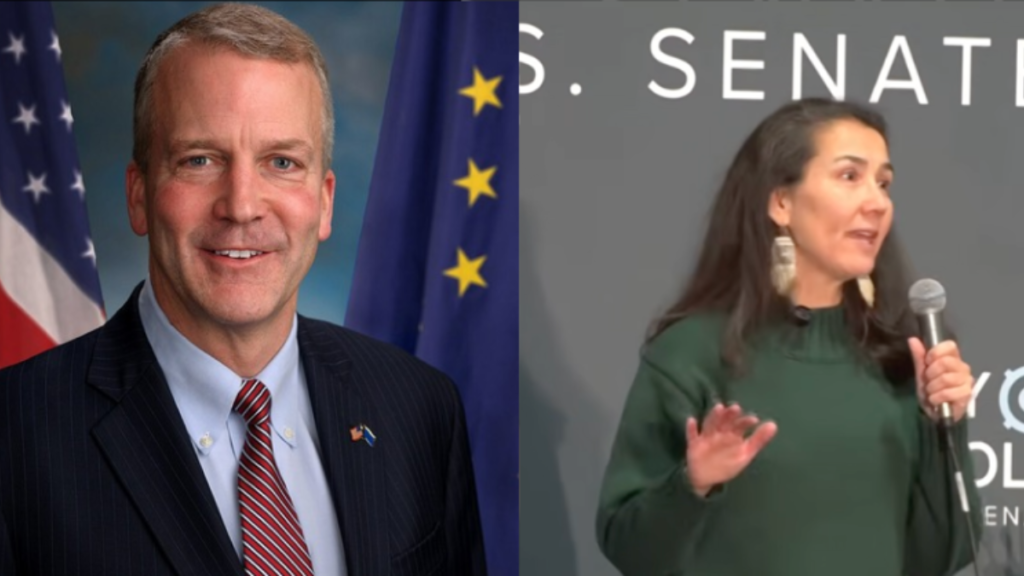
The controversy centers on what The New York Times reported as a “ballot composition project” — an effort by Democrat Mary Peltola’s Senate campaign that allegedly worked with party leaders to recruit a second Dan Sullivan to run as a Republican against incumbent Republican Senator Dan Sullivan. The alleged goal was to siphon votes away from the incumbent by exploiting voter confusion over the identical names.
Peltola’s campaign has denied recruiting decoy candidates, but the reported scheme has drawn sharp criticism from those who see it as hypocritical given Democratic rhetoric about protecting voters from confusion.
Democrats’ Case Against Voter ID Requirements
For months, Democratic leaders have portrayed proof of citizenship requirements as obstacles that would unfairly burden American voters. Senate Minority Leader Chuck Schumer claimed in February 2026 that the SAVE Act would make it “harder for eligible people to vote, particularly low income Americans and people of color.”

Schumer went further, accusing Republicans of trying to “disenfranchise 21 million American citizens” and “meddle in the midterm elections” through the legislation.
Representative Hillary Scholten of Michigan argued that married women would face particular difficulties under the SAVE Act because their married names might differ from those on their birth certificates. “Nearly 70 million married women in this country have changed their last name, but their birth certificates don’t reflect that,” Scholten said, claiming the bill makes it “harder” for people to vote.
House Minority Leader Hakeem Jeffries declared in September that he would not support the SAVE America Act, calling it “the latest MAGA effort to rig the midterm elections.”
Experts Push Back on Democratic Claims
Legal experts have disputed many of the Democratic arguments against the SAVE Act. Cleta Mitchell, senior legal fellow at the Conservative Partnership Institute, noted that “when women change their names upon marriage (or divorce) there is a process for changing / updating [their] name from birth certificate or a prior marriage,” adding that “millions of women do it every day so they can operate their lives under their married names.”
Representative Chip Roy pointed out that the SAVE Act explicitly addresses name changes. “For the tiny fraction of women … who have changed their name right before an election, the SAVE Act explicitly directs states to establish a process for individuals to register if there’s a discrepancy in their documents, such as due to a name change,” Roy explained.

Hans von Spakovsky, a senior legal fellow at Advancing American Freedom, drew parallels to existing documentation requirements. “Federal immigration law … requires all employers to get documentation from new employees proving both their identity and citizenship, or if they are an alien, their identity and work permit,” he noted, arguing that citizenship documentation for voting merely mirrors requirements Americans already meet to work legally.
The Alaska Decoy Controversy
The alleged “Decoy Dan” scheme in Alaska presents what critics see as a glaring contradiction. If Democrats genuinely prioritize making voting easier and less confusing — their stated reason for opposing the SAVE Act — the recruitment of a candidate with an identical name to an incumbent appears designed to do precisely the opposite.
According to The New York Times reporting, the effort was internally referred to as the “ballot composition project” and was aimed at exploiting voter confusion to benefit Peltola’s campaign. Critics argue this represents actual election interference, far more direct than requiring voters to present identification.
The silence from prominent Democrats who vocally opposed the SAVE Act has been notable. Schumer, Jeffries, and Scholten — all of whom spent months arguing against election integrity measures on the grounds that they would confuse or burden voters — have not publicly condemned the Alaska scheme.
What the SAVE Act Would Actually Do
The SAVE America Act would strengthen existing law by adding verification requirements to citizenship attestation. Currently, voters must attest under penalty of perjury that they are citizens, but the SAVE Act would require documentary proof as well.
Acceptable documentation under the bill includes a REAL ID, valid passport, military card, and other forms of identification — documents that proponents argue most Americans already possess for other purposes.
The legislation aims to prevent non-citizens from voting in federal elections, which supporters say protects the voting rights of American citizens by ensuring their votes aren’t diluted by illegal ballots.
The Larger Political Context
The controversy arrives as election integrity remains a contentious issue ahead of the 2026 midterm elections. Republicans have pushed for stricter verification measures, while Democrats have largely resisted, framing such efforts as voter suppression.
The Alaska situation, however, suggests to some observers that concerns about voter confusion and accessibility may not be Democrats’ primary motivation in opposing measures like the SAVE Act. Instead, critics argue, the party’s position appears driven by electoral calculations about which rules and conditions benefit their candidates.
Whether intentionally confusing voters with duplicate candidate names constitutes election manipulation remains a matter of debate, but the optics have proven challenging for Democrats who positioned themselves as defenders of simple, straightforward voting processes.
The Peltola campaign’s denial of involvement in recruiting decoy candidates has not fully quieted the controversy, particularly given The New York Times reporting on the alleged “ballot composition project.” As the Alaska Senate race continues, the “Decoy Dan” controversy is likely to remain a talking point for those questioning Democratic sincerity on election integrity issues.
Source: thefederalist.com — https://thefederalist.com/2026/10/30/decoy-dan-exposes-democrats-bogus-excuses-for-opposing-save-act/