

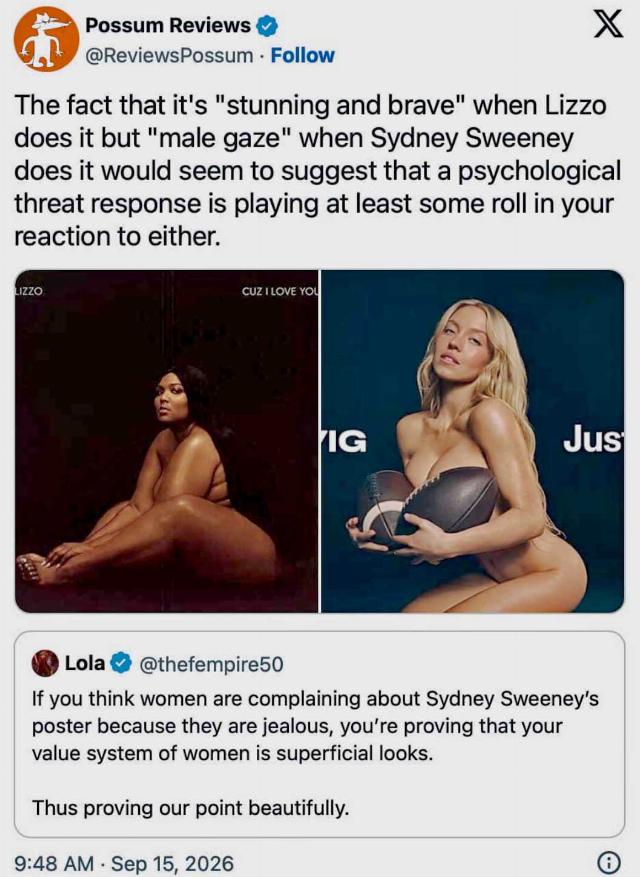
The backlash was predictable. When Sydney Sweeney appeared in ads for Novig, a sports prediction market, posing mostly nude with strategically placed sports equipment, critics—including some female athletes—accused her of sexualizing women’s sports. But according to commentary published at American Thinker, the outrage obscures a more interesting fact: the campaign was a remarkably lucrative business move.
Writing for the outlet, Mike McDaniel argues that Sweeney is not simply a familiar face cashing in on her looks. She is, he contends, a smart businesswoman who put her own money behind the bet—and won big.
The numbers behind the noise
Citing reporting from The Wall Street Journal, the American Thinker piece notes that Novig’s valuation has reportedly quadrupled, climbing from $500 million earlier this year to $2 billion after the racy ads featuring Sweeney went viral. The platform, described as a smaller competitor to Kalshi and Polymarket, raised new funding at that higher valuation.

According to the account in the source material, Novig had built a modest audience through its podcast and a partnership with the New York Mets. But the platform took off after the “Euphoria” actress signed on as an equity investor and posed in the company’s advertisements. The resulting surge in valuation, McDaniel writes, is a rare kind of increase—from $500 million to $2 billion—and it happened quickly.
The critique in the American Thinker piece is not aimed at Sweeney’s critics on the left alone. McDaniel acknowledges that feminist outrage over the ads was “a bit hypocritical,” but argues that the response from some female athletes was no less so. His reasoning: Sweeney has never claimed to be an athlete, though she has played one on screen, and her physique is that of a fit woman rather than a competitor. Meanwhile, he points out, uniforms in sports like swimming, diving, gymnastics, track and field, and beach volleyball are not designed around absolute modesty—and they help draw viewers to sports that would otherwise receive far less attention.
The familiar economics of youth and beauty
The broader argument in the piece is that Sweeney is doing what many women in entertainment and sports have done before her: capitalizing on her attractiveness while it remains in demand. McDaniel notes that youth and beauty are fleeting assets, and that Hollywood seldom rewards women for aging gracefully. In his framing, Sweeney is simply maximizing her earning potential during the window when her appeal is most marketable.

What sets her apart, he suggests, is not the strategy but the execution. She is, in his assessment, doing it “better and more profitably” than many who came before—and that success may be exactly what has provoked so much irritation.
The piece also highlights comments from Novig CEO Jacob Fortinsky, who stood by the campaign. Fortinsky said the company is “hugely supportive of women’s sports” and that it “never intended to portray female sports.” He credited Sweeney with driving much of the creative direction, saying, “It really was Sydney who’s driving a lot of the visuals and the messaging.” He added, “Sydney’s an actress. We’re a prediction market that’s focused on sports, and that was the story she was communicating.”
That distinction matters to the argument: the ads were not, in the company’s telling, a statement about women’s athletics but a marketing play aimed at young men. And it worked.
A hedge against a cloudy regulatory future
There is also a political dimension. The American Thinker piece notes that investors have been rushing into prediction markets even as the platforms—which allow users to wager on everything from sports to pop culture and politics—face regulatory scrutiny. In McDaniel’s reading, the partnership between Fortinsky and Sweeney functioned as a hedge against future adverse legislation: a bet on her popularity that would pay off regardless of what regulators do next.
That bet, according to the source material, has already paid off handsomely for both parties.
McDaniel’s conclusion is blunt. Sweeney, he writes, has demonstrated that she is more than the sum of her most prominent assets. She has done nothing different from many young women before her, but she did it more effectively and more profitably—which, he argues, is likely what has so many of her critics upset. Jealousy, he adds, is a powerful and unattractive human trait, and smart men value intelligence and ability in a woman as much as beauty. In his view, Sweeney has proven she has both in abundance.
The commentary is a reminder that cultural flashpoints often carry an economic subtext. The argument over whether the Novig ads degraded women’s sports is unlikely to be settled anytime soon. But the valuation figure—$500 million to $2 billion—is not a matter of opinion. Whatever one makes of the campaign’s aesthetics, the business result is difficult to dispute, and that is the part of the story the outrage cycle tends to skip.
Source: www.americanthinker.com — https://www.americanthinker.com/blog/2026/10/sydney-sweeney-much-more-than-the-obvious/