
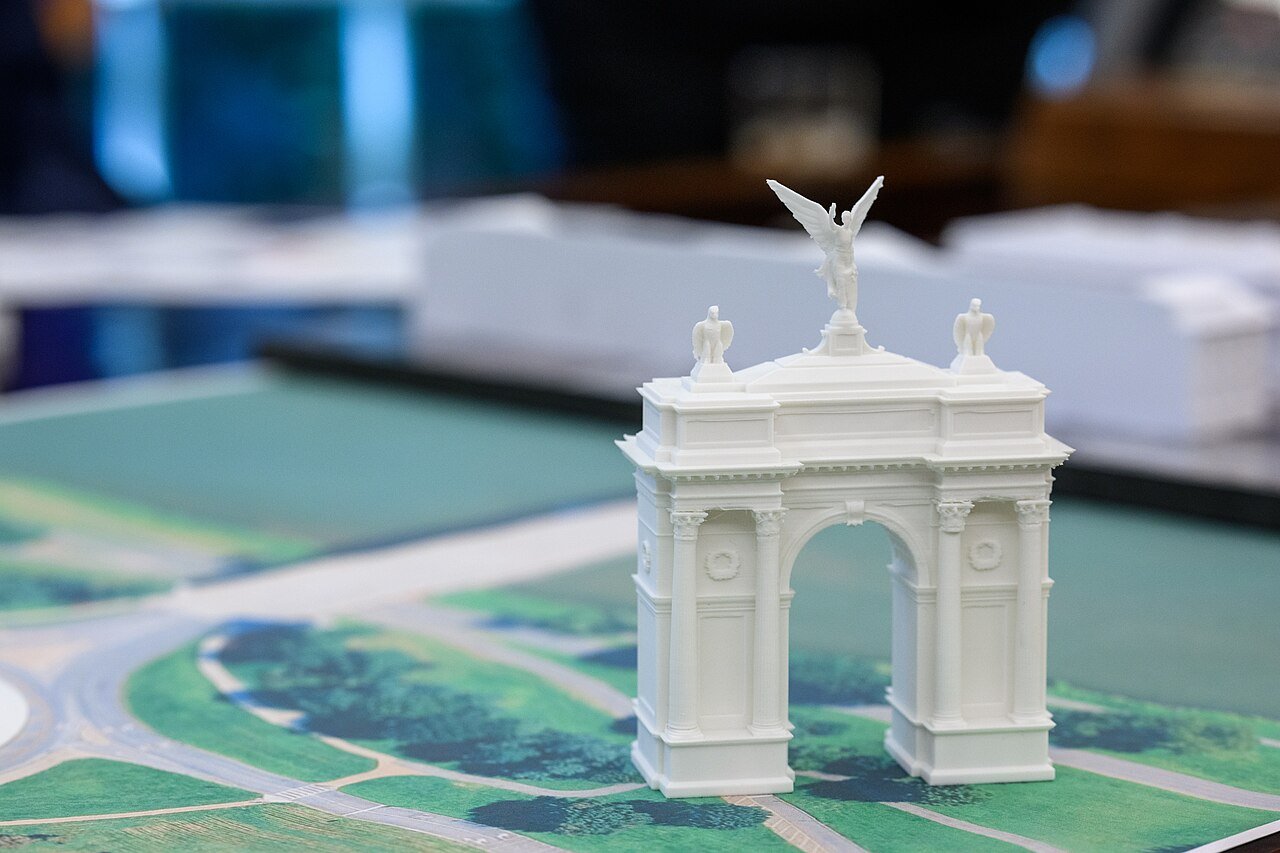
The chairman of the National Capital Planning Commission says he will vote to approve President Donald Trump’s plan for a monumental triumphal arch at Memorial Circle, the traffic circle at the entrance to Arlington National Cemetery — a project, he argues, that Congress authorized more than a century ago and that the federal government never finished.
Writing in The Federalist, NCPC Chairman Will Scharf called the empty circle “a national embarrassment” and said he applauds what he described as Trump’s effort to complete a long-deferred obligation to the nation’s veterans. Scharf’s essay amounts to a public signal of support ahead of what would be a consequential vote before the commission he leads.
A project first authorized in 1925
According to Scharf’s account, Congress passed legislation in 1925 directing the executive branch to build a monumental project linking the Lincoln Memorial to Arlington National Cemetery, with a monumental plaza on Columbia Island serving as its centerpiece. The plaza was meant to sit between Robert E. Lee’s former home atop the cemetery and the Lincoln Memorial, symbolizing what Congress saw as the enduring unity of North and South.
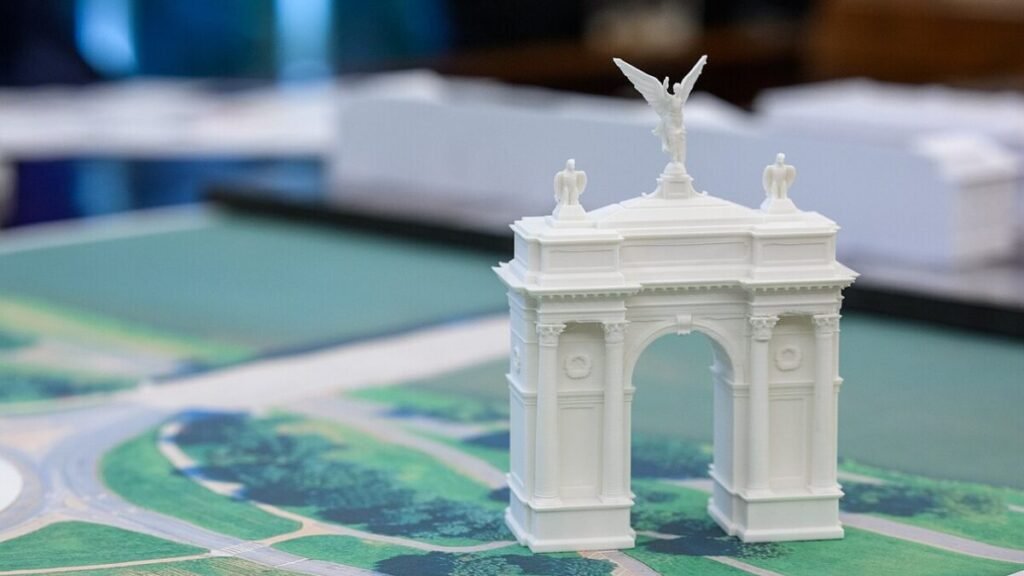
The original design called for two columns standing 166 feet tall, each topped with allegorical figures. The 1925 law, Scharf writes, was the product of a decades-long campaign to create a monumental landscape connecting Washington, D.C., and Virginia. He notes that President Andrew Jackson promoted such a project as “a symbol of the firmly established union of the North and South,” and that Daniel Webster spoke of spanning the Potomac “with arches of ever-enduring granite.” The 1902 McMillan Plan, which still governs planning in the capital, likewise envisioned a monumental bridge between North and South.
Congress ultimately adopted the recommendation of the Arlington Memorial Bridge Commission, tasking the executive branch with the project — including the “monumental treatment” of Columbia Island — while allowing design changes the executive branch deemed “necessary or advisable,” Scharf writes. Maj. Gen. Ulysses S. Grant III served as executive director of the project and later chaired the National Capital and Parks Planning Commission.
The Memorial Bridge was built. The Columbia Island portion was not. Scharf attributes the abandonment of the monumental columns in the 1930s to the Great Depression and problems with a nearby airfield that no longer exists. A later plan for fountains framed by 65-foot columns in the style of a Roman forum was also never built. Instead, in the 1940s, the government installed what Scharf describes as a placeholder traffic circle — today’s Memorial Circle — which has remained in place ever since.

Trump’s arch and the case for finishing it
Scharf argues the 1925 Act remains in effect and gives Trump the authority to finish the project. He points out that the government was still completing other elements of it as late as 1951, when the massive Arts of War and Peace equestrian statues on the D.C. side of the bridge were installed as a gift from the Italian government. Long gaps between congressional authorization and completion are common, he adds, noting that the Fourth Infantry Division Memorial — located next to where the arch would stand — was authorized in 1935 but not installed until 2000.
Grant, the project’s original executive director, called the temporary road and informal circle untenable and said the central plaza on Columbia Island “had never been undertaken” and “seems to be absolutely essential to link together the two parts of the project, namely the main bridge itself and the entrance to Arlington Cemetery.” Scharf says that after walking the grounds himself, he can confirm his predecessor’s assessment.
Trump’s arch, as described by Scharf, would echo the original 1925 vision. Its pillars would rise 166 feet — the same height as the columns first proposed a century ago — and would be topped with winged figures. An inscription reading “One Nation Under God” would span the structure. Scharf frames the location as the point: placing the arch at the cemetery’s entry demonstrates that the nation reserves its grandest monuments for the gateway to the graves of those who fought for its freedoms.
Scharf also cites practical arguments. He says the arch would offer veterans, families and visitors sweeping views into Arlington National Cemetery, and that the military has determined it would serve as a necessary platform for advance defense capabilities protecting the capital.
He closes by noting that Washington is the only capital of a major nation without a monumental arch, casting Trump’s plan as the latest in a series of projects the president has moved to finish after decades of delay.
What comes next
The National Capital Planning Commission is the federal body responsible for planning and review of development in the nation’s capital region, and Scharf’s stated intention to vote yes is a significant procedural marker for the project. His essay, published by The Federalist — which also solicited donations alongside it — is an advocacy document as much as an argument, but it lays out the legal and historical case supporters are likely to make as the proposal moves through review.
Whether the arch ultimately rises over Memorial Circle will depend on that review process and the commission’s formal vote. For now, the project’s most prominent official champion has made his position clear: after a hundred years, he argues, the empty circle should finally hold a monument.
Source: thefederalist.com — https://thefederalist.com/2026/10/05/trumps-triumphal-arch-completes-a-longstanding-national-aspiration/