
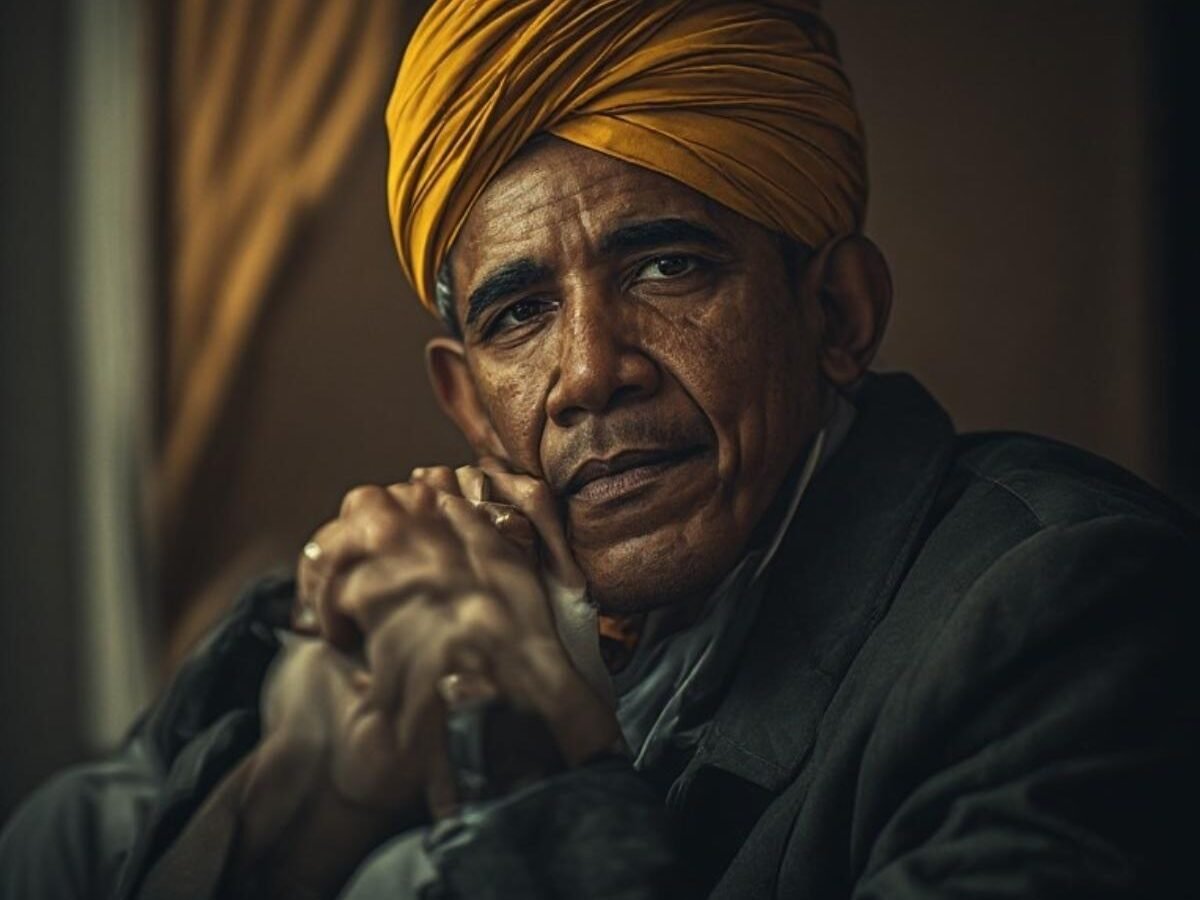
Nearly two decades after Barack Obama’s landmark Cairo speech, a new conservative analysis argues that the political transformation he long championed may finally be taking shape. Writing for American Thinker, commentator Jeannie DeAngelis contends that Obama’s presidency and post-presidential activities reveal a sustained effort to cultivate an Islamic-socialist strain within the Democratic Party — a project she says is now bearing fruit in the rise of progressive Muslim politicians.
The article, published in August 2026, points to a series of policy decisions and rhetorical choices made during Obama’s tenure, then connects them to his recent outreach to two high-profile progressive candidates. DeAngelis argues that these events are not isolated but part of a coherent long-term strategy.
Early Signals: Dismantling the Post-9/11 Framework
DeAngelis begins with the early days of Obama’s first term, when he moved quickly to dismantle the Bush-era counterterrorism apparatus. Within days of taking office, she notes, Obama prohibited CIA interrogation practices used after 9/11 and restricted interrogations to techniques in the U.S. Army Field Manual. He later ordered the closure of CIA detention centers, declared waterboarding to be torture, and directed the closure of the Guantánamo Bay detention facility, according to the article.
The author also highlights a shift in vocabulary during April 2009. Homeland Security Secretary Janet Napolitano described terrorist attacks as “man-caused disasters,” the phrase “Global War on Terror” was replaced with “Overseas Contingency Operations,” and the Justice Department dropped the term “enemy combatant.” Around that time, Obama told the Turkish parliament that “the United States is not, and will never be, at war with Islam.”
DeAngelis takes issue with that framing, arguing that jihadist groups declared war on America, not the reverse. She also points to an April 7, 2009, Department of Homeland Security assessment on right-wing extremism that warned of recruitment of military veterans and movements tied to racism, abortion, and immigration — a report she suggests was designed to divert attention from more pressing threats.
The Cairo Speech and Its Aftermath
Weeks later, Obama flew to Cairo to seek what he called “a new beginning between the United States and Muslims around the world.” DeAngelis notes that he opened with “Assalaamu alaykum,” discussed Western colonialism and America’s role in Iran’s 1953 coup, commiserated over Palestinian suffering, praised Islamic civilization, defended the hijab, and declared that “Islam is a part of America.” He also asserted that as president, it was his responsibility to combat negative stereotypes of Islam.
The author argues this presentation omits centuries of conflict between Muslim and Christian powers, from early Islamic conquests and the Crusades to Ottoman expansion and modern jihadist movements. She cites the Center for the Study of Political Islam’s estimate that Muslim conquests have caused 270 million deaths over nearly fourteen centuries.
In November 2009, Attorney General Eric Holder announced that Khalid Sheikh Mohammed and four other accused 9/11 conspirators would be tried in civilian federal court in Manhattan rather than by military commission at Guantánamo Bay — a decision DeAngelis frames as further evidence of Obama’s approach.
Ground Zero, Egypt, and the Iran Deal
DeAngelis also revisits the Park51 controversy, when Obama defended Muslims’ right to build an Islamic center near Ground Zero. She describes the move as cementing an instinct to consistently defend Islam against its American critics, using vivid language to characterize the project’s symbolism.
From 2011 to 2013, the Obama administration engaged with Mohamed Morsi’s Muslim Brotherhood government in Egypt. In 2012, Obama told the United Nations that “the future must not belong to those who slander the prophet of Islam.” DeAngelis contrasts that with what she sees as a tolerance for abortion-related policies, writing that “babies born alive after botched abortions can be left to die, but slandering the prophet… is a big no-no.”
She also highlights Obama’s repeated assertion that ISIS, which wages war in the name of Islam, is separate from Islam. Yet at the 2015 National Prayer Breakfast, she notes, he drew a moral equivalence between Islamist atrocities and the Crusades, the Inquisition, slavery, and Jim Crow.
The article goes on to criticize Obama’s championing of the Iran nuclear agreement, which gave Iran access to tens of billions of dollars in previously restricted assets. DeAngelis points to a $1.7 billion settlement with Iran, including $400 million in Iranian funds and $1.3 billion in interest, plus roughly $50 billion in restricted foreign reserves released under the deal. She describes that as “akin to handing Lizzie Borden a barrel of sharpened hatchets.”
From Retirement to Political Mentor
After leaving office, Obama appeared to settle into a celebrity retirement — kitesurfing with Richard Branson, vacationing with celebrities, and making television appearances. But DeAngelis argues he has never truly disappeared politically.
In 2025, when Zohran Mamdani won the New York City mayoral race, Obama reached out to offer to be his “sounding board.” Mamdani, a longtime supporter of the Palestinian cause, has accused Israel of genocide in Gaza and has said he would honor the International Criminal Court warrant for Israeli Prime Minister Benjamin Netanyahu.
Then in 2026, Abdul El-Sayed defeated the Democratic establishment candidate in Michigan’s Senate primary. Obama called him as well, just as he did Mamdani. El-Sayed, like Mamdani, has called Netanyahu a “war criminal,” accused Israel of genocide, questioned whether Israel should exist as a Jewish state, opposed U.S. support for Israel against Iran, supported defunding the police, and called for abolishing ICE. He has also associated with streamer Hasan Piker, who infamously said “America deserved 9/11.”
DeAngelis acknowledges that association alone does not prove agreement, but she argues that continued, selective association “can reasonably invite questions about support.”
The article concludes by framing Obama’s public engagement with these figures — combined with his decades of policy and rhetoric — as evidence of a consistent ideological project. She writes that a “progressive Islamist worldview now sits at the heart of today’s Democrat Party” and that Obama remains one of its most influential architects.
Whether readers share that interpretation or not, the piece offers a pointed synthesis of Obama’s record and his ongoing political influence in a transformed Democratic landscape.
Source: www.americanthinker.com — https://www.americanthinker.com/articles/2026/08/from-cairo-to-mamdani-obama-s-long-game/