
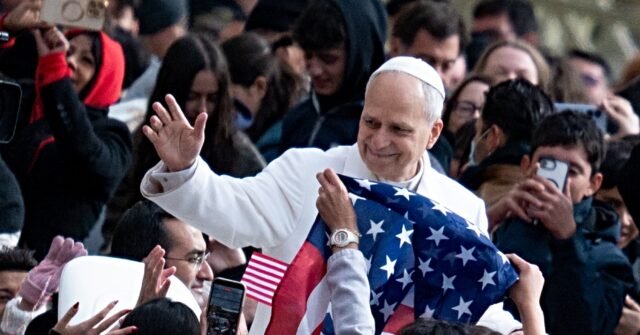
In a historic first for the papacy, Pope Leo XIV has cast his ballot in the U.S. midterm elections, the Holy See Press Office announced Friday, making him the first sitting pope to vote in an American general election.
According to Vatican News, the Chicago-born pontiff submitted a mail-in ballot from his residence in Rome — some 4,800 miles from his home precinct in Illinois — while affirming his “belief in the right and the duty of citizens to participate in democratic processes.”
The Vatican statement confirmed that Leo XIV, who was born Robert Prevost in Chicago, has maintained a consistent pattern of civic engagement throughout his life. “Pope Leo XIV has exercised his right to vote as a United States citizen, whenever he was eligible to do so,” the Holy See Press Office stated.
A Long Pattern of Civic Participation
The announcement revealed that the pope’s commitment to democratic participation extends beyond his time in the Vatican. “The Holy Father has also confirmed that, during his years of residence in Peru he exercised his right to vote whenever he was eligible to do so,” the statement noted, indicating a decades-long practice of engaging in electoral politics wherever he held citizenship rights.
The Press Office emphasized that this voting action represents “a long-standing practice of civic participation” for the pontiff, who submitted his ballot through Chicago election officials despite residing at the Vatican.
Details about the specific method used to return the mail-in ballot from Vatican City to Illinois remain unclear, though U.S. law allows eligible citizens living abroad to cast absentee ballots in federal elections. This provision extends to both civilians residing overseas and military personnel stationed away from their voting residence.
Voting Record Reveals Political Leanings
Records maintained by the Illinois State Board of Elections offer a window into the pope’s electoral history prior to his elevation to the papacy. According to the Associated Press, the man born Robert Prevost has participated in five primary elections since 2000, requesting Republican ballots on three of those occasions.
This voting pattern provides rare insight into the political inclinations of a sitting pope, though the Vatican statement focused exclusively on the broader principle of democratic participation rather than any specific political positions or candidate preferences.
Unprecedented Papal Participation in U.S. Politics
The decision by Pope Leo XIV to vote in an American election marks a departure from traditional papal practice. While popes have historically commented on political and social issues affecting nations around the world, direct participation in a national election — particularly one outside Vatican City itself — represents new territory for the modern papacy.
The announcement comes at a moment when the role of religious leaders in democratic processes continues to spark debate across the United States and globally. By framing his vote as both a “right” and a “duty,” Leo XIV appears to be making a broader statement about the relationship between faith and civic responsibility.
The pope’s dual status as both a religious leader with global influence and a U.S. citizen with voting rights creates a unique situation. Unlike most world religious leaders, American-born popes retain their U.S. citizenship and the accompanying rights and obligations, including the franchise.
Implications for Church-State Relations
The pope’s public acknowledgment of his vote may raise questions about the intersection of religious authority and political participation. While the Vatican has long maintained diplomatic relations with nations worldwide and often weighs in on matters of public policy, direct electoral participation by a pontiff in a secular democracy’s elections is without modern precedent.
Leo XIV’s statement emphasizing the “duty” of citizens to participate in democratic processes suggests he views voting not merely as a personal prerogative but as a civic obligation that transcends his religious office. This framing aligns with Catholic social teaching on civic responsibility, which has traditionally encouraged faithful participation in democratic governance.
The timing of the announcement — coming during a midterm election cycle — also places the pope’s action within the context of ongoing debates in the United States about voter participation, mail-in voting procedures, and the role of faith in public life.
As the first pope to vote in a U.S. general election, Leo XIV’s decision to maintain his electoral participation even while serving as the leader of the world’s 1.3 billion Catholics sets a precedent that future American-born pontiffs may follow. Whether this action influences broader discussions about the relationship between religious leadership and democratic participation remains to be seen, but it marks a significant moment in the evolving relationship between the Vatican and American political life.
Source: www.breitbart.com — https://www.breitbart.com/europe/2026/10/30/pope-leo-xiv-has-voted-in-u-s-midterms-via-mail-in-ballot/