

Colorado is once again headed to the Supreme Court, this time to defend its exclusion of religious preschools from a supposedly “universal” state-funded education program — the latest in a string of religious liberty disputes that have landed the state before the nation’s highest court.
In St. Mary Catholic Parish v. Roy, set for oral arguments next week, the justices will decide whether Colorado can lawfully bar Catholic preschools that maintain traditional beliefs about marriage and biological sex from participating in its taxpayer-funded preschool initiative. The case raises fundamental questions about the First Amendment and could force the court to reckon with a controversial three-decade-old precedent that critics say has muddled religious freedom protections.
A Pattern of Supreme Court Defeats
The Centennial State has developed something of a track record at the Supreme Court in recent years — and not the kind state officials would prefer. The justices have repeatedly struck down Colorado’s attempts to compel religious believers to violate their convictions, including forcing a Christian baker to design a wedding cake for a same-sex couple, compelling a Christian web designer to create websites for same-sex weddings, removing Donald Trump from the 2024 ballot, and blocking therapists from helping children struggling with gender dysphoria.
Now Colorado returns to defend another policy that religious liberty advocates argue targets people of faith.
The ‘Universal’ Preschool Program That Isn’t
The current dispute stems from a 2020 ballot measure approved by Colorado voters that established a state-funded “universal” preschool program. The legislature subsequently passed implementing legislation, with both public and private preschools eligible to receive funding starting in the 2023-2024 school year.
But participation comes with strings attached. Schools must sign an agreement pledging to offer equal enrollment opportunities regardless of various identity-based characteristics, including race, religious affiliation, sexual orientation, and so-called “gender identity.”
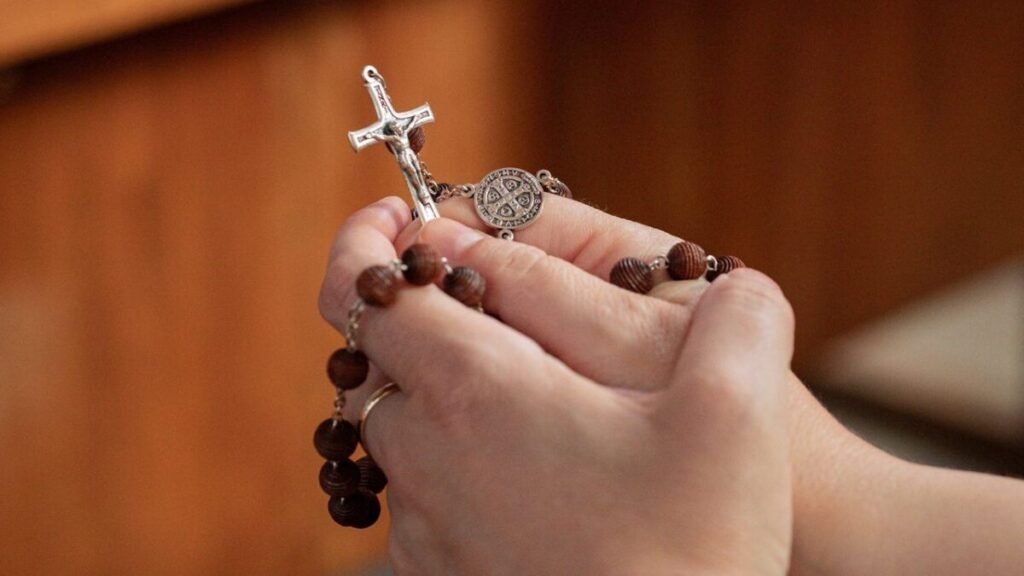
That requirement proved problematic for Catholic institutions whose religious teachings hold that marriage is between one man and one woman and that biological sex is immutable. Two parents, two Catholic parishes and their preschools, along with the Archdiocese of Denver, filed suit arguing the mandate violated their First Amendment rights by forcing them to choose between their faith and public benefits.
“This case is important because it’s an example of the ways that governments have been trying to evade the protections that the Supreme Court has spent decades reaffirming for religious exercise,” Amanda Dixon, counsel at the Becket Fund for Religious Liberty representing the Catholic plaintiffs, told The Federalist.
Lower Courts Side With Colorado
The Catholic challengers found no sympathy in the lower courts. A federal district court ruled against them in June 2024, rejecting their First Amendment claims, denying their request for an injunction, and dismissing the archdiocese for lack of standing. The court did, however, prevent Colorado from enforcing the nondiscrimination requirement as it relates to religious affiliation where a congregation preference existed.
The 10th Circuit Court of Appeals similarly sided with Colorado in September 2025, finding that the state’s contract requirement “exists in harmony with the First Amendment and does not violate the Parish Preschools’ First Amendment rights.”
Undeterred, St. Mary Catholic Parish and its co-plaintiffs petitioned the Supreme Court, which agreed to hear the case.
The Shadow of Employment Division v. Smith
Beyond the immediate facts of the Colorado preschool dispute, the case forces the Supreme Court to confront a thorny issue it has sidestepped before: what to do about Employment Division v. Smith, a 1990 decision that has shaped — and some say distorted — religious liberty law for more than three decades.

In Smith, the court permitted Oregon to deny unemployment benefits to a Native American worker fired for using peyote for religious purposes. Justice Antonin Scalia’s majority opinion represented a significant shift in how courts evaluate laws that incidentally burden religious exercise, holding that the First Amendment does not require religious exemptions from a “neutral general law of applicability.”
According to Dixon, while Smith contained “a lot of language” suggesting the majority was concerned about broad criminal prohibitions that might inadvertently affect religious conduct, lower courts and governments have since misapplied the decision in ways that undermine religious freedom.
“Governments have treated Employment Division v. Smith since it was decided as kind of a free pass to burden religion as long as they kind of check some boxes about how they structure their law,” Dixon explained. The result has been governments “continually chang[ing] the way [they’re] operating to try to get into the bucket of being generally applicable so that [they don’t] have to accommodate religious people and groups.”
Recent Precedents Point in a Different Direction
While Dixon argued the plaintiffs’ claims should succeed even under Smith, she said they’re asking the Supreme Court to revise the Smith framework to align with more recent public benefits cases involving religious exercise. Chief among these is the court’s 2022 decision in Carson v. Makin, where a 6-3 majority found that Maine’s requirement that schools be “nonsectarian” to qualify for tuition assistance violated the First Amendment.
“This Court, Carson explained, has ‘repeatedly held that a State violates the Free Exercise Clause when it excludes religious observers from otherwise available public benefits,'” the petitioners’ brief states. “To penalize religious parents for choosing a school that meets their religious needs over a secular private school is thus to impose a free-exercise burden of an especially onerous character.”
The Court’s Reluctance to Overturn Smith
The St. Mary case isn’t the first time the Supreme Court has been asked to reconsider Smith. In Fulton v. Philadelphia (2021), involving Philadelphia’s ban on a Catholic foster care agency that wouldn’t place children with same-sex couples, the court unanimously ruled for the religious organization but split on whether to overturn Smith.

Only Justices Clarence Thomas, Samuel Alito, and Neil Gorsuch supported overruling Smith in that case. Justice Amy Coney Barrett, joined by Justice Brett Kavanaugh, wrote a concurrence acknowledging “serious arguments that Smith ought to be overruled” but questioning “what should replace Smith” if the court overturned it.
That hesitancy appears to persist. While the Catholic plaintiffs presented three questions for the court to consider, the one the justices declined to take up was whether Smith should be overruled.
Dixon suggested the court might handle Smith similarly to how it recently addressed Humphrey’s Executor v. U.S., a 1935 precedent about presidential removal authority that the court overturned in Trump v. Slaughter earlier this year — potentially narrowing or revising the precedent without explicitly overruling it.
What’s at Stake
For the Catholic plaintiffs, the case represents a fundamental question of whether religious believers can participate in public life and public programs without being forced to abandon their deeply held convictions. For Colorado, it’s about whether the state can attach conditions to public funding that advance its preferred values on marriage and gender identity.
The Supreme Court’s decision, expected by late spring or early summer, could have far-reaching implications for how governments at all levels structure benefits programs and whether religious institutions can access them on equal terms with their secular counterparts. It may also determine whether Smith continues to give governments wide latitude to burden religious exercise, or whether the court will chart a new course that provides stronger protections for the free exercise of religion.
With oral arguments set for next week, Colorado’s latest Supreme Court appearance promises to be closely watched by religious liberty advocates and church-state separation groups alike.
Source: thefederalist.com — https://thefederalist.com/2026/10/30/scotus-gears-up-to-decide-whether-colorado-can-exclude-christians-from-universal-preschool-program/