

In what legal observers are calling a remarkable display of self-contradiction, defense lawyers for the Southern Poverty Law Center have filed a brief that appears to undermine the very organization they’re defending against federal criminal charges.
The October 28 filing, according to The Federalist, attacks the credibility of a government witness by highlighting problems with paid informants — while simultaneously confirming that this witness was the SPLC’s own longtime paid informant whose work was central to the organization’s reporting on hate groups.
The defense team, led by prominent attorney Abbe Lowell, argues in the brief that the government’s informant — identified in court documents as F-9 — cannot be trusted because he has “every incentive to tell the government what it wants to hear” due to his relationship with federal law enforcement. The lawyers specifically cite the informant’s “extreme biases, self-serving motives, and personal and professional misconduct” as reasons to discount his testimony.
The Circular Logic Problem
The issue, as multiple legal commentators have noted, is that F-9 was working as a paid SPLC informant for years, infiltrating neo-Nazi groups and gathering intelligence that formed the basis of SPLC reports. By attacking his credibility as an informant, the defense team is effectively attacking the credibility of the SPLC’s own informant program.
“If the government’s informant isn’t trustworthy, the SPLC itself can’t be trusted, because the government’s deceitful informant was the SPLC’s own major informant,” The Federalist’s analysis notes. “You can’t attack one without hitting the other.”
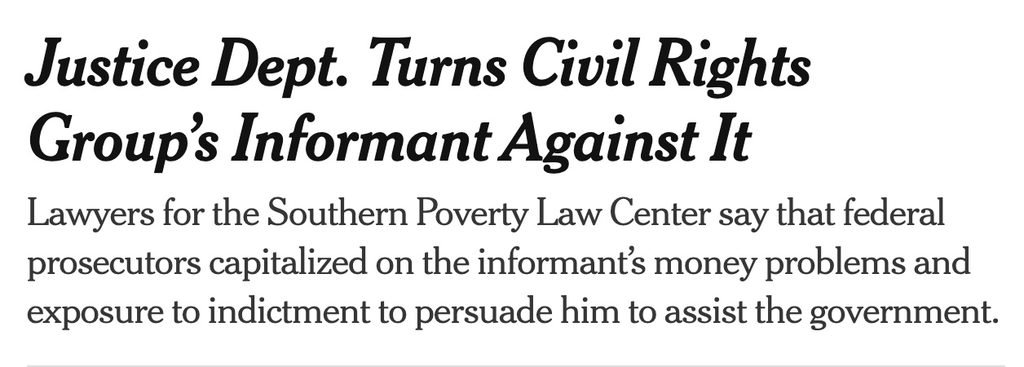
The New York Times reported on the defense filing without apparent recognition of this contradiction, according to The Federalist’s account. In a statement provided to both the Times and CBS News, lawyers Lowell and Addy Schmitt emphasized that the informant had financial incentives to cooperate with prosecutors.
Confirming Government Allegations
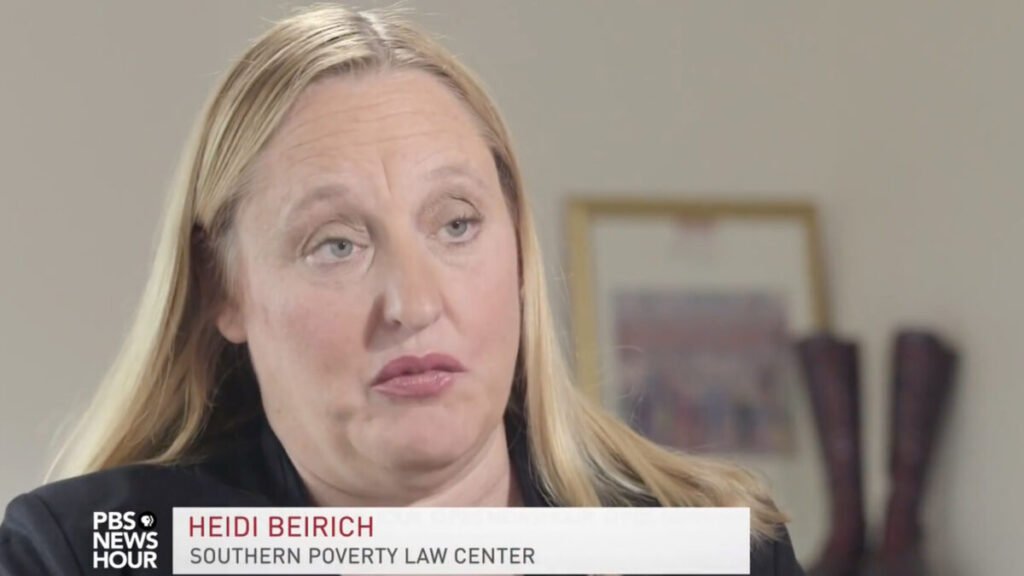
Perhaps more significantly, the defense brief appears to corroborate several key government allegations. The opening paragraph of the filing acknowledges that the informant had both a professional and personal relationship with the SPLC that ended simultaneously. According to reporting from the New York Times, this appears to reference a relationship between the informant and Heidi Beirich, who ran the SPLC’s intelligence program and is now a co-defendant in the criminal case.
The brief also explicitly states that the informant was “taking SPLC records and privileged information” — language that effectively authenticates documents the government has obtained. By describing these materials as “SPLC records” in a court filing, the defense team has made it significantly more difficult to later challenge the authenticity of evidence prosecutors may present.
“That’s a confession dressed up as an attack,” The Federalist observes.
Timeline Contradictions
The defense filing also contains information that contradicts the defense team’s own political framing of the case. While Lowell and his colleagues have repeatedly characterized the prosecution as a politically motivated action by the Trump administration, their own brief states that “starting in March 2022, F-9 began speaking to the team investigating the SPLC.”

March 2022 falls within the Biden administration, not the Trump administration as the political vendetta narrative would suggest.
Document Cache Concerns
The defense brief makes another potentially risky move by demanding that prosecutors subpoena the informant for all records he possesses relating to the SPLC. The lawyers argue that the informant may be withholding exculpatory evidence that could help their client.
However, legal experts note this demand could backfire spectacularly. If the informant is indeed holding an extensive cache of internal SPLC materials, forcing disclosure could expose damaging information the organization would prefer to keep private — both for the criminal case and for the SPLC’s public reputation.
The Break-In Allegation
CBS News reported that prosecutors have alleged F-9 once broke into the headquarters of the National Alliance, a neo-Nazi group, to steal documents while working as an SPLC informant. The defense brief characterizes this document theft as evidence of the informant’s “personal and professional misconduct.”
Yet this creates another paradox: the informant is being criticized for stealing documents on behalf of the SPLC while he was being paid by the SPLC to gather intelligence — which presumably included obtaining documents from inside extremist organizations.
“The guy who stole documents stole documents,” The Federalist summarizes. “The defense allegation is that the government’s witness from the SPLC’s informant program can’t be trusted because he’s engaged in the misconduct of providing information from inside an organization.”
No Response From Defense Team
The Federalist sent multiple questions to the SPLC’s defense team, including: “If his requests for payment discredit him, doesn’t that discredit the SPLC’s entire informant program? Did you mean to discredit your client?”
As of publication, the defense team has not responded to these inquiries, continuing a pattern of non-response to questions about the case.
Federal prosecutors have also not yet filed a response to the defense brief and have declined to comment on the ongoing prosecution, citing standard policy regarding active cases.
Broader Implications
Legal observers note that the brief presents a fundamental contradiction for the SPLC’s public image. For years, the organization built its reputation on intelligence gathered from informants who infiltrated extremist groups. Now its own lawyers are arguing in federal court that such informants are inherently untrustworthy due to financial motivations and willingness to engage in deceptive behavior.
“It’s like watching a snake eat its own tail,” The Federalist writes, noting that an organization that famously used paid informants for years is now outraged that those same informants might work with government investigators.
The case continues to develop, with prosecutors expected to file their response to the defense brief in the coming weeks. The criminal charges and the nature of the alleged fraud have not been fully detailed in public court filings, though the defense brief’s admissions have confirmed several key elements of the government’s case.
Source: thefederalist.com — https://thefederalist.com/2026/10/30/defense-lawyers-for-the-splc-appear-to-bizarrely-undermine-the-splc-in-court/