
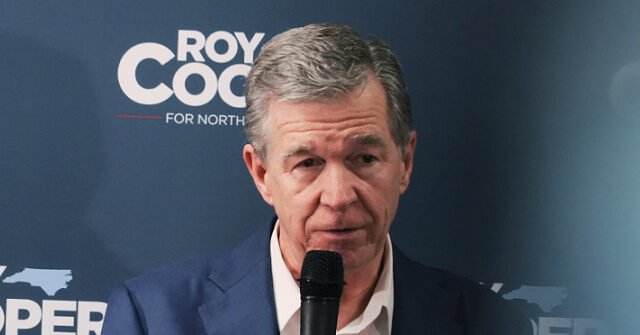
The Department of Justice has filed criminal charges against 28 foreign nationals accused of casting illegal ballots in North Carolina elections, a development that has sparked scrutiny of the state’s election oversight during Governor Roy Cooper’s tenure.
According to federal prosecutors, 18 foreign nationals were charged on Thursday with illegally voting in the state, adding to 10 individuals charged earlier in October for casting ballots in federal elections. The charges represent one of the more significant enforcement actions targeting non-citizen voting in recent years.
Federal Response and Enforcement
Department of Homeland Security Secretary Markwayne Mullin addressed the charges in a statement, emphasizing the deliberate nature of the alleged violations. “These aliens have been arrested and charged with illegally voting in multiple elections,” Mullin said. “They knowingly violated our laws. Now, thanks to the devoted patriots of HSI [Homeland Security Investigations] and our partners at the Department of Justice, these aliens will have to answer for violating the sacred right of Americans to elect their own leadership.”
The arrests were conducted through a collaborative effort between Homeland Security Investigations and the Justice Department, marking an aggressive federal stance on election law enforcement in the state.
Questions About State Election Board Oversight
The charges have renewed attention on North Carolina’s State Board of Elections, which operates under appointments made by Cooper. Critics have alleged that the board has prioritized partisan interests over election integrity during Cooper’s governorship.
In 2020, the election board worked with attorney Marc Elias to modify mail-in ballot procedures in ways that critics argued contradicted state law. According to the John Locke Foundation, a state-based policy organization, the settlements engineered through this collaboration “subverted election laws, eliminated ballot safeguards, and extended the time in which ballots could be received by an extra week.”
The board faced multiple legal challenges during the 2024 election cycle from both the Republican National Committee and the North Carolina Republican Party. One lawsuit centered on the board’s alleged refusal to verify citizenship status for more than 225,000 voter registrations.
Ballot Access Controversy
Additional litigation was required to resolve the status of Robert F. Kennedy Jr. on the state’s November ballot after he endorsed President Trump and sought to withdraw from the race. The delay in removing Kennedy from the ballot became another flashpoint in disputes over the election board’s actions.
These controversies occurred against a backdrop of what critics have characterized as persistent governance issues during Cooper’s administration. Beyond election-related disputes, Cooper has faced scrutiny over a proposed $57.8 million fund that opponents labeled a “slush fund,” questions about family business interests in a solar farm development, and connections to a company that federal regulators fined $1.1 billion while describing its conduct as “fraud for the history books.”
Political Fallout
The timing of the federal charges, coming weeks before a major election, has intensified the political stakes surrounding election integrity debates in North Carolina. Republicans have seized on the prosecutions as evidence of systemic oversight failures, while Democrats have yet to issue detailed responses to the specific charges.
North Carolina remains a crucial battleground state in federal elections, making election administration particularly sensitive to partisan scrutiny. The state has implemented voter identification requirements and other security measures in recent years, though disputes over their enforcement have persisted.
The federal charges allege that the foreign nationals voted in “multiple elections,” suggesting the illegal voting spanned several election cycles rather than a single contest. Prosecutors have not yet publicly disclosed details about how the alleged illegal voting was discovered or whether it had any measurable impact on election outcomes.
Broader Context
The prosecutions come amid ongoing national debates about election security, voter verification procedures, and the balance between ballot access and fraud prevention. While documented cases of non-citizen voting remain relatively rare compared to the total number of ballots cast, each case generates significant attention from lawmakers and advocacy groups on both sides of the political spectrum.
Cooper, who recently sought legal counsel from Elias following a media inquiry about his health, has not issued a public statement specifically addressing the federal charges against the 28 foreign nationals. The governor’s office has historically defended the election board’s independence and professionalism.
As the criminal cases proceed through federal court, they are likely to fuel continued debate about election administration practices in North Carolina and other swing states. The outcomes could influence future policy discussions about citizenship verification procedures and the coordination between state and federal authorities in enforcing election laws.
The Department of Justice has indicated that investigations into potential election law violations remain ongoing, suggesting additional charges could be filed as federal prosecutors continue reviewing voter registration and ballot casting records in the state.
Source: www.breitbart.com — https://www.breitbart.com/midterm-election/2026/10/30/democrat-roy-coopers-election-board-oversaw-fraudulent-voting/