
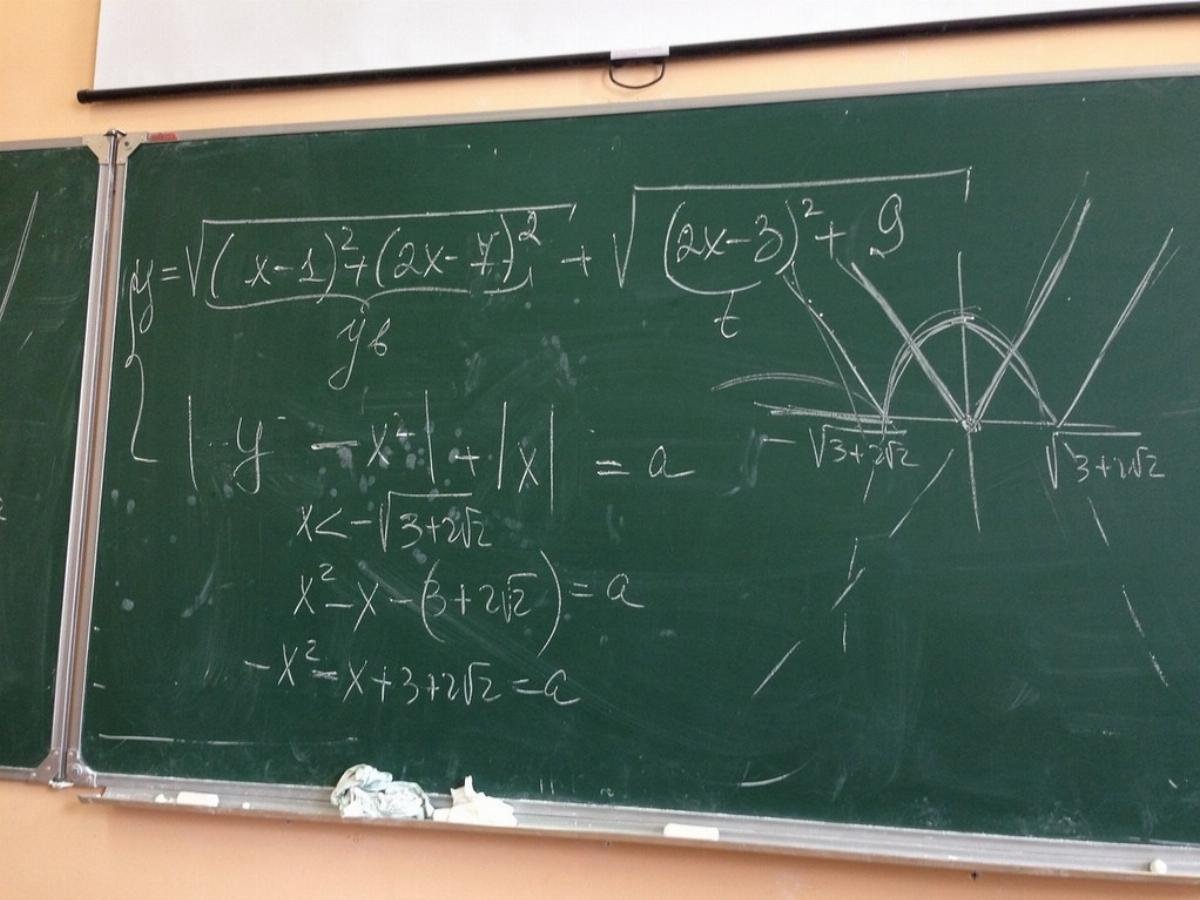
A UC Berkeley math professor’s lament about incoming calculus students needing remedial training has reignited a fierce debate over academic standards, admissions policies, and the role of ideology in higher education. The professor, whose frustration echoes a broader concern among STEM educators, reportedly told colleagues that “some students are five to eight years behind in mathematics,” leaving her to teach fractions rather than the elegant theorems of calculus.
The anecdote, highlighted in a recent American Thinker opinion piece by Noel S. Williams, offers a launching point for a broader critique of contemporary college preparedness. While the column is decidedly provocative—pointing fingers at K-12 teachers’ unions, DEI initiatives, and pandemic-era school closures—it also lands on a more specific demographic observation: the gender composition of modern undergraduate enrollment.
A Numbers Game on Campus
At UC Berkeley, women now make up roughly 55 percent of undergraduates, while men account for about 44 percent. The remaining percentage, as Williams wryly notes, is “unsettling even for Berkeley.” Those numbers reflect a national trend, but the column argues they carry particular weight in math-intensive fields, where the gap reverses sharply.
At STEM-focused institutions like MIT and Caltech, male undergraduates outnumber women. In graduate studies at Caltech for the 2025–2026 academic year, the enrollment split is 63 percent male and 37 percent female, according to the column. Williams suggests this disparity is not a failure of recruitment but an indication of divergent academic interests and aptitudes.
Rigor, Remediation, and Retention
The core issue, as framed, is that too many students are being admitted without the mathematical foundation required for calculus. Rather than lowering the bar or offering endless remediation, Williams advocates for a blunt approach: fail underprepared students and expose admissions failures.
“Rather than remediate math-deficient students, drop them or give them an F,” he writes, suggesting that admissions offices should be held accountable for accepting students who are not academically prepared for the majors they chase. He proposes that publicly funded universities track drop rates by major and route that data back to admissions teams for their own “remediation.”
The argument extends to a critique of administrative bloat. Colleges, Williams points out, now employ more administrators than professors, a fact that makes their failure to streamline admissions tests—or align them with majors—all the more puzzling. He even suggests that if a prospective student cannot declare a major, she should “reapply when she grows up.”
Gender and the STEM Gap
The column does not shy away from gendered generalizations. Williams asserts that “loquacious females dominate in the squishy leftist-arts studies,” while men continue to outperform in fields with real-world applications. He credits DEI programs and “reverse discrimination” for narrowing a gap that would otherwise be wider, a claim that will likely draw sharp criticism from advocates of inclusive admissions.
Yet the piece also touches on a more substantive point about how students engage with mathematics. Women, Williams argues, excel at memorization, but higher-level math demands analytical and conceptual thinking—an inconvenient reality for “incoherent bundles of irrational emotions,” as he bluntly characterizes some students.
A Broader Reckoning
Whatever one makes of Williams’s tone, the underlying concern is real: U.S. college students are increasingly arriving on campus underprepared for STEM coursework. The COVID-era school closures, which he attributes to “Faustian Fauci,” only widened the gaps. Teacher unions, he claims, have long resisted meaningful performance metrics, preferring to protect their own benefits over student outcomes.
The result, in his view, is a generation of students funneled into “Easy A” curricula that reward ideological conformity rather than intellectual rigor. When such students do attempt calculus, they collide with a subject that does not yield to memorization or vibes.
The solution, as Williams sees it, is not more accommodation but higher standards. If students cannot handle calculus, they should not be in the class—and, perhaps, should not have been admitted in the first place. It is a hard-line stance, but one that resonates with a growing chorus of educators who worry that the push for access has come at the expense of excellence.
Whether Bay Area universities will heed such advice remains to be seen. But the conversation—about preparedness, admissions, and the purpose of higher education—is far from over.
Source: www.americanthinker.com — https://www.americanthinker.com/blog/2026/08/another-reason-many-college-students-can-t-do-math/