Home/opinion/Sophie Cunningham’s Stand Against Men in Women’s Sports Undercut by Her Own SI Photo Shoot?
opinion
Sophie Cunningham’s Stand Against Men in Women’s Sports Undercut by Her Own SI Photo Shoot?
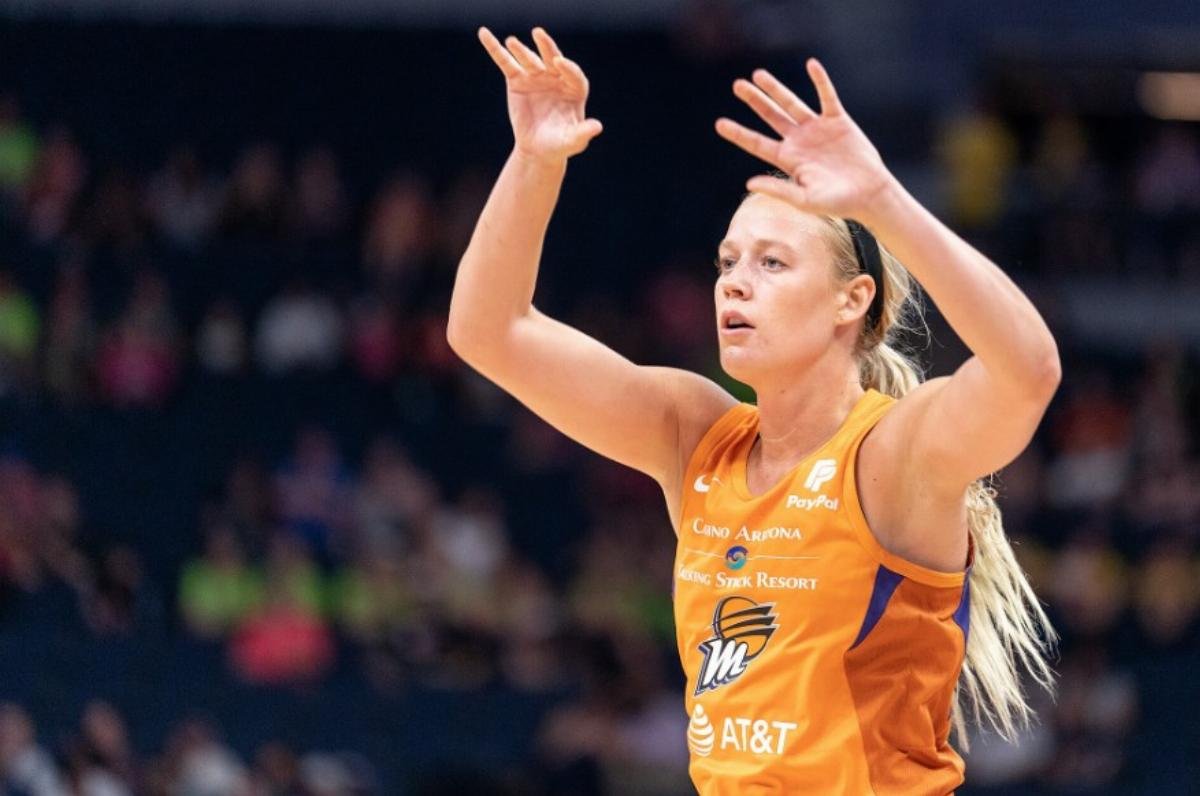
Basketball star Sophie Cunningham is hailed as a hero for speaking out against biological males in women's sports, but a conservative commentator argues her Sports Illustrated photo spread undermines her message.
Sophie Cunningham has been called a hero for being the first current professional female athlete to publicly state that only women should play in women’s sports. But now, a prominent conservative voice says the basketball star’s own actions may have undercut her message.
In an op-ed for American Thinker, therapist and grandmother Paula Rinehart praises Cunningham for her courage while sharply criticizing her decision to pose for Sports Illustrated. The piece, published August 19, 2026, argues that Cunningham’s willingness to use her body for the magazine’s swimsuit issue sends a damaging message to the very girls she says she wants to protect.
A Hero’s Stand
Rinehart begins by acknowledging the significant impact of Cunningham’s public stance. According to the op-ed, nearly 80 percent of Americans believe men should not play in women’s sports. Rinehart notes that for ten years, young women have suffered injuries, lost scholarships, and endured humiliations—damage that has become undeniable.
Cunningham, a WNBA player, has faced backlash for her statement that “Young girls should be protected from having to compete against biological males or share locker rooms with them.” Her coach disparaged her, and teammates target her. Yet, to thousands of girls in female sports, she is a new and deserved heroine, according to Rinehart.
“No other current female athlete has been willing to risk backlash that could ruin a career,” Rinehart writes.
The Sports Illustrated Controversy
The heart of Rinehart’s critique lies in Cunningham’s decision to appear in Sports Illustrated. While acknowledging the issue sold millions of copies, Rinehart questions what that says to young aspiring girls who look up to Cunningham as a role model.
“Can anyone question why girls at ever younger ages are taught to twerk in sequins and halter tops—girls schooled to see beauty as power?” she asks.
Rinehart argues that Cunningham, by posing for the magazine, is unwittingly playing into false notions as “unreal” as boys in girls’ sports. She describes it as “another gnostic form of using the body as a means to an end,” feeding the old trope of woman as a plaything.
Faith and the Sanctity of the Body
Rinehart, who is a therapist, a grandmother, and a mother, cites Cunningham’s recent adult baptism as an ironic touchstone. Cunningham described the experience as “one of the better things I’ve done in my life,” thanking Jesus.
The op-ed argues that for the whole of Jewish and Christian history, the body has mattered and holds a sanctified place. It points out that Christians created hospitals for healing the body, not just churches for the soul, and that Christ came as a man in a human body.
“A person is born male or female for purposes larger than his or her own individual self,” Rinehart writes. “Bodies come together and create whole new persons.”
To Cunningham’s courage, Rinehart pleads for an addition of a measure of modesty, saying affectionately, “put some clothes on, girl.” She warns that girls are vulnerable to “the dark exchange of sensuality for the hope of love,” but love and relationships don’t work that way.
“You don’t get to flaunt your body without thinking of the impact on other people,” Rinehart writes. “Sexuality is like kryptonite. What is meant to be a great blessing, applied wrongly, backfires and burns to the core.”
A Plea to Protect Young Girls
Rinehart concludes by expressing gratitude that an important female athlete is speaking up for the safety of girls coming behind her, saying “May her tribe increase.” But she urges Cunningham to reconsider her message.
“Until then, please, Sophie, just play basketball,” she writes.
The op-ed highlights the complex balancing act facing female athletes who speak out on controversial issues while navigating the demands of media exposure and personal choices. As Cunningham continues to be a voice for fairness in women’s sports, her actions off the court are equally scrutinized.