
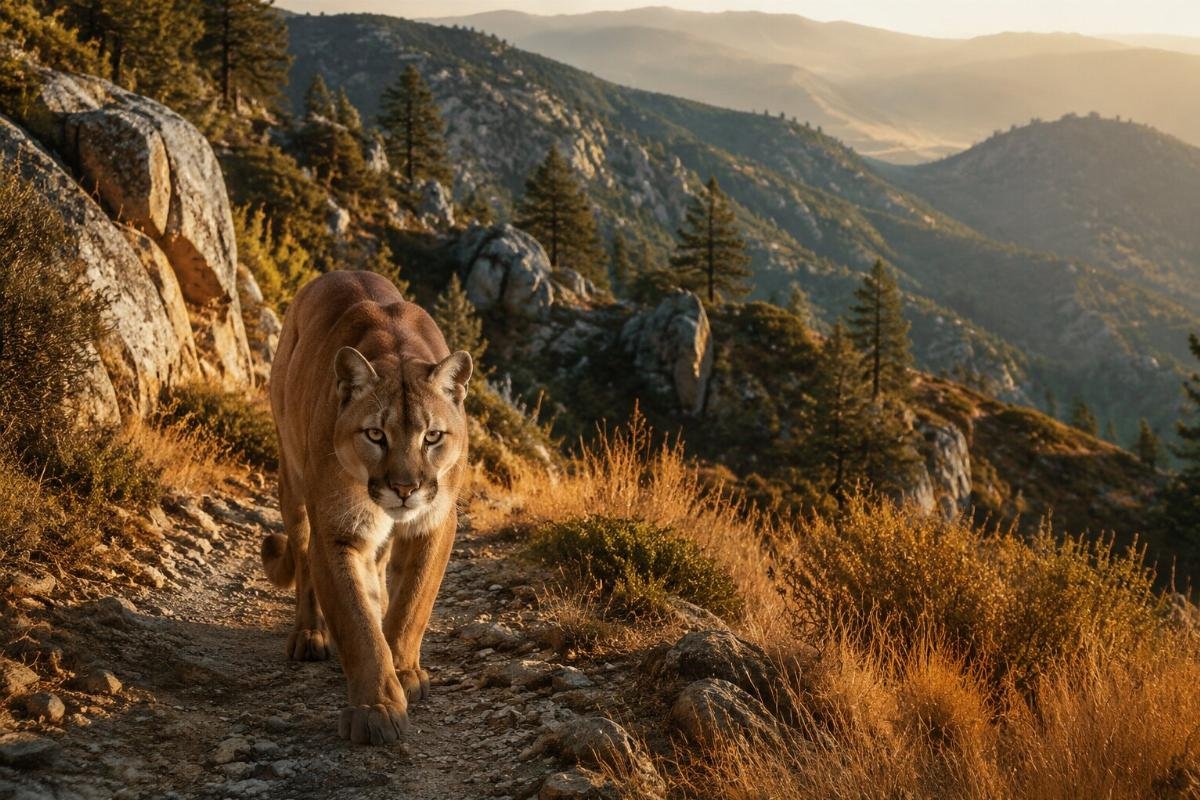
In the hillside communities above Los Angeles, a new kind of conflict is brewing—one that pits the interests of mountain lions and coyotes against the safety and property rights of human residents. It’s a clash driven by an ideology known as anti-speciesism, which argues that granting humans special moral status over animals is a form of discrimination as harmful as racism or sexism. According to a recent analysis in American Thinker, this worldview is increasingly shaping public policy, with profound implications for how Americans live.
The term “speciesism” was coined by British psychologist Richard Ryder and popularized by Australian philosopher Peter Singer in his 1975 book Animal Liberation. Singer contends that privileging human interests over those of animals is arbitrary because animals suffer pain just as humans do. Ryder goes further, comparing human exploitation of less intelligent species to fascism. From this perspective, species egalitarianism—assigning equal moral weight to animal and human interests—becomes a moral imperative, with consequences that reach into everyday life: eating meat becomes morally questionable, saving an animal may be as urgent as saving a human, and ecosystems must be shielded from human encroachment.
This “preposterous ideology,” as the American Thinker piece phrases it, gained traction in the 1990s with the concept of “rewilding,” a term coined by the radical environmental group Earth First! and later contextualized by conservationists Michael Soulé and Reed Noss. Rewilding aims to restore ecosystems by reintroducing large predators near human settlements and creating wildlife corridors that cut through developed areas. To put this into practice, Soulé and others founded the Wildlands Network in 1991, envisioning a national tapestry of “wildways”—corridors linking protected areas where wildlife would have the right of way. Maps on the network’s website show these corridors passing near residential neighborhoods, effectively suggesting that people may need to move.
The NGO’s ambitions align closely with Agenda 21 and the U.N. Convention on Biological Diversity, both products of the 1992 Earth Summit. These international agreements called for designating 50% of the U.S. as wildlands, essentially off-limits to human habitation, in the name of protecting endangered species. American Thinker warns that this would inevitably restrict property rights, yet the idea has found resonance not only among bureaucrats but also with elected officials.
Several American cities have established programs to “reverse America’s wildlife crisis,” including Los Angeles, Evanston, Minneapolis, Austin, and Albuquerque. One notable example is the Los Angeles program initiated in 2023, targeting a 36-square-mile area in the Santa Monica Mountains and foothills. It imposed strict regulations on private developments: limiting building height, area, and grading angles; mandating tinted windows to prevent bird collisions; requiring native landscaping; and demanding fences that allow small animals to pass through. The program was halted in 2025 amid budget cuts and opposition from developers and property owners, but its ambitions have not fully faded.
Indeed, the Los Angeles region is set to welcome the Wallis Annenberg Wildlife Crossing, billed as the world’s largest. This $114 million structure will span ten lanes of U.S. Route 101 between Agoura Hills and Calabasas, opening in December. Funded by $77 million from the state, $2.5 million from the federal government, $25 million from the Annenberg Foundation, and additional contributions from state conservation bodies, the project will also restore 14 acres around the freeway.
American Thinker contends that such projects overlook the very real dangers wildlife poses to humans: disease transmission, unpredictable behavior, property damage, and outright attacks. Historically, wildlife agencies would relocate or euthanize bears, lions, and coyotes when human settlements expanded. Now, the analysis argues, focusing on human safety has become anathema. In California, the risk is particularly acute—the state leads the nation in attacks by wild carnivores, and four of the nine cougar attacks nationwide since 1994 have occurred there. Wildlife managers have been sounding alarms since the 1980s, but rewilding projects are likely to increase human-animal encounters.
The rhetoric is not just hypothetical. In West Hollywood, coyotes have taken up residence in an unfinished condominium, now dubbed “Coyote Condo.” Residents report frequent sightings and sleepless nights due to howling. City officials say they are working with the property owner to resolve the issue “in a humane manner, consistent with the city’s expectations,” following a coyote “management and coexistence” plan that prioritizes non-lethal interventions. No timeline has been set, and frustrated residents are told to file reports with the Department of Agriculture.
American Thinker argues that policymakers are unwilling to accept that these animals are not victims but predators. If not confined to habitats far from residential areas, they will attack humans and become habituated to such behavior. Yet proponents of wildlife crossings and rewilding continue to push for granting animals free access to human habitations, driven by what the outlet calls a “cultish zeal” to elevate animals above humans.
This anti-speciesism, the piece concludes, is antithetical to the Judeo-Christian foundations of Western civilization. While the Bible instructs humans to treat animals with compassion, it also affirms human superiority and stewardship. The ideology, the author writes, joins other “attacks” on Western values—gender-identity politics, DEI over merit, and the replacement of critical thinking with Critical Theory. In this view, anti-speciesism is not merely an environmental fad but a fundamental challenge to the moral order.
Balancing Compassion and Safety
The debate over anti-speciesism raises profound questions. To what extent should human interests be subordinated to animal welfare? Can we coexist with predators without sacrificing safety? And how do we weigh the moral claims of animals against the practical needs of human communities? These are not easy questions, and the answers will shape the future of American landscapes and communities.
As the Wallis Annenberg Wildlife Crossing nears completion and cities continue to experiment with wildlife-friendly policies, the tension between ecological ideals and human concerns is likely to intensify. American Thinker’s critique offers a stark warning: that in the zeal to protect animals, we may be neglecting our responsibility to protect our own kind. Whether that warning is heeded remains to be seen.
Source: www.americanthinker.com — https://www.americanthinker.com/articles/2026/08/the-new-religion-of-anti-speciesism-values-animals-above-humans/