
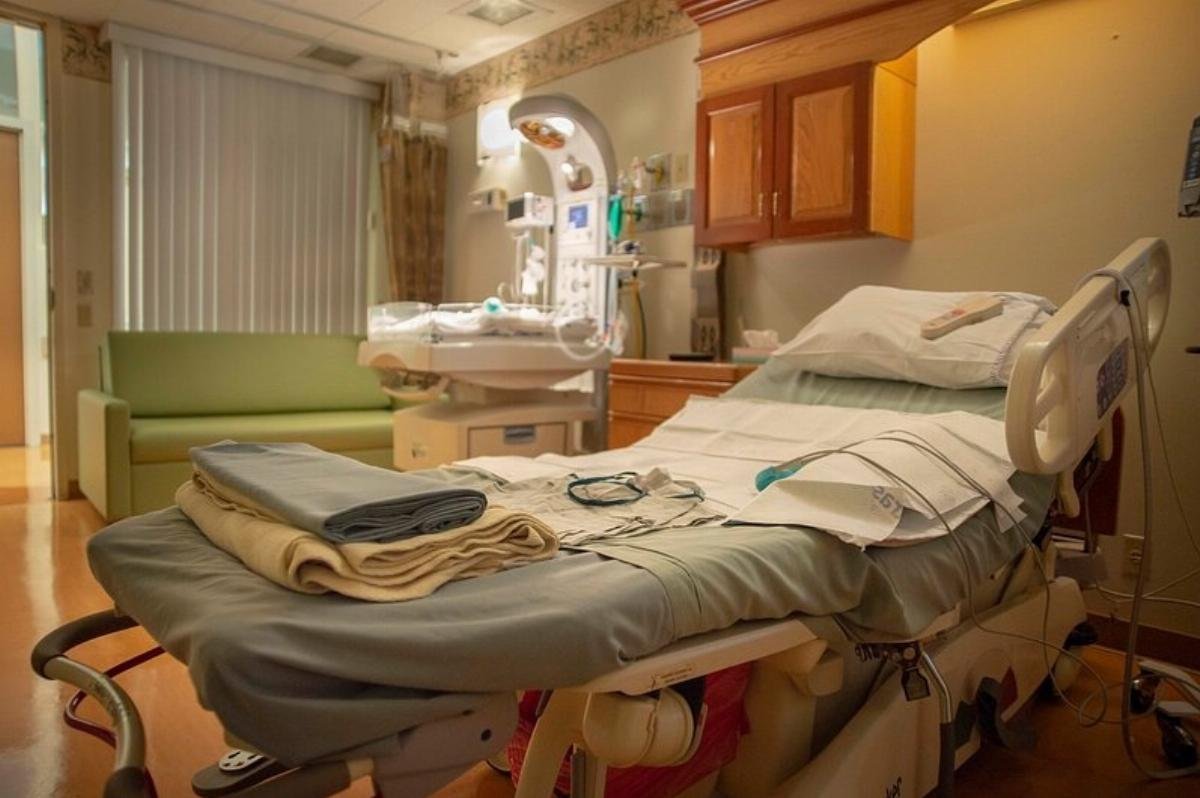
Death, the writer notes at the outset, is hard enough on its own. What made her father’s final weeks harder, she argues, was the machinery of hospital end-of-life care that kept pushing his treatment in a direction his family had not chosen.
In a first-person essay published by American Thinker, a daughter identified only by the dateline “Jamaica Plain” recounts her father’s death in a hospital following a massive stroke. Her account is not a medical study or an investigation; it is a grieving family member’s testimony about what she says she saw at the bedside, and about the gap she perceives between the language of “comfort care” and the reality of how her father was treated.
The piece turns on a recurring phrase: “Can we transition the patient to comfort care?” A hospital social worker named Rose, according to the writer, called every morning with some version of that request. Comfort care is described in the essay as “a state without pain or suffering” — an appealing phrase that, in the author’s telling, came to mean something else entirely.
From intubation to an unwelcome morphiine drip
The essay traces the arc of her father’s care in stages. His initial treatment, she writes, was competent. But after several weeks his body was not healing, and he failed spontaneous ventilator trials for a full week. Lowering his narcotics had allowed the family to talk with him, though he grew frustrated at being unable to speak back. The author, who describes her relationship with her father as distant, says her goal was to rebuild that relationship and share her Christian faith before he died.
When it became clear he was not getting stronger, she considered compassionate extubation — removing the breathing tube so he could breathe on his own “under God’s sovereign control.” She credits a medical director who had mentored her with the idea that doctors must give families permission to withdraw ventilator support, and she followed that example in leading her own relatives toward the decision. The family chose a date when all the grandchildren could be present.
The logistics were coordinated with the ICU team: a nurse would suction the airway, deflate the cuff, pull the endotracheal tube, and hang tubing to blow supplemental oxygen into his nose. The physician wanted the patient sedated before the procedure; the author asked for standby sedation only, arguing that pre-emptive sedation would impair family conversation, cause respiratory depression, and, in her words, “co-opt God’s sovereignty.”

The extubation itself was pushed to the evening shift because of a delay in getting the oxygen tube to the bedside. The physician warned that without sedation the procedure would be “grisly to watch,” and the grandchildren left the room. After the short procedure, the author writes, her father was soon breathing comfortably at 98% oxygen saturation — though a nurse’s failure to connect the oxygen to the wall caused a brief and alarming drop until her brother noticed the dangling tube.
The family gathered around the bed and relayed last words to him, with the father seated and alert, unsedated. Expecting to spend the night at his bedside until he tired and perhaps needed morphine, they instead left for home after several hours because he looked so good.
A morning discovery, and questions that followed
What she found the next morning at 7 a.m. is the emotional center of the essay. The curtains were drawn and a sign read, “talk to desk before entering.” The room was dark. Her father’s face was gray, his lips blue, his extremities cyanotic. The oxygen tube lay on the bed. His respiratory rate was 8 — very low — and a morphine drip had been turned on.
The author connected his pulse oximeter, plugged the oxygen tube into the wall, and inserted it into his nose. His oxygen level climbed from 80% to 96%, and his color improved immediately. Her fear, stated plainly, was that eight hours of low oxygen could cause irreversible brain damage.
When she sought out the ICU critical care physician, she writes that she was told removing the ventilator prematurely had put her father into an end-of-life protocol. The order form, she says, had checkboxes for morphine dosing frequency. Although she had requested oxygen by nasal cannula after extubation, the protocol did not administer oxygen. Her questions run throughout the essay: Why give morphine if he isn’t experiencing pain? Why remove oxygen when extubation causes known hypoxemia? To her, the respiratory rate of 8 and the cyanosis pointed to respiratory depression from excessive sedation.
The ICU morphine took 36 hours to wear off, and he did not open his eyes until the following morning. With oxygen resumed, he was discharged from the ICU. She asked to remain with him until transfer and was denied because visiting hours were over; she asked to be notified at transfer so she could accompany him. Two hours later, when visiting hours resumed, his room was empty and no one had called. She rushed to the new room and found him fully sedated again. According to her account, his oxygen saturation had dropped during transfer, the oxygen tank was found to be empty, and morphine had been given in a single push while a replacement tank was ordered.

She tallies the pattern: three times his supplemental oxygen was discontinued, and twice morphine was administered. The ICU sedation took a day and a half to wear off; the transit sedation lasted three days before he would open his eyes.
The social worker’s daily call
Throughout, Rose kept calling to request comfort care. The author says she never witnessed signs of pain, yet Rose recommended morphine to address pain from a bedsore and described tube feeding and oxygen supplementation as artificial and uncomfortable. The writer draws a stark contrast: no one washed her father’s face or put vaseline on his dry lips, yet the same system proposed inducing dehydration, starvation, and cyanosis in the name of compassion. “Her version of not prolonging life seemed to hasten death without benefit,” she writes.
Almost three weeks after the extubation, one afternoon, his eyes closed and he took a deep breath followed by a long pause. She held her own breath, watching his peaceful expression. There was no distress, and then his breathing became regular again. That evening, she and her husband stopped by and found him especially alert, with bright eyes that nodded encouragingly at their words. She held his hand and reminded him that God’s kingdom awaited him if he would walk with God.
The next day she had a vision of her father standing at the pearly gates. As the image faded, she called her pastor for prayer — and as they talked, her brother messaged her with what she already knew: he had died. At the hospital, a volunteer had placed a new monarch butterfly pillow under her father’s head.
Her conclusion is not a policy proposal but a personal testimony. Her father died with dignity, she writes, reconciled with his daughter, his spirit surrendered to his heavenly father.
What the essay is really arguing
Running beneath the hospital narrative is a theological argument. When death is “glamorized” as a comforter or friend, the author contends, we reject God’s gift of life and forget that “the wages of sin is death” — that God ordains our days on earth and that His redemptive plan overcomes death. She describes a persistent disconnect between “comfort care” and “death with dignity,” two phrases the medical system often uses interchangeably.
It is worth being clear about what this piece is. It is an opinion essay — a memoir of one family’s experience inside an ICU, not an audit of hospital protocols or a survey of outcomes. The physician’s rationale and Rose’s reasoning are presented as the author heard and understood them, not as statements those individuals have confirmed or defended. Readers weighing the broader debate over end-of-life care, sedation practices, and family authority at the bedside will find here one daughter’s account of what she believes went wrong, and why she thinks the language of compassion can sometimes mask decisions families never agreed to.
The essay ends where it began — with the difficulty of death, and with the conviction, on the writer’s part, that her father’s final days were shaped as much by what the system withheld as by what it administered.
Source: www.americanthinker.com — https://www.americanthinker.com/articles/2026/09/can-we-transition-the-patient-to-comfort-care/