
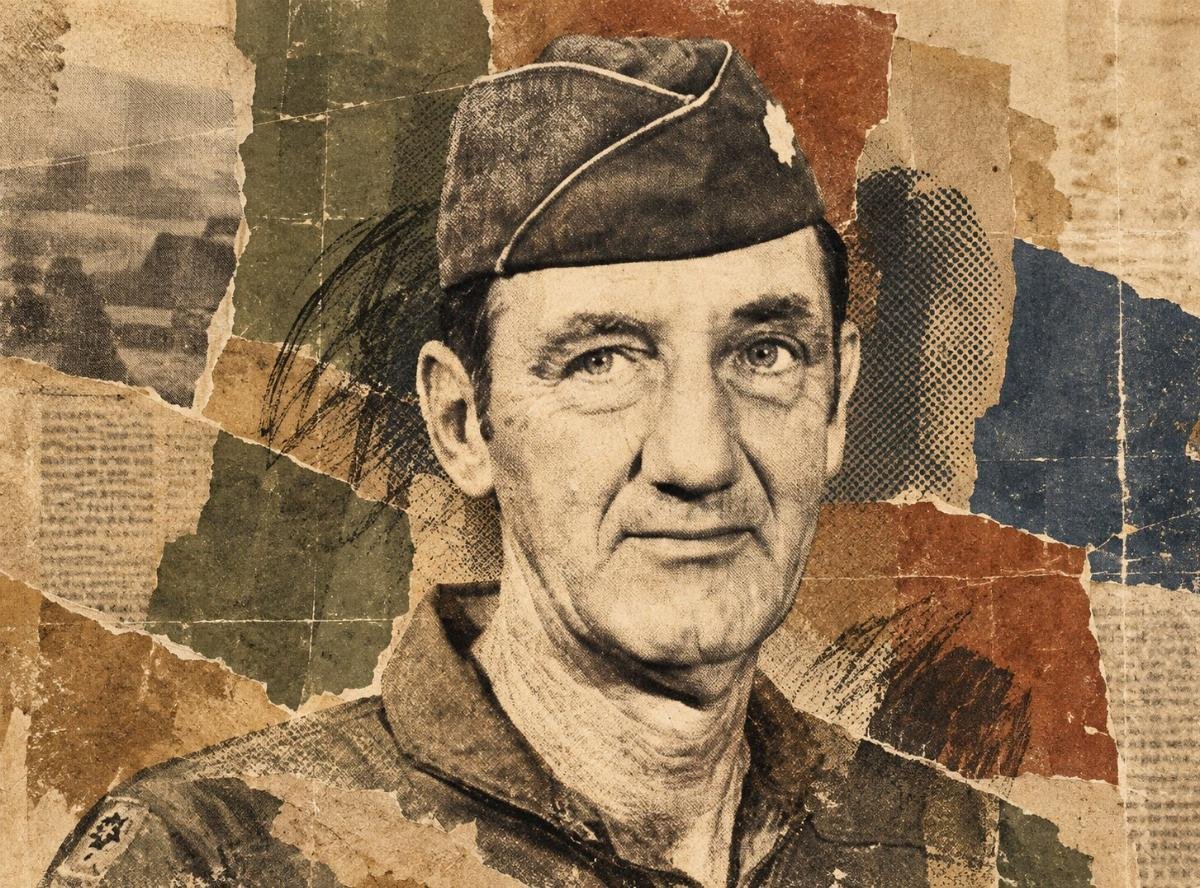
More than five decades before two U.S. Air Force F-15E crew members were shot down over Iran in April and recovered in operations involving roughly 150 aircraft, a different rescue unfolded over the jungles of Southeast Asia. Writing for American Thinker, James Zumwalt recounts the story of Lieutenant Colonel Gene Hambleton — an Air Force navigator whose evasion of North Vietnamese forces in April 1972 became the subject of what he describes as the largest, longest, and most complex search-and-rescue operation of the Vietnam War.
The comparison to the Iran rescues is instructive. In both cases, U.S. forces flew into hostile territory to retrieve individuals whose capture would carry consequences beyond the loss of a single airman. In Hambleton’s case, those consequences were especially acute.
A Plane Down, a Secret at Risk
The mission that placed Hambleton in harm’s way was part of the largest combined arms operation of the Vietnam War. On April 2, 1972, three days into that campaign, he was aboard an EB-66 — an aircraft configured to gather signals intelligence by identifying North Vietnamese anti-aircraft radar installations so they could be jammed.
A surface-to-air missile struck the plane. Hambleton was the only crew member to eject safely, and the stakes of his recovery were unusually high: he possessed top secret information and, by a grim coincidence, was himself an expert in countering the very weapons system that brought his aircraft down.
What followed was no simple extraction. According to the account, Hambleton spent more than eleven days evading enemy capture, setting in motion a rescue effort of extraordinary scale. The cost was severe — eight U.S. aircraft lost, including both fixed-wing planes and helicopters, fourteen airmen killed, and two more captured. Among those swept into the operation was Lieutenant Mark Clark, who ejected from his plane during a failed rescue attempt and was fortunate to be recovered quickly.
An Enemy That Heard Everything
As losses mounted, the reason became clear. The enemy appeared to have access to U.S. communications. Any effort to rescue Hambleton, or even to guide him toward safer ground, risked being known to the North Vietnamese as soon as it was transmitted. In effect, Hambleton became bait — a downed airman whose presence could draw more American aircraft into range.
He did not die alone in a jungle clearing, however, because someone on the rescue staff proposed a workaround that had nothing to do with cryptography and everything to do with a hobby.
The Golf Course Code
Hambleton was an avid golfer — by Zumwalt’s description, probably among the best in uniform. More usefully, he possessed a memory for golf courses that bordered on the encyclopedic. He knew the 18-hole layouts of numerous American courses, and not merely their yardages. He knew the direction of travel from one hole to the next.
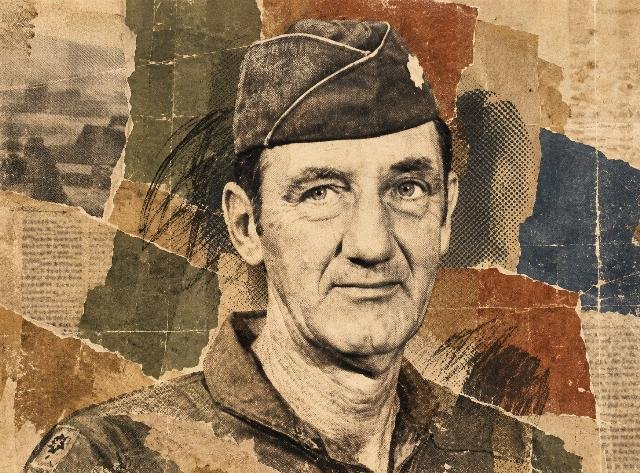
That knowledge became the encryption. Rather than broadcasting explicit directions that an eavesdropping enemy could act on, rescuers gave Hambleton golf hole numbers and distances tied to familiar courses. From those references he derived which way to walk and how far — a code that required no key, no equipment, and no transmission that would mean anything to anyone who did not already carry the same mental map of American fairways.
The method worked. It eventually brought him to a river.
There, uncertain of what awaited him, Hambleton watched a sampan move across the water with fishermen aboard. Drawing closer, he noticed that some of the men were Caucasian. They were Navy SEALs, dressed in local clothing, waiting to ferry him back to friendly lines.
What the Two Rescues Share
Zumwalt’s purpose in reaching back to 1972 is not nostalgia. He pairs the Hambleton operation with the recently disclosed details of the Iran recoveries — one crew member on the ground for six hours, the other for two days, with some 150 aircraft involved and no further losses — to make a point about continuity.
Technologies change. The signals, the aircraft, and the adversaries differ. What does not change, in his telling, is the willingness of uniformed personnel to risk their lives so that no one is left behind.
It is a story with an unusually specific moral: sometimes the most secure channel in a war zone is the inside of a single man’s memory, filled with the doglegs and par-threes of courses half a world away.
Source: www.americanthinker.com — https://www.americanthinker.com/blog/2026/09/pilot-s-knowledge-of-golf-stymied-enemy-capture/