
LINDSAY CLANCY | SHUTTERSTOCK
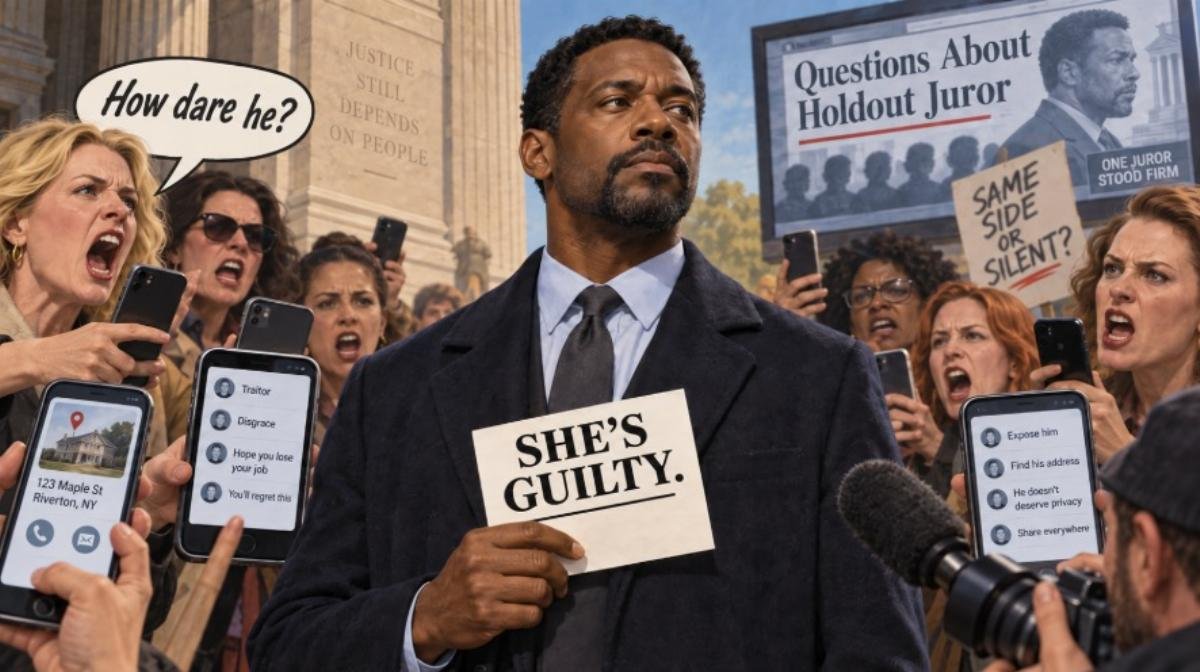
The holdout juror from the Lindsay Clancy trial had no idea what was waiting for him on the other side of his civic duty. He showed up, sat through days of evidence, and refused to bend on the one point that mattered most to him: that a mother who viciously killed her own young children deserved to be convicted for it. For that — not for a crime, not for a conflict, but for a vote — his life has been turned inside out.
According to Olivia Murray, writing in American Thinker, the juror was outed by a Boston NBC affiliate. The outlet didn’t print his name outright, but it did publish deeply personal details about his life under the headline: “Domestic violence allegations raise questions about holdout juror in Lindsay Clancy trial.” That was enough. The internet, as it always does, filled in the blanks. Soon the man was identified, named across social platforms, and subjected to a round of harassment and public shaming that has not let up.
What the Juror Actually Did
What is the man’s offense, really? He declined to join the majority on a verdict. In a criminal trial, the jury is supposed to reach a unanimous decision, and when one person holds out, the system is meant to absorb that — it’s called a hung jury, and it’s been part of the American legal fabric since the beginning. Murray frames it bluntly: he simply “bucked the ‘white savior’ feminists” by forming his own opinion based on the evidence. The complaint isn’t that he was uninformed or biased; the complaint is that he reached the wrong conclusion.
Murray’s own framing, in an opinion piece, is pointed and partisan — she writes that the holdout juror’s “cardinal sin” was declining to follow the prevailing political current, and that the reaction to him has been especially ferocious because he is a Black man who refused to fall in line with what she describes as white feminist expectations.
She also finds the irony hard to miss: the same crowd eager to punish a man over allegations of domestic violence is, in her telling, equally eager to see a woman who admitted to strangling her three children walk free. That is the contradiction at the center of the doxxing episode — not a dispute about facts but about who deserves the benefit of the doubt.
Allegations, Not Convictions
It’s worth pausing on what the NBC affiliate actually reported. The allegations of domestic violence are allegations. No conviction has been reported in the piece, no verdict on that front. Yet the story’s framing, per Murray, treats the accusations as disqualifying enough to raise “questions” about the juror’s worthiness to serve. The publication did not name him, but the specificity of the details gave internet sleuths everything they needed.
Murray notes the double standard she sees in the coverage. If previous charges of violence are enough to disqualify a person from participating in this case, she writes, then a pro-Clancy juror — a woman named Kellie Farina, who Murray says was charged with simple assault and battery under Massachusetts law — would have to be disqualified too. The implication is that the standard being applied is not evenhanded; it’s a weapon aimed at one juror and waved away for another.
The harassment the holdout juror now faces is the predictable outcome, Murray argues. She writes that he likely anticipated some of it, having spent somewhere between 36 and 40 hours in deliberations with what she describes as obnoxious and vitriolic fellow jurors. But even a thick skin doesn’t make a privacy breach like this acceptable — and the doxxing, she says, is a “massive breach of his privacy.”
The Broader Pattern
The piece is as much about a political culture as it is about one juror. Murray describes the tactics on display as Alinsky-style, meant to isolate and punish anyone who steps out of line. You can’t stop the left from deploying them, she concedes, but you can make yourself a harder target.
That’s the practical turn the article takes. Data brokers and people-search sites compile names, home addresses, phone numbers, and the names of relatives, then legally sell the package to any buyer — including police departments and private operators. The suggestion is that anyone who might one day end up on the receiving end of an online mob should get ahead of it by scrubbing their information from those databases.
Murray points to a service called Incogni, which finds the brokers holding a person’s information, sends legally binding removal requests on their behalf, and keeps sending them as data reappears. The article is presented by Incogni, with the disclosure that sponsors have no input into editorial content. That is standard practice for a sponsored section, but it’s also the mechanism by which the piece moves from outrage to solution — the juror would benefit, Murray writes, and so would Farina.
Whether or not readers act on that advice, the underlying story raises a question that has nothing to do with product pitches: what do we owe a juror who does the job we asked him to do and reaches a conclusion we don’t like? The answer from the internet, in this case, has been loud and unkind.
Source: www.americanthinker.com — https://www.americanthinker.com/blog/2026/09/clancy-holdout-juror-gets-doxxed-and-subsequently-harassed/