
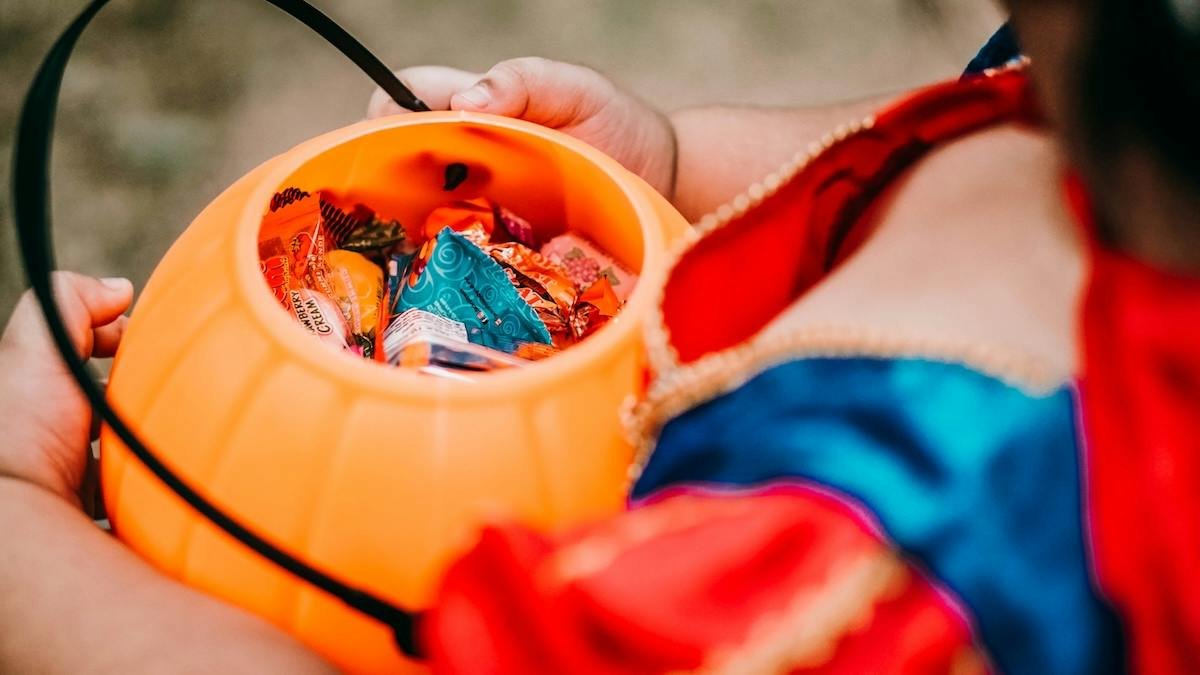
Every Halloween, parents dutifully inspect their children’s candy bags for the classic bogeymen: razor blades in apples, tampered wrappers, suspicious homemade treats. But one mother of five is arguing the real danger is far more mundane — and far more profitable for the companies that make it.
In an essay published by The Daily Wire as part of its Upstream culture and lifestyle section, Alicia Bittle writes that her children will go trick-or-treating this year but won’t be eating what they collect. Her argument: the candy itself has changed for the worse, and corporate cost-cutting, not neighborhood strangers, is to blame.
The Recipe Has Changed, She Argues
Bittle’s case rests on the ingredient history of some of Halloween’s biggest names. Take Reese’s Peanut Butter Cups. Hershey maintains its “classic recipe” is unchanged, she writes, but the timeline tells a different story: dextrose was added in the 1960s, the preservative TBHQ and citric acid arrived in the 1980s, and by 2006 the company had introduced PGPR, an emulsifier that alters chocolate’s consistency.
Snickers comes in for similar scrutiny. The bar once contained malted milk and sweetened condensed milk, according to Bittle, but now lists palm oil and artificial flavor among its ingredients. In 2019, she notes, the company acknowledged reducing the amount of chocolate used to coat the bar.
She also points to products like Reese’s Chocolate Peanut Butter Mini Hearts Unwrapped, which she says consist primarily of sugar and seed oil with 2% or less cocoa — a chocolate candy that barely qualifies as chocolate.
“The candy today truly does taste like hot garbage,” Bittle writes. “And that’s because it is.”

Lab-Grown Chocolate and the Profit Question
The essay then turns to what Bittle frames as the next phase of the industry’s retreat from real ingredients. Several major manufacturers have partnered with companies developing lab-grown cocoa or cocoa-free chocolate substitutes, she writes. Mondelēz, Lindt, and Puratos are investing in lab-grown chocolate, while Mars, Nestlé, Cargill, and Barry Callebaut have teamed up with firms working on cocoa-free alternatives. Some products are already on shelves, with others expected to reach the market by the end of 2026.
Why would companies spend years engineering an inferior product? Bittle argues the answer is in the corporate communications themselves: lower production costs, cheaper ingredients, and insulation from volatile cocoa prices. Sustainability language, in her telling, is marketing draped over a bottom-line calculation.
“There’s another word conspicuously absent from all that gushingly saccharine corporate altruism: profit,” she writes.

A Counter-Program for Halloween Night
Bittle doesn’t call for abandoning the holiday. She and several other mothers she says she has spoken with still plan to take their kids trick-or-treating and still plan to hand out candy. The twist comes at the end of the night: the collected haul goes into a bucket for older trick-or-treaters still making the rounds. One mother she spoke with lets her son trade his entire bag for a stuffed animal.
Her children will still eat candy on Halloween — just the kind she has chosen or made herself. Among the alternatives she recommends are MrBeast’s Feastables milk chocolate bar, which she praises for a short ingredient list free of seed oils and artificial flavors, along with Unreal and Justin’s as substitutes for Reese’s and similar products. For gummies and hard candy, she points to Solely, YumEarth, and SmartSweets.
The obvious obstacle is cost: buying premium candy for one’s own children is one thing, buying enough for the whole neighborhood is another. Bittle acknowledges the trade-off without resolving it, leaning instead on the redistribution plan for collected candy.
Reframing the Scary Story
The essay closes by revisiting the urban legends that shaped a generation of parents — razor blades in caramel apples, glass in unwrapped candy — none of which, she notes, she or anyone she knew ever encountered. The real threat, she suggests, was never a lone bad actor but an industry consistently finding ways to cut costs at the expense of children’s health.
“What if the most frightening aspect of Halloween is that monsters no longer have to sneak dangerous candy into our children’s bags?” Bittle writes. “We put it there ourselves.”
The piece is an opinion essay rather than a reported investigation, and several of its ingredient claims are presented without cited documentation beyond the author’s account. It nonetheless captures a broader current in parenting culture: growing skepticism of ultra-processed food and a willingness among some families to spend more for shorter ingredient lists — even on Halloween.
Source: www.dailywire.com — https://www.dailywire.com/news/my-kids-are-going-trick-or-treating-but-theyre-not-eating-the-candy