
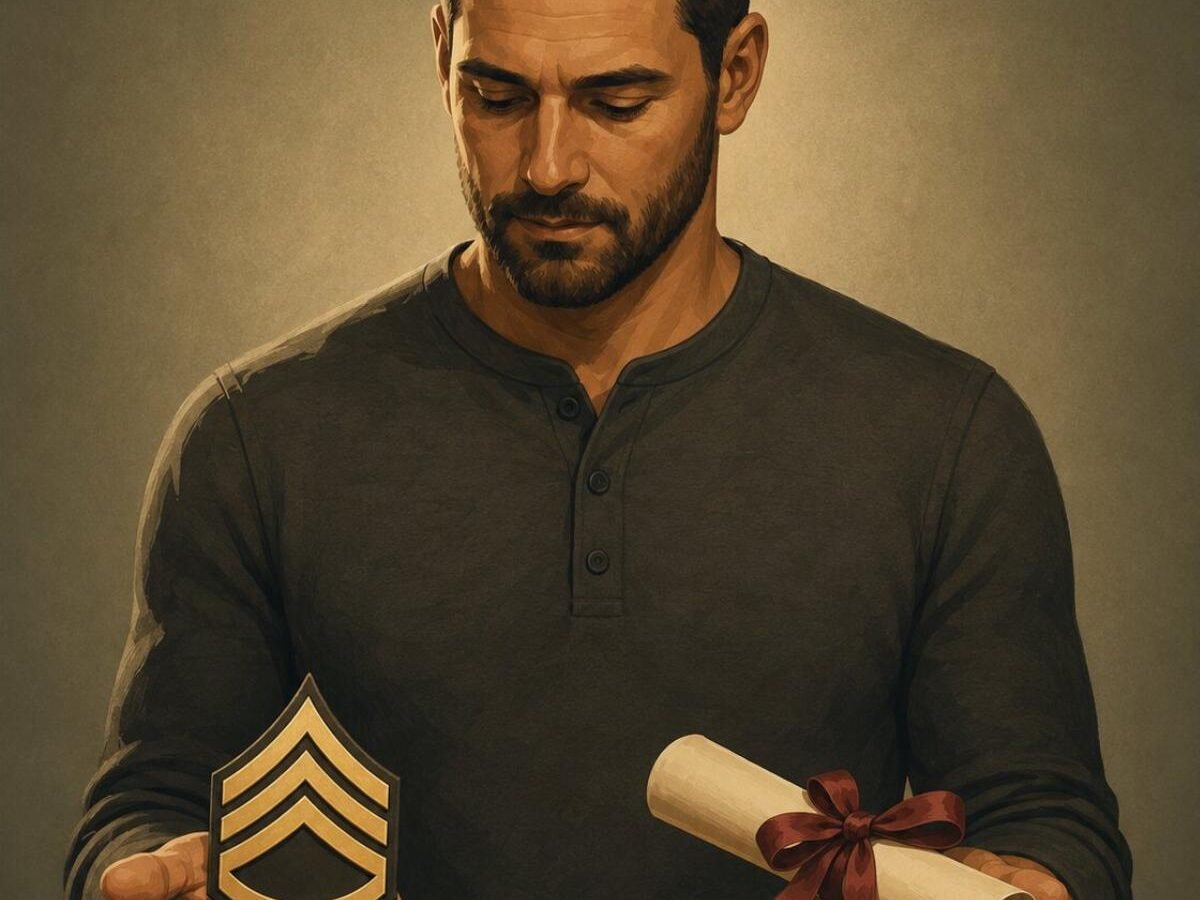
After more than 55 years inside higher education — a bachelor’s degree, a PhD, a post-doctoral cancer research fellowship, faculty posts, and a research administrator career that ran until he was nearly 79 — R.W. Trewyn makes a confession that might sound strange to outsiders: the Staff Sergeant (SSG) rank he held for about a year as a young draftee still means more to him than his doctorate.
Writing in American Thinker, Trewyn, now the author of a book on Vietnam veterans’ treatment at home, says the 19 months he spent in the U.S. Army as a 24-year-old draftee transformed his life — and that essentially every significant civilian success he later achieved can be traced back to that stint in uniform.
From Shake ‘N’ Bake School to Vietnam
Trewyn attributes much of that transformation to a 12-week Non-Commissioned Officer (NCO) Candidate Course — informally known as “Shake ‘N’ Bake” school — which he attended after basic and advanced infantry training. The Vietnam War had created a severe shortage of infantry squad leaders and platoon sergeants, he explains, and the program was designed to quickly fill that gap.
The instruction, led mostly by Army Rangers, was first-rate, Trewyn writes. The infantry leadership motto, “Follow Me,” was thoroughly ingrained during the course — and he says he applied it in combat and long afterward in his academic career. He earned his SSG stripes — three stripes with a rocker — a little over eight months after being sworn in. Out of nearly 170 graduates, he was one of eight who earned the rocker, a distinction that in peacetime would typically require years of service.
Three-and-a-Half Months of Combat
But the most important part of his military experience, Trewyn says, was leading troops in combat in Vietnam. He served there for only three-and-a-half months — from January 7 to April 19, 1969 — but in that short window he saw enough combat to employ all of his NCO training and then some.
On Groundhog Day, he started as a squad leader and by the end of the day had jumped to platoon leader, doing the job of a lieutenant. The reason, he writes, was that Delta Company’s casualties — killed and wounded — were tragically high in a bloody, day-long battle. The remainder of his time in Vietnam was split about equally between platoon sergeant and platoon leader, with the latter role involving two different platoons.
As Trewyn notes, “Follow Me” leadership comes with a heavy price in the infantry — leaders in combat positions often become casualties themselves. That reality, he explains, is why ranking NCOs were shuffled around every couple of weeks or so, assigned wherever the company needed them most, including into officer slots when necessary.
Four Leadership Principles Under Fire
In addition to “Follow Me,” three other leadership parameters were driven home under fire, having been introduced during his NCO training. They were: “think you can,” “WE not ME” — meaning selfless service — and “battlefield vision.” Trewyn says their roles have been described elsewhere, but their impact on him was lasting.
His combat duty ended April 18, 1969, when a visiting major tripped a booby trap behind him. Three pieces of shrapnel struck him, and one embedded two inches from his heart sent him to Okinawa the next day — and out of the Army after 19 months of service. Yet the leadership principles validated in combat proved invaluable from then on, he writes.
Without them, Trewyn says, he never would have become president of the university research foundation (16 years), vice provost for research and dean of the graduate school (9 years), or vice president for research (7 years). “Warfare within the hallowed halls tends to be bloodless,” he observes, “but Follow Me, think you can, WE not ME, and battlefield vision are all applicable.”
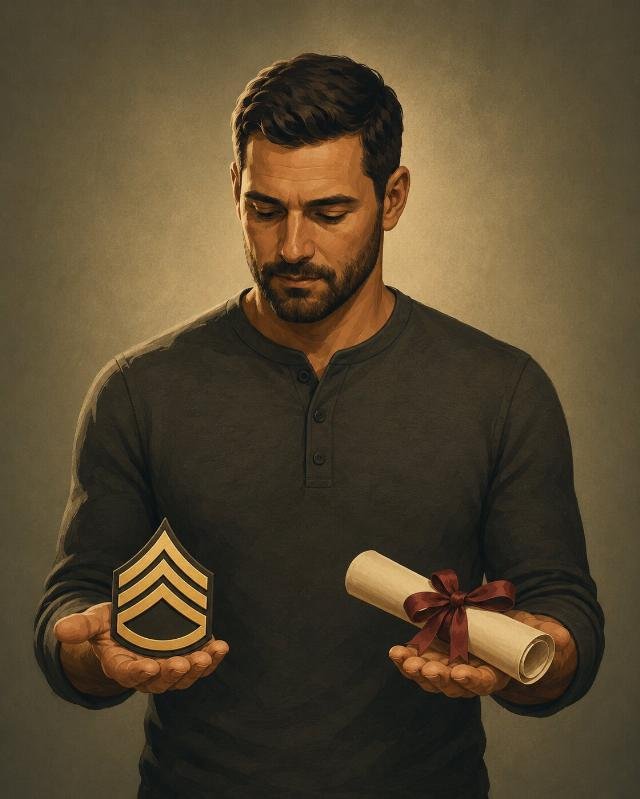
Why SSG Outranks the PhD
So how can a one-year rank mean more to him than a doctorate earned over years of study? Trewyn offers several reasons.
First, the consequences of one’s actions in Vietnam — regardless of rank — could mean life or death for teammates. His PhD was never so demanding, he notes. Had he held the SSG rank in peacetime, any lasting impacts almost certainly would have been diminished.
Second, he says he does not believe he has ever done anything better in his life than his jobs in Vietnam. “That’s just my assessment, but it’s what I believe,” he writes. He has told friends that if a person is supposed to do in life what they’re best at, staying in the Army would have made the most sense for him. But, knowing he should have died on multiple occasions in 1969, civilian life appeared more promising.
Finally, Trewyn says it’s unlikely anything could match the pride instilled while serving in a combat unit where selfless service — WE not ME — is the norm. He even admits to feeling sorry for people who have never experienced that in their lives. “Being surrounded by individuals willing to die for their brothers around them is something to treasure for a lifetime,” he writes. “That level of brotherly love is awe-inspiring, and we could use more WE not ME in America today.”
Trewyn’s conclusion is simple: “Yes, SSG still outranks my PhD … by a lot!”
Source: www.americanthinker.com — https://www.americanthinker.com/blog/2026/08/ssg-still-outranks-my-phd-over-a-half-century-later/