
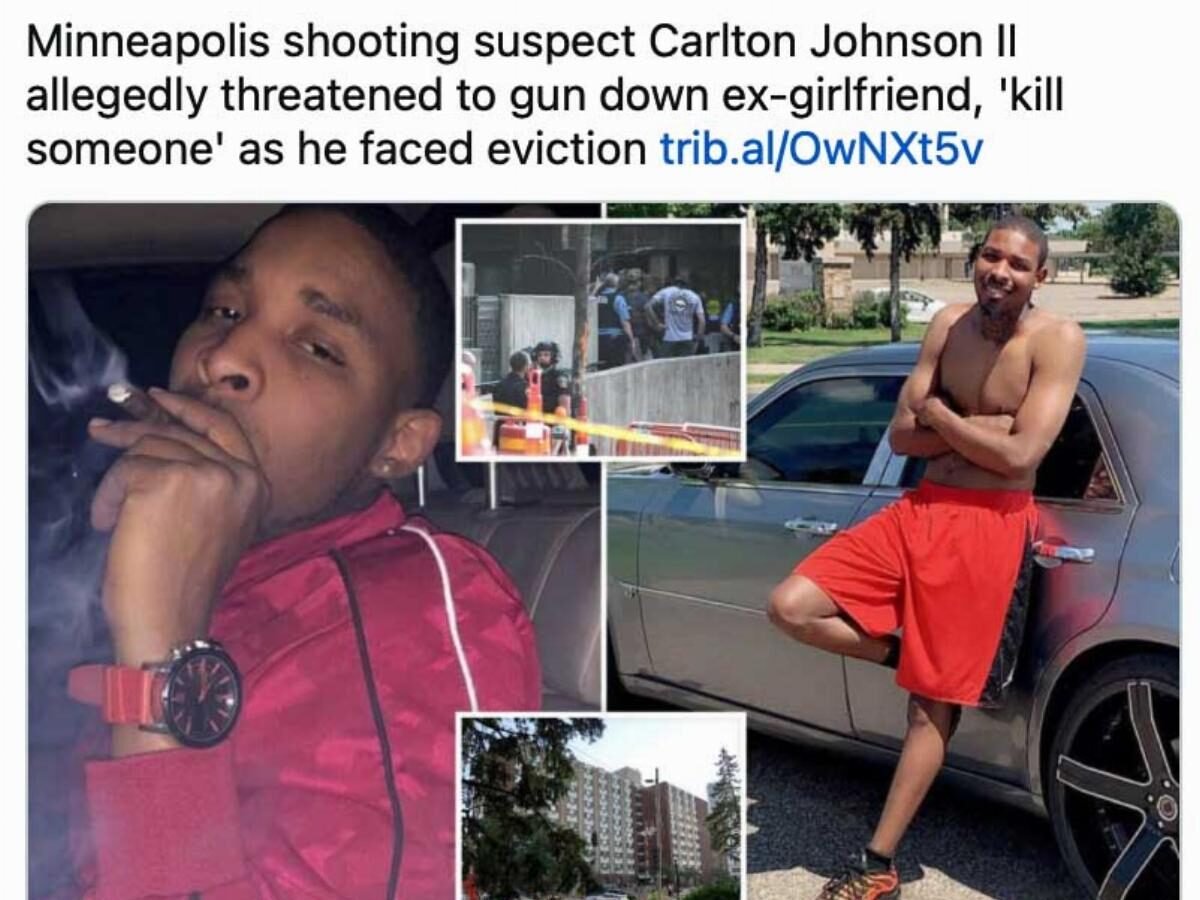
When a gunman opened fire in Minneapolis on September 2, killing two people and wounding six others — including three police officers who survived — the immediate response from city officials was one of shock. But for many observers, the tragedy felt less like an anomaly and more like a predictable outcome of a criminal justice system that had repeatedly failed to act on clear warning signs.
According to CBS News, the suspected shooter was eventually identified as a man with an extensive criminal history. The Minneapolis police chief acknowledged at a press conference that the suspect was known to law enforcement, though he did not initially release a name. CBS reported that multiple law enforcement sources later provided the suspect’s identity, and Alpha News claimed to have obtained an eviction notice showing the man had accumulated 34 criminal and traffic offenses dating back to 2011, including charges for domestic abuse, domestic assault, drug paraphernalia, and multiple citations for driving with a suspended license.
The picture that emerges from reporting by CBS, Alpha News, and the New York Post is one of a man who had been spiraling for months — making threats, brandishing a gun, and assaulting fellow residents — all while police and prosecutors apparently declined to intervene.
A trail of warnings
The purported eviction notice lists a series of incidents beginning in January of this year. In March, the suspect allegedly assaulted a fellow resident. By June, he had visited the apartment office and aggressively displayed his gun to staff. In another June incident, he reportedly told multiple people he was going to kill someone with his new gun.
Shortly after that, according to CBS, the man was outside brandishing his firearm and appeared to be targeting one specific resident. Someone called the police, but no arrest was made. The suspect then allegedly tried to bribe other residents to reveal who had called the police. It remains unclear whether he ever discovered the caller’s identity, and whether that person was among the deceased.
Staff at the apartment complex finally managed to evict the man on Wednesday — the same day he went on his shooting spree.
A neighbor told the New York Post that the suspect had explicitly threatened to shoot two property managers and his ex-girlfriend. Another neighbor described him as fighting people “every day,” yet police never arrested him.
A city still recovering from Floyd
The shooting has reignited a familiar national debate about policing, crime, and the consequences of reform efforts in major Democratic cities. Minneapolis, in particular, has been at the center of that conversation since the murder of George Floyd in 2020.
In the aftermath of Floyd’s death, the Minneapolis Police Department was defunded, and officers faced intense scrutiny and accusations of racism. The high-profile conviction of Officer Derek Chauvin and the broader reckoning that followed led to a significant exodus of experienced officers. According to the article, some 40% of the force ultimately left — many retiring early, others relocating to departments where they felt more supported.
Minneapolis has never fully recovered from that staffing crisis. The department remains desperately undermanned, raising questions about whether a lack of available officers contributed to the failure to take the suspected shooter off the street before he escalated to lethal violence.
Prosecutorial caution and police reluctance
The article argues that the problem extends beyond police staffing. It suggests that Hennepin County prosecutors have a reputation for handling criminal cases leniently and at times openly criticizing law enforcement. In such an environment, officers may be reluctant to make arrests — particularly of minority suspects — for fear that even a by-the-book arrest could result in career repercussions or criminal charges against them.
That dynamic, critics say, creates a system where proactive policing is effectively discouraged. Officers who might otherwise intervene in a deteriorating situation choose instead to minimize their exposure, hoping to make it to retirement without incident.
This is a familiar story in American cities, the article contends. When police are prevented from enforcing the law against repeat offenders, it is often the most vulnerable communities — including the minority communities that reformers claim to protect — that suffer the most from uncontrolled crime.
In this case, a man with a known history of violence and a pattern of escalating threats was allowed to remain free until the moment he chose to act. Two people are dead. Six more were injured. And the question that lingers is whether any of it was truly unavoidable.
As the article puts it: In sane cities, run by ordinary Americans, this kind of tragedy might have been prevented. In Minneapolis, it’s almost surprising it doesn’t happen more often.
Source: www.americanthinker.com — https://www.americanthinker.com/blog/2026/09/the-minneapolis-mass-shooting-was-no-surprise/