
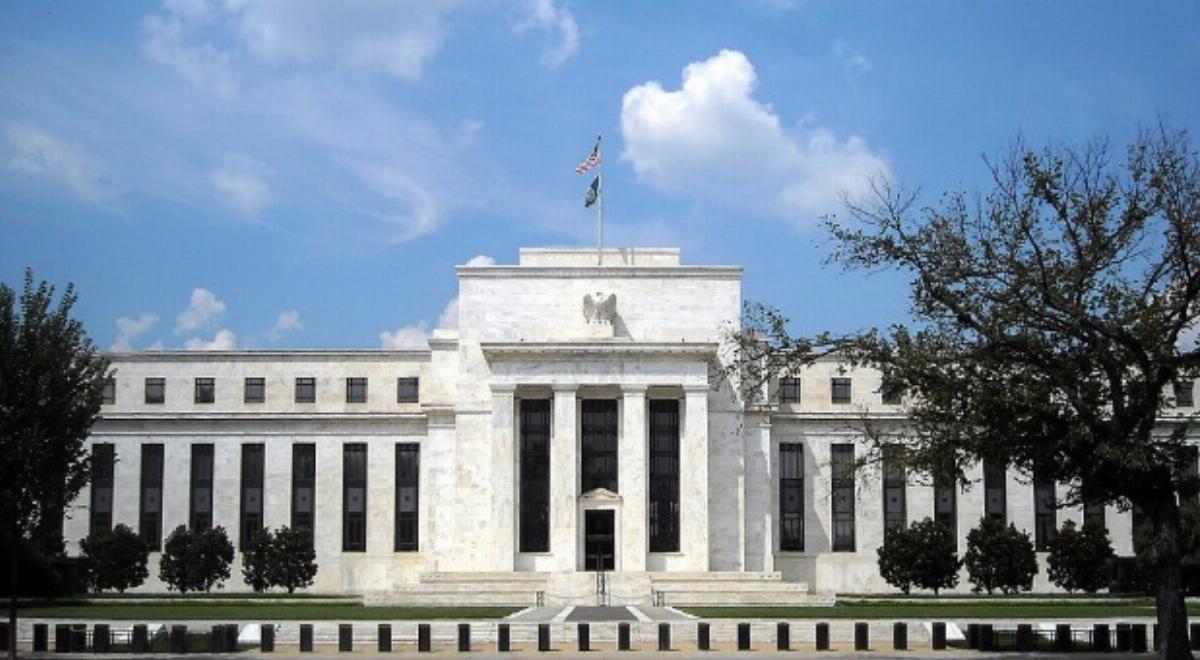
Few institutions draw fire from both ends of the American political spectrum quite like the Federal Reserve, and a new essay in American Thinker argues that restoring the central bank’s tarnished credibility will require more than good intentions. Writing for the outlet on September 27, Paul C. Binotto lays out a case that the Fed needs structural safeguards — transparency rules, conflict-of-interest disclosures, a single nonrenewable term for the chair — and, more ambitiously, a statutory mechanism allowing elected officials to intervene when monetary policy goes badly and obstinately wrong.
Binotto’s piece builds on an earlier American Thinker article by Meda Parameswara Reddy, Ph.D., published September 24, which diagnosed what it called the Fed’s core defect: “enormous discretionary power, concentrated in a committee that answers to no one between confirmation hearings.” Reddy’s proposed fixes, as characterized in Binotto’s essay, are aimed at making the Fed’s decisions legible to a public that has grown skeptical of its neutrality.
The reform menu, and where it stops
Reddy’s ideas, per the essay, include a public, rule-based anchor for policy — one that wouldn’t strip the committee of judgment but would force it to explain in writing each time it departs from a formula rather than simply declaring a new consensus. He also calls for fuller disclosure requirements to eliminate conflict-of-interest questions, and for a single, longer, nonrenewable term for the Fed chair, which would remove the incentive to angle for reappointment when a new administration takes office.
Binotto credits those recommendations as likely to improve the Fed’s legitimacy without turning it into a democratic body — a distinction Reddy himself insisted on, arguing the Fed doesn’t “need to become a democratic institution to remain a legitimate one.” But the essay’s central question is whether such fixes go far enough.
Congress, after all, built the Fed to sit above the daily grind of partisan politics — insulated so its members wouldn’t have to wade into what Binotto calls the alligator-infested D.C. swamp. The trouble, he writes, is that insulation designed to keep politics out can also shield members from the consequences of acting on their own ideological leanings. He points to the Fed’s heavy recruitment from elite academic institutions, including the Ivy League and the London School of Economics, and asks whether the ideological homogeneity of those institutions can carry over into the central bank. In 2020, he notes, the Fed’s regional bank chairs came overwhelmingly from the Ivy League. It’s hard to believe, he writes, that such backgrounds haven’t colored how officials approached a personality as forceful as Donald Trump’s.
Trump, by his nature, places extraordinary pressure on institutions and the people inside them, Binotto acknowledges — and occasions when that pressure tests the Fed’s ordinary restraints are rare. But rare occasions still call for backstop systems, he argues, especially when an institution leans as heavily as the Fed does on personal integrity and unwritten norms.
The gap no reform fills
Even taken together, Reddy’s proposals and additional backup restraints leave a constitutional question unresolved, according to the essay: the precise scope of Federal Reserve independence. The Supreme Court has recognized the Fed’s distinctive historical status and its statutory protections, but that doesn’t settle the limits of its independence in every scenario. And neither set of reforms answers what to do when the Fed fixes stubbornly on a long-term policy that visibly damages the national economy.
Reddy gestured at that possibility when he wrote that the Fed’s 2021 insistence inflation would prove transitory “was not a minor technical miss but a forecasting failure serious enough to justify structural reform rather than an apology.” That framing matters, because current law offers no obvious escape route. There is, Binotto writes, no statutory mechanism letting Congress or the president override a specific Federal Reserve monetary-policy decision on an emergency basis without first rewriting the governing law. Congress retains broad authority to amend the Federal Reserve Act, redefine the Fed’s mandate, alter its powers, or restructure the institution outright. But neither branch can simply order the Federal Open Market Committee to raise or lower rates because elected officials think the policy is mistaken.
So what would a narrow, rare-circumstance intervention mechanism look like without gutting the Fed’s everyday independence? Binotto finds an unlikely model in the War Powers Resolution of 1973 — the much-criticized law meant to limit the executive’s ability to wage prolonged war. He sketches a rough analogue: a “Federal Reserve Powers Resolution” that would give Congress an avenue to intervene in Fed policy under strict conditions, while giving the executive a check on any congressionally approved intervention.
Under one possible design, Congress could pass a resolution authorizing limited executive intervention in Fed policy, with the executive holding sole discretion over whether to actually exercise that authority. The final shape, Binotto concedes, would be up to Congress to debate and structure in consultation with the executive.
His bottom line is layered: adopt Reddy’s credibility fixes, add redundant safeguards to keep decision-making unbiased even if the primary mechanisms fail, and — most importantly — write legislation giving both the legislative and executive branches authority to step in under strict circumstances when Fed policy becomes failing, obstinately fixed, and potentially catastrophic.
An old tension, restated
The essay lands in a moment of unusually high public skepticism about the Fed’s nonpartisanship. Binotto notes that many Americans, particularly those who see the central bank as working against Trump’s economy, doubt its neutrality — while both sides of the political spectrum say they value an independent Fed. His argument is that independence and restraint aren’t opposites. The stilts holding the Fed above politics, as he puts it, were meant to insulate it from political influence, not to let its members step over the constitutional system of checks and balances.
Whether Congress has the appetite to legislate any of this is another matter. The essay’s own framing suggests the author knows the intervention mechanism is the hardest sell, which is precisely why it’s paired with the easier-to-swallow transparency and term-limit proposals. But for readers worried about an institution that answers to no one between confirmation hearings, the piece offers something more concrete than a demand for better behavior: a checklist of restraints, plus one novel emergency valve modeled on a law that has spent five decades being denounced as both too weak and too strong.
Source: www.americanthinker.com — https://www.americanthinker.com/articles/2026/09/the-fed-needs-fixes-beyond-simply-restoring-its-credibility/