
In a first-person essay published by American Thinker, writer Caren Besner argues that the people American Jews might reasonably expect to sound the alarm about rising antisemitism—rabbis, professors, educators, politicians, journalists—have instead stayed quiet, minimized the threat, or avoided the subject altogether for fear of giving offense.
The piece, dated September 25, 2026, is framed by an informal survey Besner says she conducted after the Jewish holidays, when she asked friends whether their rabbis had raised Israel, Iran, or antisemitism from the pulpit during temple services. Most, she writes, had not.
A recurring silence, by the author’s account
Besner says the result no longer surprises her. Fewer than 5% of Jewish leaders discussed those issues at all, according to her informal count, and she describes having reached a point where the pattern is expected rather than shocking. The essay presents that finding as emblematic of a broader reluctance she sees across academia and other credentialed circles.
She reaches back more than a decade for examples. In 2014, she writes, she showed a Jewish friend video of hundreds of demonstrators in Paris chanting a hostile slogan aimed at Jews. Her friend’s anxiety eased, she recalls, after a well-known and highly credentialed history professor reviewed the footage and dismissed it as one small incident not worth worrying about.
Later, she says she took courses at a university lifelong learning center and asked the director of education—who she notes was Jewish—to screen the 2016 documentary Hate Spaces, which examines antisemitism from the left and from Islamists on college campuses. According to her account, he walked away quickly, telling her it would offend people.
The essay’s central complaint is that even people who should know better, or at least should be willing to look, seem driven to avoid confronting what she says is plainly in front of them.
A dinner that became a confrontation
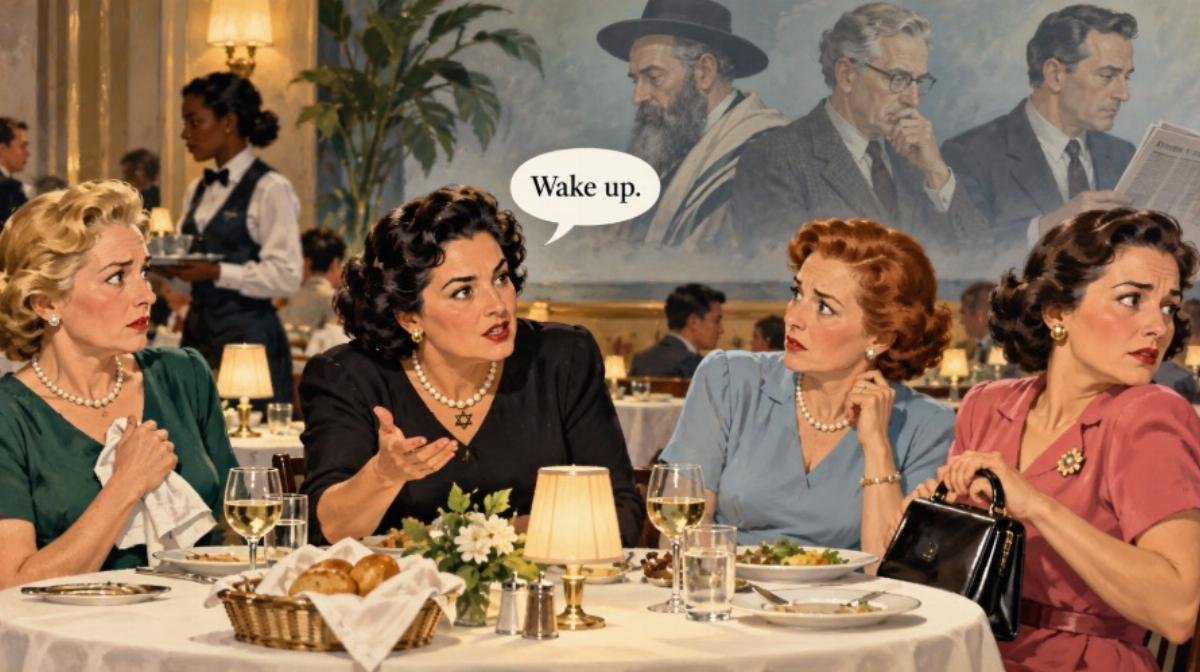
Much of the column is devoted to an evening out with women from a club Besner belongs to. When she heard the group criticize President Trump, she says she spoke up in his defense and asked why they disapproved. She describes the reaction as visceral—friends going pale or appearing physically stricken—and says things escalated when she argued that keeping their heads in the sand would invite another Holocaust and eventually put figures like Zohran Mamdani, or someone similar to Abdul El-Sayed, in the White House.
At one point, she writes, a woman at the table whispered to a friend that the Israeli television series Fauda depicts Israelis behaving the same way Arabs do. Besner says she responded that this is precisely why such portrayals exist—to appeal to Jews who conflate Prime Minister Benjamin Netanyahu and Israel with ISIS. She describes the woman’s expression as something out of The Exorcist, and says another woman retreated to the bathroom.
Besner also says she asked the group whether they knew about Sharia law, and that they did not. Whatever else the evening accomplished, she writes, they left knowing how it could affect their children and grandchildren.
She goes on to argue that viewing events through what she calls a Trump Derangement Syndrome lens makes it impossible to consider what she contends he has done for Jews—citing, as one example, closing the border to what she describes as potentially millions more hate-filled “Caliphaters.”
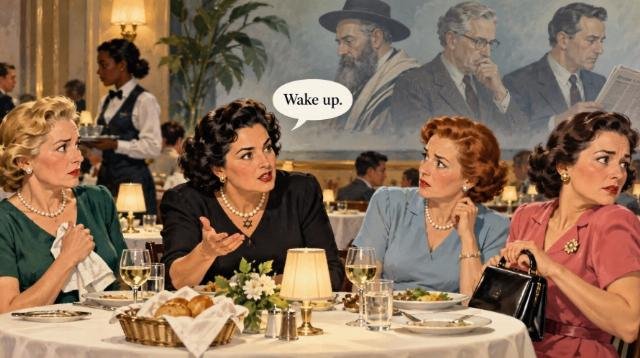
The surprise of the night, in her telling, was that the woman she had always found over-the-top and obnoxious ended up agreeing with her, saying she had shifted from progressive politics after the October 7 attacks. The two, Besner writes, became friends. The other three she characterizes as passive, cloned leftist appeasers from a “go-along-to-get-along” school—though she adds that they did not hear the usual talking points that evening.
She suspects it may have been one of the few chances those women had to encounter something that challenged beliefs they hold firmly but, in her view, have not examined. Their inability to respond with logic or common sense, she suggests, may reflect a buried recognition that at least part of what she said was true. She expects they will never invite her out again, and writes that she is glad of it.
From one dinner to a larger question
The essay then widens its lens. For years, Besner writes, Jews have been confronted with warning signs about antisemitism, hostility toward Israel, radical Islamism, and campus conditions. Yet the figures who ought to be raising alarms—rabbis, professors, educators, politicians, journalists, and other credentialed experts—too often downplay what is happening or refuse to discuss it because someone might take offense.
Her sharpest charge is that these leaders fail to grasp their own culpability in legitimizing and emboldening the enemies she describes. The question she poses to readers is who will warn the Jews, given that this has been unfolding for some time.
Her answer, offered wryly, is that sometimes it takes one or two people at an uncomfortable dinner to spread the word. She closes by tying the argument to free expression, writing that the ability to speak one’s mind is now more crucial than ever to the republic.
The column appears in American Thinker’s religion and antisemitism section and ends with a solicitation for reader donations.
Source: www.americanthinker.com — https://www.americanthinker.com/blog/2026/09/does-anyone-have-the-courage-to-warn-america-s-jews/