
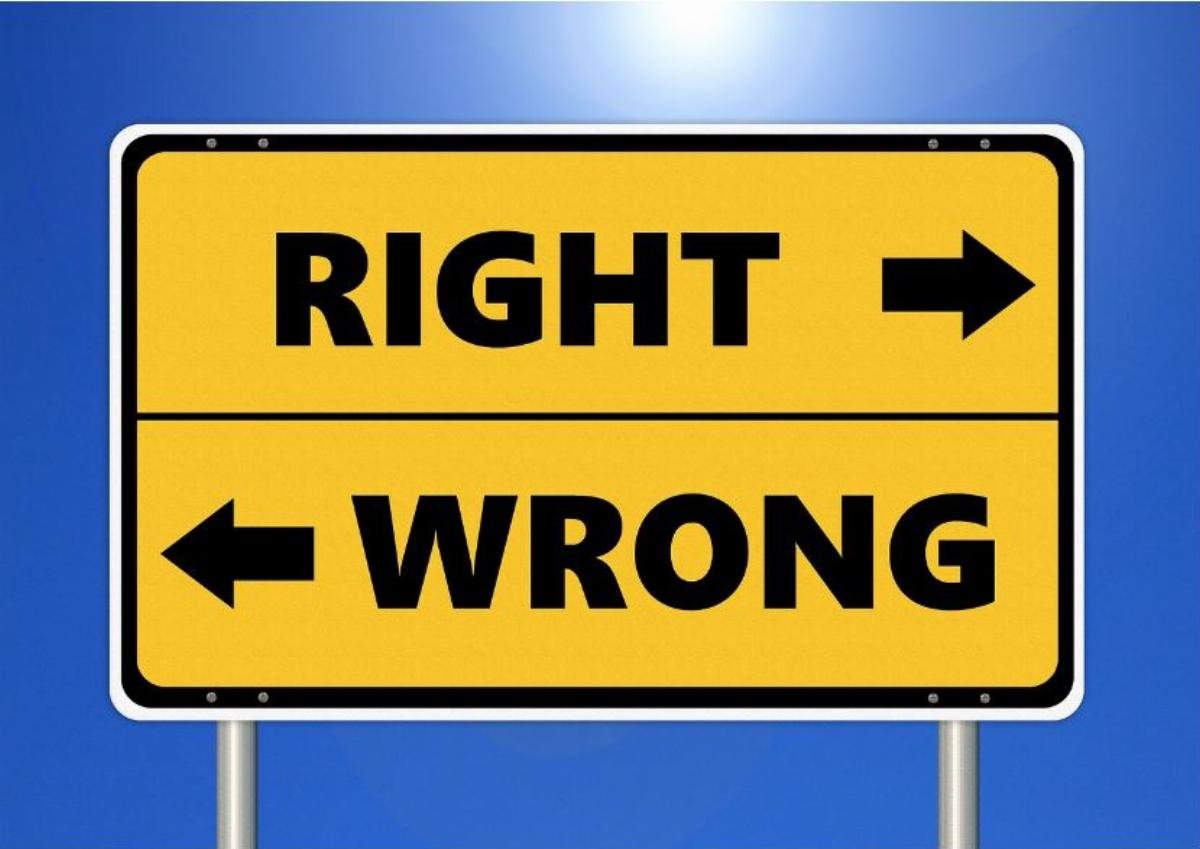
Good ideas and evil ideas often arrive wearing the same face. That is the central claim of a new column in American Thinker, in which author Jay Davidson argues that both begin with a vision — and that vision usually promises to solve a problem people already have. Politicians, he writes, fit the same mold.
The essay, published September 12, 2026, under the magazine’s Religion and Morality section, poses a question that Davidson acknowledges has occupied philosophers since antiquity: how do we tell whether a vision is good or evil? And if something evil can sound good at the outset, what should guide the choice between paths?
His answer is not an ideological label. It is a method: look past the surface rhetoric to the consequences, and decide whether a given course of action leads toward freedom or toward enslavement.
A Question Each Person Must Answer
Davidson frames the search for that answer as a personal undertaking. While he notes that many great thinkers have written down their conclusions or passed them along through the spoken word, he argues that readily available knowledge does not spare anyone the work of reaching a conclusion in their own lifetime.
From there he moves to a theological and political claim: that the Creator’s expectation that each person seek this answer reflects an individual nature, and that this individuality is the source of the rights each person holds. He traces that idea to the nation’s founding, pointing to the Declaration of Independence as its first expression.
Set against that framework, the essay suggests that systems promising collective salvation deserve particular scrutiny — not because their stated goals are ugly, but because their stated goals are attractive.
Communism, Socialism, and the Test of Outcomes
Davidson uses communism and socialism as his case study. On the surface, he concedes, Engels, Lenin, and Marx envisioned a future that helped the common man. Their mantra rests on the concept that all men are created equal — a concept Davidson accepts as true — but with an added premise: that outcomes should be enforced by a greater entity.
That greater entity, in practice, turned out to be central-controlling politburos. Davidson pushes the point further, asking what real difference exists between government and monarchy if both amount to a controlling entity.
He also draws attention to language. Communism, he writes, employs euphemisms — “together,” “collectivist,” “equity” — terms that sound pleasant and that fit comfortably within a religious and moral heritage of noble cause.
His instruction to readers is to set the vocabulary aside and examine the result. Communism and socialism, he contends, lead inexorably to control, and away from individual freedom and liberty.
Capitalism, Fair Trade, and the Threat of Cronyism
The essay’s alternative is an economic system Davidson says aligns with individual freedom and the right to choose — the sanctity of the individual on which he believes the nation was founded. He describes that system as fair trade: a willing buyer and a willing seller, without outside coercion. That, he writes, is capitalism.
But he attaches a condition. For capitalism to function, he argues, it must be free from federal restrictions — with the Rule of Law as the exception. Rule by regulation, in his telling, is simply control exercised by a bureaucrat in the administration.
Davidson then turns his argument against a practice often associated with the right as much as the left. Capitalism, he writes, is the exact opposite of cronyism, which he defines as an unholy alliance of public and private entities formed to stifle competition. Cronyism, he says, uses the power of government to restrict free choice.
That, he asserts, is the nature of the economy today. And here he offers an unusual concession to the political left: in one sense, he writes, the left is correct that the economic system is rigged. He calls it ironic that leftists complain about a condition he attributes to their own side, tracing the bureaucratic apparatus to President Wilson, whom he credits with creating what he calls the bureaucratic monster that rules American life today.
He is careful not to let the other party off the hook. Republicans, he adds, are no better — especially those who support big government.
Not R Versus D, but Freedom Versus Control
Applying his principle — that all men are endowed with life, liberty, and ownership — to what he calls the current state of confusion, Davidson narrows the political field to two options. The meaningful distinction, he insists, is not Republican versus Democrat. It is control through big government versus individual freedom.
His closing advice to readers is consistent with the essay’s opening warning: take nothing at surface value. Look more deeply into the consequences of actions, and judge whether they lead to freedom or to enslavement.
He ends with a note on speech, arguing that the ability to speak our minds is more crucial now than ever to the republic we cherish.
The piece is published as an opinion essay rather than reported news, and its arguments rest on Davidson’s own framework of moral and political judgment. Its practical takeaway is less a policy prescription than a habit of mind: don’t accept a politician’s promise at face value, and don’t assume that a vision’s appeal tells you anything about where it will lead.
Source: www.americanthinker.com — https://www.americanthinker.com/blog/2026/09/good-or-evil-how-can-we-tell/