
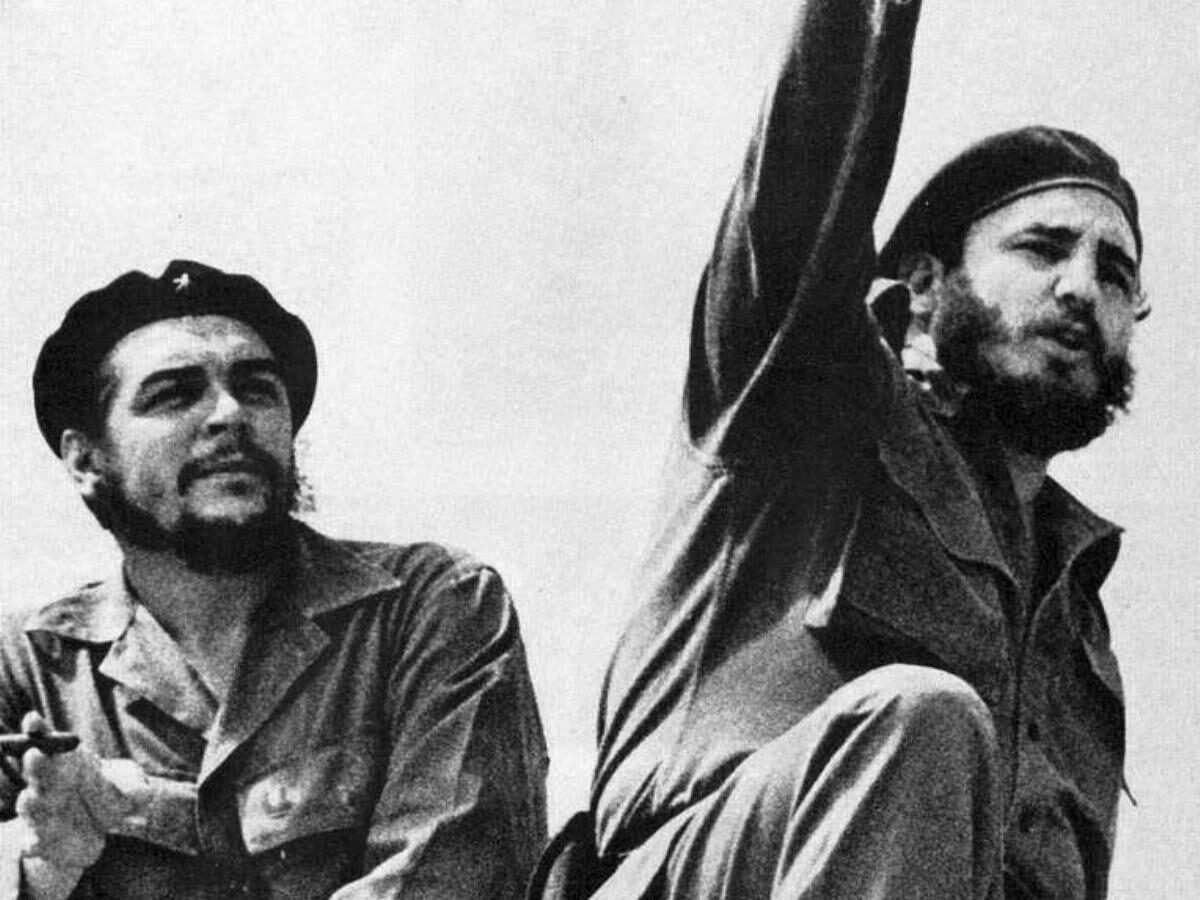
In a column published by American Thinker on September 26, 2026, contributor Fay Voshell argues that the West has a long habit of anointing communist strongmen as saviors — and that Cuba’s revolutionary leadership, past and present, belongs squarely in that tradition. The piece is a full-throated call for Washington to keep confronting Havana rather than normalize relations, and it leans on a mix of historical journalism and prisoner testimony to make the case.
Opinion pieces reflect the views of the author, not necessarily those of this publication.
An ‘Age of the Heroic Lie’
Voshell opens with historian Paul Johnson, author of Modern Times, who she says described the 1930s as “the age of the heroic lie” — a moment when, in his telling, “saintly mendacity” became a prized virtue. Stalin’s Soviet Union, she writes, was built on sanctified fabrications, and the creation of Stalin as a messianic communist figure was part of that project.
She cites Johnson’s observation that writings about Stalin from 1929 to 1934 make strange reading today. Among the enthusiasts: H.G. Wells, who claimed “everybody trusts him”; U.S. ambassador to the Soviet Union Joseph E. Davies, who described the dictator’s “brown eye” as “exceedingly wise and gentle” and imagined a child wanting to sit on his lap and a dog sidling up to him; and Chilean poet Pablo Neruda, who called him a “good-natured man of principle.”
That adulatory posture among academics, politicians, and the press, Voshell writes, barely changed into the late 1950s and 1960s. She points to author Matthew Blackwell’s essay “Devastation and Denial: Cambodia and the Academic Left,” which she says documents how the academic left of the 1970s evaded or refused to condemn Pol Pot’s genocide. Blackwell’s line that the French cognoscenti had become “entranced by Stalinism” after World War II — ready to tolerate the worst crimes if committed in the name of the proper doctrines — anchors her argument.
Life Magazine and the ‘Liberator’
The column then turns to Fidel Castro’s rise. Voshell recalls Life magazine’s January 19, 1959, article “Liberator’s Triumphal March,” which described Castro marching through post-Batista Cuba “ecstatically acclaimed by the people he had liberated,” greeted by throngs throwing flowers and declaring, “Now we are going to purify this country.” The purification, she notes, was to begin with a group of “impartial, honest men” — and the piece counted rebels immediately executing 40 of Batista’s accomplices and jailing another 2,000 as a minor, just adjustment.
She lingers on one detail from that issue: a photograph of the execution of Cornelio Rojas, Batista’s chief of police, captured as bullets struck, hat flying off and face contorted — placed directly above an advertisement for Campbell’s turkey noodle soup. Rojas, Voshell writes, received no trial and no specific charges.
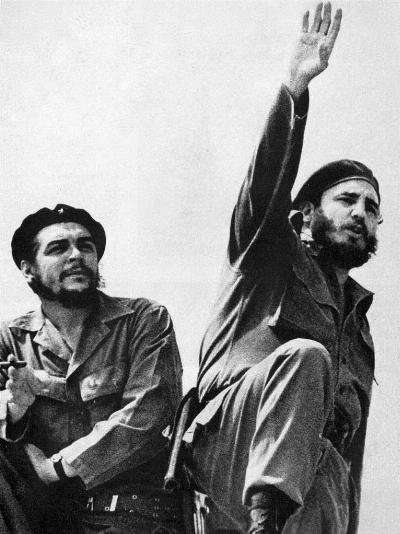
Che Guevara, described by Time magazine in an article titled “Cuba: Castro’s Brain” as having a “sweet smile,” is presented as the revolution’s architect. Voshell quotes the Time piece laying out his “three crucial steps”: cutting Cuba’s main economic ties with the West and hooking them to the communist world, preparing for a war he expected the U.S. to wage, and spreading revolutionary influence across Latin America. That project, she argues, left Che a durable messianic icon promising a wonderful future after the violent destruction of the old order.
The View From Inside a Cell
For the human cost, Voshell turns to Armando Valladares, whose memoir Against All Hope recounts 22 years as a prisoner of the Castro regime. Arrested in 1960 for opposing communism and released in 1982 only after international pressure, Valladares witnessed the failed Bay of Pigs invasion from his cell window, was tortured, and listened as firing squads eliminated the opposition, according to the column.
She revisits Castro’s April 19, 1959, appearance on “Meet the Press,” where journalist Lawrence Spivak asked where his heart lay between communism and democracy. Castro answered that democracy was his ideal: “I am not Communist. I am not agreed with Communism… There is no doubt for me between democracy and Communism.”
Valladares also recounts Castro’s January 21, 1959, speech before the Presidential Palace, in which he declared no more than about 400 henchmen and conspirators would be executed. But, in the passage Voshell quotes, far more had already fallen. On January 12 at a firing range in the San Juan valley in Oriente province, hundreds of soldiers from Batista’s defeated army were lined up in a trench, hands tied behind their backs, and machine-gunned where they stood; bulldozers then turned the trenches into mass graves. Many were barely more than boys who had enlisted because money and food were scarce, the account says, and the mass execution was ordered by — and attended by — Raúl Castro.
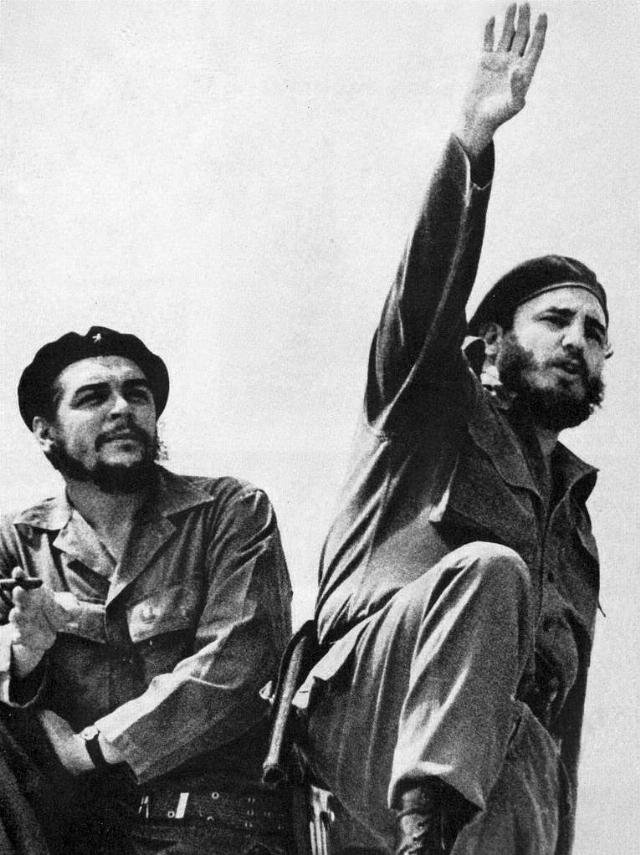
Fidel, Che, and Raúl, Voshell concludes, were the “hellish messiahs anointed to rule over the Cuban people,” and their ideological dedication has left the island in ruins for decades.
The Present Tense
The column does not confine itself to history. Voshell invokes Secretary of State Marco Rubio, who she says has noted that the communist template for Cuba — and its ambitions to revolutionize South America and influence Americans — continues today.
Her conclusion is blunt: given the record, it is “only right” that the ideology and actions of Cuba’s current government be confronted and resisted by the United States, and that the Monroe Doctrine continue to be implemented. Valladares, now 89, would no doubt approve, she writes.
Voshell has been a regular contributor to American Thinker and other online publications.
Source: www.americanthinker.com — https://www.americanthinker.com/articles/2026/09/cuba-s-failed-communist-messiahs/