
There is a particular genre of online commentary that thrives on the gap between what someone says and what that same person is visibly doing while saying it. American Thinker’s Olivia Murray has just filed a specimen into that genre, and she does it with a personal confession attached.
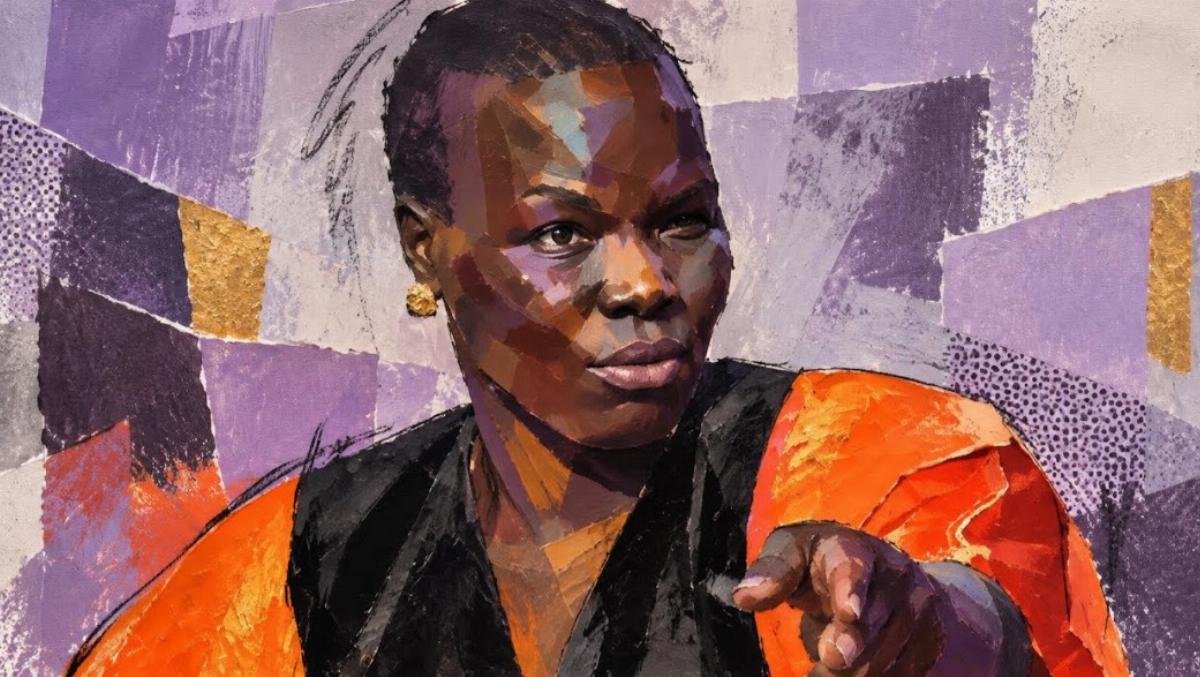
At the center of her September 21 essay is a video she describes as “one of the more bizarre” clips circulating online: a Sudanese migrant, speaking from what Murray presumes is Australia, appearing on a panel to argue that “white culture” does not exist — while simultaneously insisting she has no intention of assimilating to it. Murray’s piece treats the contradiction as self-evident and lets it sit there, mostly unadorned, for readers to absorb.
The setup, as Murray frames it
Murray’s essay, which she notes originally ran in American Thinker’s subscriber newsletter the prior Friday, lays out the scene she finds so damning. The woman is seated, per Murray’s description, in a studio constructed from what Murray calls “white culture-created technologies,” alongside men dressed in suits and ties — the uniform, in Murray’s telling, of “white culture males.” The speaker concedes that French culture and Italian culture exist, which Murray flags as an admission that these are, by her accounting, white cultures. And yet the phrase “white culture” itself is dismissed as a fiction.
Then comes the line Murray builds the piece around: the woman says she has “no intention of assimilating.” Murray treats the implied object of that sentence — white culture — as the obvious and only possible referent, and treats the non-assimilation pledge as a de facto acknowledgment that the thing she just denied exists does, in fact, exist.
Murray also references a social media post describing the speaker as a Sudanese refugee lawyer who boasts about her African costume and complains she doesn’t feel welcome in Australia. She does not name the woman, and the essay leans on the video’s viral circulation rather than any independent verification of the speaker’s background or the full context of the panel.
A confession from 18-year-old Olivia
What gives the piece its texture — and arguably its main reason for existing — is Murray’s willingness to turn the lens on her younger self before turning it on anyone else.
She recounts arriving at college as a freshman, barely a week past her eighteenth birthday, and being seized by what she calls “the spirit of virtue-signaling.” She ordered checks emblazoned with the Sierra Club logo so that every transaction would advertise her environmental bona fides. She bought items from a National Geographic site because the purchases supported artisans in developing countries, and because, as she puts it with a parenthetical self-jab, she could show off how non-materialistic she supposedly was.
Then came Darfur. Murray describes setting a “Save Darfur” screensaver on her laptop and positioning herself in the cafeteria so passersby would see it — and see, by extension, what a cultured and caring person she was. The punchline is that she knew essentially nothing about the conflict. She went to Wikipedia, memorized who was fighting whom in case anyone asked, and never donated a dollar to refugees. She admits she failed to connect the dots that the conflict was, in her words, an Afro-Islamic cultural issue.
At 37, Murray writes, she cringes at that 18-year-old and pretends not to know her. She frames the anecdote as the inoculation that made her a “realist” about Sudan — the implication being that her former self was performing solidarity with a people and place she understood not at all, and that the performance, not the substance, was the whole point.
Where the argument goes
Once the confession is out of the way, Murray pivots back to her subject with considerably less charity. She acknowledges no meaningful contributions from the culture and race she is describing, asks how a group can be “so problematic for itself and the rest of the world” while its members consider themselves superior, and concludes that the position “defies all reason and evidence.”
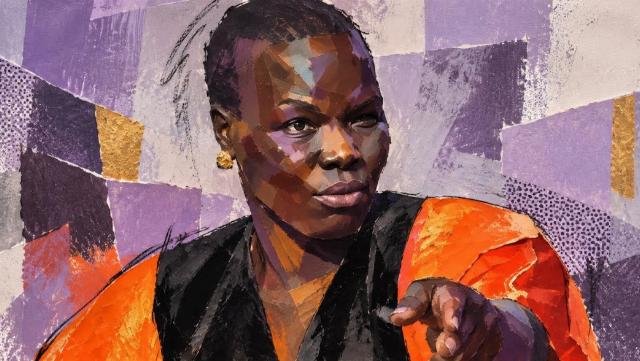
She then reaches for a rhetorical cudgel that is likely to be the essay’s most-quoted line: “The only functioning majority-black culture is Wakanda, and that’s a fictional place!”
The line is pure provocation, and it is worth being precise about what it is and isn’t. It is not an argument so much as a declaration of contempt, and it does the work Murray seems to want it to do — signaling to her audience exactly which register she’s operating in and how little she thinks the opposing view deserves a rebuttal. Notably, the substantive case against the woman’s position, in Murray’s telling, never really arrives. The essay rests on the perceived hypocrisy — denying a culture while refusing to join it — and lets that stand as the whole of the case.
It’s a structure worth noticing, because it’s common in opinion writing on immigration and identity. If a speaker says white culture doesn’t exist, the response could engage with what she means: that “white” is a thin, recent, and largely invented category compared to the national and regional traditions — French, Italian, and yes, Sudanese — that she does name. Murray instead treats the pair of statements as a logical trap, and the trap closes neatly if you accept her definitions. It closes less neatly if you don’t.
What the piece is really doing
Strip away the Wakanda line and the cringe memoir and what remains is a fairly familiar American Thinker argument: that assimilation is a one-way obligation, that its refusal is evidence of bad faith rather than a coherent position, and that the people making these claims are insulated from the consequences of their own contradictions by the very society they disdain.
Murray’s personal history is doing heavy lifting here. By confessing to her own collegiate posturing — the Sierra Club checks, the carefully angled screensaver, the Wikipedia-crammed Darfur talking points she never backed with money — she positions herself as someone who has already been where her target is standing, and who grew out of it. That’s a rhetorically effective move, and it’s an honest one as far as it goes. It also sets up a comparison she never quite makes explicit: her own youthful performance was, in her account, harmless and self-correcting, while the migrant’s is a genuine problem to be solved.
Whether that comparison holds is the question the essay leaves open — and given the piece’s framing, probably intentionally so. The refugee lawyer’s full remarks aren’t quoted at length, the panel’s context isn’t described, and the woman isn’t named. Readers are given a contradiction and a punchline, not a transcript.
What Murray does deliver is a clean illustration of a broader argument running through much of the immigration commentary on the right right now: that the debate has less to do with borders or policy than with whether newcomers owe the host society anything at all — and that any answer short of enthusiastic embrace is itself proof of the problem.
Source: www.americanthinker.com — https://www.americanthinker.com/blog/2026/09/a-sudanese-migrant-doesn-t-need-logic-to-reject-the-white-culture-she-denies-even-exists/