
The Lindsay Clancy case has become a Rorschach test for just about everyone with a platform, and the latest to hold it up to the light is American Thinker’s Selwyn Duke. In a column published September 15, Duke is careful to say up front that he isn’t weighing in on whether Clancy suffered a psychotic break when she killed her three young children. What interests him instead is the reaction — and what that reaction reveals about how men and women are judged differently.
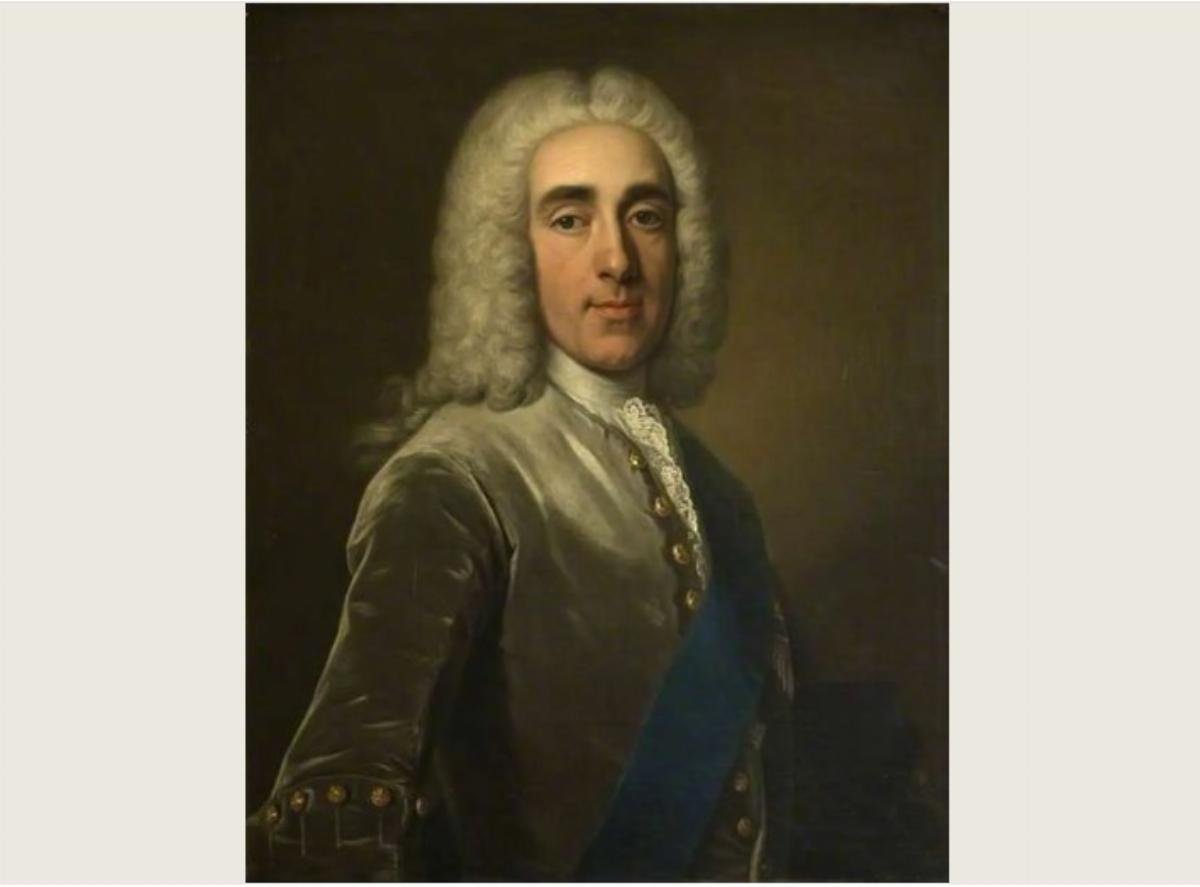
Duke anchors his argument in a line from a 1748 letter written by Philip Dormer Stanhope, the 4th Earl of Chesterfield, to his son: women, Chesterfield wrote, “are only children of a larger growth.” Duke concedes the earl was a “dead white male” writing when America was still a colony. His point, though, is that the sentiment never really went away. “This is precisely how many men and women treat females today,” he writes — as children of a larger growth.
The double standard at the heart of the argument
The Clancy drama, in Duke’s telling, is illustrative. When a man kills his children, he argues, the default assumption is that he is simply evil. Hormonal explanations may circulate in the abstract, he notes, but they don’t function as a defense — the verdict is swift. When a woman does it, the script flips. The assumption becomes that she would never do such a thing if she were in her right mind, that something must have been wrong with her, that she may have buckled under pressure imposed by a man or by what he mockingly calls “this Patriarchal Society™.” The conclusion follows: she needs help and compassion, not punishment.
Duke points to research indicating that women receive more lenient punishments than men for the same crimes. He frames this as the unspoken, uncodified mirror image of a principle we do state explicitly in law — that children cannot be held criminally to an adult standard. What isn’t written down, he argues, is just as real: women aren’t held to an adult male standard either.
He also takes aim at the women he says rallied to Clancy’s side. He describes them as “groupies” who knew little about the case yet passionately defended the killer. Such behavior doesn’t surprise him, he writes, citing 2020 research finding that 56 percent of young, liberal, white women had been diagnosed with some form of mental health problem — a figure he drops with heavy irony.
Not new, but ‘on estrogenic steroids’
Duke is at pains to say the phenomenon isn’t novel. He notes that Winston Churchill was physically attacked by suffragettes in the early 1900s, and that Cato the Elder complained about unreasonable women protesting in 195 B.C. What has changed, he writes, is the scale — the dynamic has been put “on (estrogenic) steroids.”
To bolster the point, he quotes Megan Fox writing about the behavior of anti-Kavanaugh protesters, whom Fox called “screeching gorgons” whose conduct “has called into serious question their fitness to even participate in any serious matter of state.” Fox, he notes, went on to investigate arguments against giving women the vote and cited a 1912 British parliamentary debate in which Viscount Helmsley said the mental equilibrium of the female sex was not as stable as that of the male sex, warning that giving women the vote would introduce a “disastrous element” into public life. Duke reproduces a substantial chunk of that quotation.
From there he offers what he calls Duke’s First Rule of Women in Politics, a sort of Catch-22: insofar as women are in politics, they should be moral, traditional women — but traditional women aren’t found in politics. He calls this true as a general rule, with the occasional exception proving it, and says a cursory look at female legislators makes the case abundantly clear. It is, he writes, generally abnormal women who enter characteristically masculine fields like politics.
The ‘equality’ argument, turned around
Anticipating the pushback — he expects to be called a knuckle-dragging Neanderthal — Duke pivots to an argument he says feminists should reckon with: that they don’t believe in equality any more than he does. His evidence is a 2018 observation from commentator Katie El-Diwany, who noted that while there is endless talk about the dearth of women in science, engineering, upper management and the C-suite, no one asks where the female garbage collectors, elevator technicians, landscape laborers and oil rig workers are. El-Diwany’s conclusion, which Duke endorses, is that feminist clamoring for equal representation was never about equality — it was about power and prestige.
Duke extends the charge to the military. Feminists, he writes, complain about the shortage of actresses playing leading-role heroines on film, yet never demand equal treatment when it comes to the draft — where real combat, and real danger, would follow. Even within the military, he adds, women’s roles are on average less dangerous.
What Duke finds notable is that pre-suffrage arrangements were at least internally consistent: women weren’t required to go to war, but they also couldn’t vote for the politicians who might plunge the country into one. Less responsibility came with less authority. Today, he argues, women have equal or perhaps greater authority while still carrying lesser responsibility — including no obligation to fight, bleed and die for the nation when necessary. He asks whether anyone can honestly claim to believe in equality while perpetuating that double standard.
On the subject of transgender athletes entering women’s sports, Duke positions himself as a longtime opponent — he says he was inveighing against the trans agenda back in 2009, and was criticized for it by conservatives at the time. Even so, he admits to a lack of enthusiasm, because he sees feminists as hoist with their own petard. He recalls feminists demanding access to boys’ wrestling teams and other male spaces, and notes that girls are still cheered when entering boys’ spaces even as the slogan “Girls’ spaces are for girls!” is shouted. The contradiction, he writes, barely registers.
A culture that coddles
Duke’s conclusion is that society has tacitly signed on to Chesterfield’s view — and gone further. Women today, he writes, aren’t merely treated like children but like spoiled, coddled, pandered-to children. Feminists want equal authority without ultimate responsibility, and they get it; they want girls’ sports for girls and, when convenient, boys’ sports for girls too, and they get that as well; they want barriers they dislike torn down and barriers that benefit them kept in place, and they get that too.
He resists the urge to say “make up your mind” or “you can’t have it both ways,” because he doesn’t think it would matter. Feminists have had it both ways for at least a century, he writes, and it likely won’t end until civilization itself does — and then reboots. His closing line is a barb: in America today, children are a most favored class.
Whether one finds the column persuasive or repellent, it lands in the middle of a live argument about how the Clancy case is being framed — and about whether the sympathy it has generated is a sign of mercy or of a standard applied unevenly.
Source: www.americanthinker.com — https://www.americanthinker.com/articles/2026/09/lindsay-clancy-trial-are-women-children-of-a-larger-growth/