
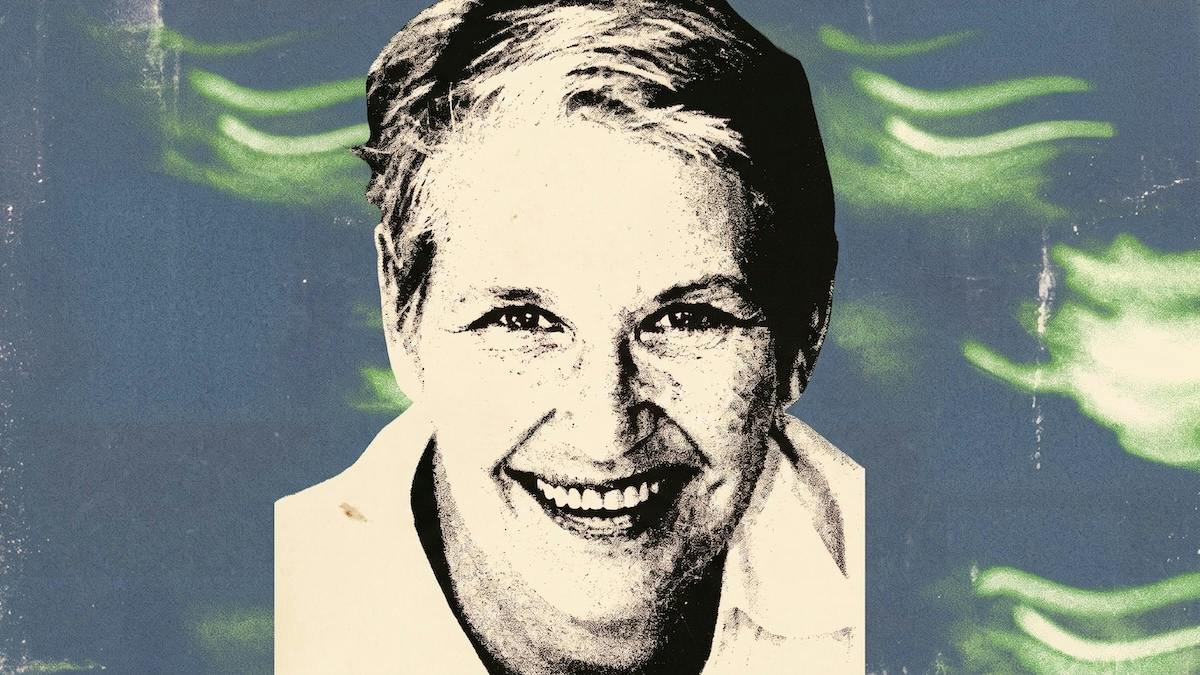
Annie Dillard, the essayist and naturalist whose precise, restless attention to the natural world made her one of the most influential American writers of the past half-century, died Tuesday at her home in Wellfleet, Massachusetts. She was 81.
Her death was reported by The Daily Wire, which noted that Dillard’s passing will register for many readers as the loss of a name they never quite knew — a reminder that her deepest influence ran through the writing world rather than the bestseller lists.
Born Meta Ann Doak in Pittsburgh on April 30, 1945, Dillard grew up in what she later described as a comfortable, progressive household, a childhood she chronicled in her first book, the memoir “An American Childhood.” She was in her late twenties, married to the poet Richard Dillard, when she published the work that made her name. The couple later divorced, and she married twice more while building a career as a professor and literary figure.
A writer’s writer
Dillard won the Pulitzer Prize for her 1974 book “Pilgrim at Tinker Creek,” a work of close observation that established her as a singular voice in American nature writing. Critics sometimes noted that her wilderness was, by her own admission, a “suburban wilderness” — short day trips to observe local wildlife, followed by a return to a comfortable home. Dillard never pretended otherwise, and that honesty became part of her appeal.
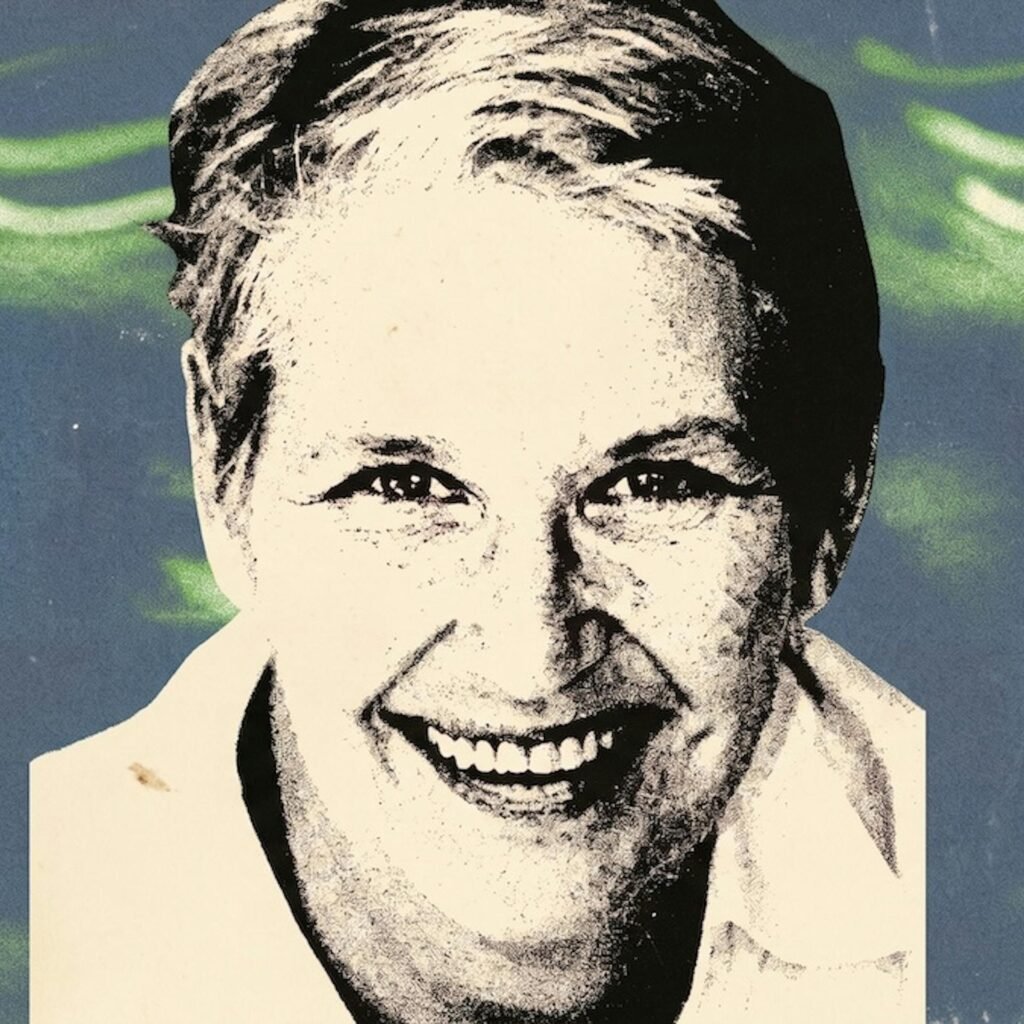
She was, as The Daily Wire put it, the antipode of Joan Didion: blonde, soft, and rural where Didion was dark, twitchy, and urban. The comparison captures something real about Dillard’s sensibility — an openness to wonder that resisted the ironic posture of much late-twentieth-century American prose.
Her signature essay, “Living Like Weasels,” contains the line that perhaps best summarizes her approach to a vocation. “We can live any way we want,” she wrote, describing the weasel’s single-minded grip on its prey. “The thing is to stalk your calling in a certain skilled and supple way, to locate the most tender and live spot and plug into that pulse.”
That image — the calling stalked rather than chosen — recurred throughout her work and her teaching.
The writing advice that outlasted the writing life
Dillard spent years as an English professor, and for a generation of nonfiction students she was less a distant literary figure than a set of working rules. Her 1989 book “The Writing Life” became a staple of writing programs, including the Iowa Nonfiction Writing Program, where by the late 1990s her guidance was treated as canon.

Her central instruction was simple and severe: writing designed to settle scores or argue a case is boring. When memoir is written to attack, she taught, it shows — and what shows is bad art. Workshop participants were asked to hold themselves accountable: Was the account fair? Was the conclusion earned, or was it just a rant?
The Daily Wire’s appraisal is that those concerns have largely vanished from an era of confessional personal essay and memoiristic screed, pointing to titles like Jennette McCurdy’s 2022 bestseller “I’m Glad My Mom Died” as a violation of nearly every one of Dillard’s directions.
Dillard also offered what may be the most quotable piece of writing advice in the modern canon: spend it.
“One of the few things I know about writing is this: spend it all, shoot it, play it, lose it, all, right away, every time,” she wrote. “Do not hoard what seems good for a later place in the book, or for another book; give it, give it all, give it now.” She warned that the impulse to save something good for later is itself the signal to spend it immediately, and that anything a writer does not give freely becomes lost. “You open your safe and find ashes,” she wrote.

The irony, noted in the Daily Wire remembrance, is that Dillard came to repudiate the very book that made her a teacher to so many. Through her third husband, the Thoreau biographer Robert D. Richardson, she let it be known that she considered “The Writing Life” an “embarrassing nonfiction narrative.” On her own website, she disowned her essay “To Fashion a Text,” writing: “This is emphatically not interesting; I renounce it.”
That restlessness — the refusal to settle into her own established reputation — was characteristic. “While writing is an art, it’s not a martial art,” she wrote in the introduction to “The Writing Life,” a line that has become a mantra for writing instructors.
Nature, writing, and God
If there was a third pillar to Dillard’s legacy, it was her faith — or, more precisely, her interrogation of it. Raised Presbyterian, she described herself as an on-again, off-for-short-periods Christian who defined her belief not by denomination but by her relationship to paradox and holiness, which she found throughout the created world.
She was willing to start where she disagreed. “Did God create people? Sure, if that’s how you like it,” she wrote in “Do I Consider Myself a Christian?” for The Christian Century. “We didn’t create ourselves. We evolved, just as all other living beings evolved. Every creature alive today is a pinnacle of creation. So is every extinct creature.”
That essay positioned her in conversation with an older tradition of Christian apologetics, including G.K. Chesterton’s “The Everlasting Man,” while drawing freely on Hasidism, Islam, and Buddhism. What she arrived at was, in her telling, something earned rather than inherited.
“I know only one thing for certain: there is holiness,” she said. “Standing there, a person can sing myriad songs.”
The Daily Wire published its remembrance as part of Upstream, its section devoted to culture and lifestyle coverage.
Source: www.dailywire.com — https://www.dailywire.com/news/the-american-writer-who-refused-to-play-by-todays-rules