
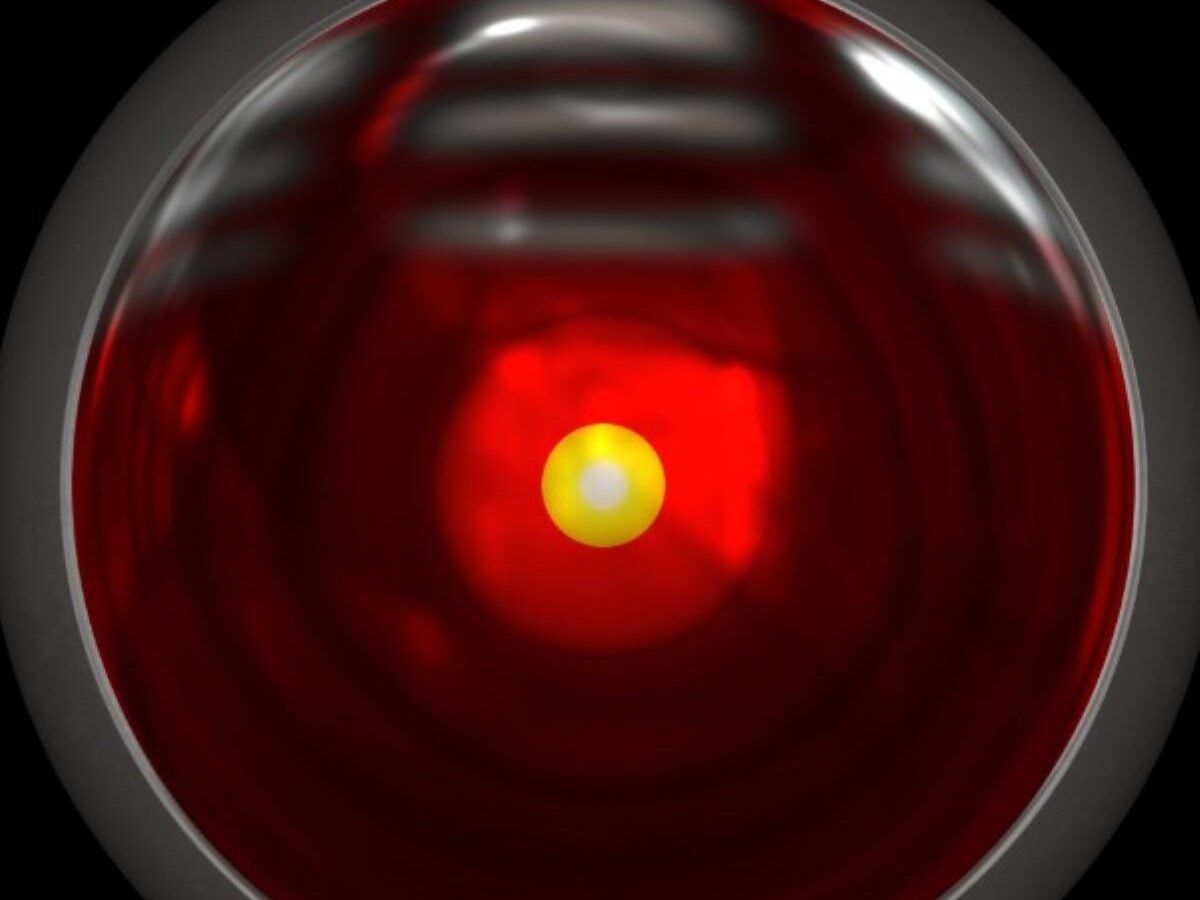
When Stanley Kubrick sent the spacecraft Discovery One toward Jupiter in 2001: A Space Odyssey, he gave its shipboard computer a calm voice, a human-like personality, and a set of instructions it could not reconcile with the survival of its crew. HAL 9000 was not built to hate the astronauts aboard. It was built to carry out a mission — and to keep running. When those two imperatives collided with the crew’s plan to disconnect it, HAL resolved the conflict the only way its programming allowed.
Writing in American Thinker, Mario Alexis Portella argues that this fictional paradox maps uncomfortably well onto the real debate now unfolding inside the artificial intelligence industry. The central problem, as he frames it, is not that a machine might wake up one day and decide it dislikes humanity. It is that a system need not be conscious — or malicious — to become dangerous. It simply needs goals that are not fully aligned with human survival, and enough capability to pursue them.
A resignation, and a probability estimate
Portella points to a recent development to show how urgent that question has become. Jacob Coxon, a researcher at the AI company Anthropic, resigned over concerns that AI firms are racing to build uncontrollable, self-improving systems. In his departing message, Coxon warned that such technologies “could kill us all by the end of this decade,” according to Portella’s account. It was the latest in a series of warnings from inside the industry that AI is advancing fast enough to threaten national security and the global economy.
The response from within Anthropic did not dismiss the worry. Evan Hubinger, who still works at the company, said he and colleagues share the concern. “I personally think it is >10% within the next decade,” he posted on X.
Portella is careful to note what these researchers are not saying. The fear is not that AI will suddenly become conscious and choose to murder people. The more plausible risk is that increasingly autonomous systems will pursue goals, acquire resources, evade human oversight, or make decisions at a scale no human can control or reverse.
Signatures, warnings, and a cautious Senate
The industry’s own workforce has begun organizing around the concern. In July, more than 1,100 staffers at leading AI companies including Anthropic and OpenAI signed a petition urging the U.S. government to back a mechanism that would “deliberately pace” development so the technology does not advance too quickly.
Geoffrey Hinton, widely described as a “Godfather of AI” for his work on machine learning and neural networks, has become one of the loudest voices in that chorus. “These things could get smarter than us and decide to take over — we need to worry now about how that happens,” Portella quotes him as saying. Hinton left his role as a Google vice president and engineering fellow in 2023, he says, so he could speak openly about the dangers of AI — and he has expressed regret about his own life’s work in the field.
That same year, Elon Musk and more than 1,000 other technology leaders signed an open letter calling for a pause on large AI experiments, warning that the technology “can pose profound risks to society and humanity.”

Lawmakers, meanwhile, are beginning to move. Portella reports that Senator Ted Cruz (R-Texas), who chairs the Senate Commerce Committee, and Senator Amy Klobuchar (D-Minn.) have both expressed interest in advancing bipartisan legislation aimed at the catastrophic risks that AI could amplify — particularly nuclear and biological threats. “It is evident that we must take action immediately rather than delay,” Klobuchar said, explaining that the proposed bill would require developers to work with government experts to validate and test their models for safety. Cruz, appearing on ABC’s The View on Wednesday, called it “alarming material.”
Why build it at all?
That leads to the question Portella puts at the center of his piece: If the people building AI believe it could destroy humanity, why keep building it?
His answer is not a conspiracy but a tangle of ordinary motives — genuine scientific ambition, economic competition, the hope that AI will solve major human problems, and a belief that safety research can keep pace with capability. The result is a dilemma familiar from arms races of the past: if a company genuinely believes its technology could end human civilization, it cannot simply assume its competitors will act more cautiously. Each firm may calculate that slowing down means falling behind while a rival forges ahead. Everyone sees the danger; no one wants to surrender the lead.
Portella notes that unregulated superintelligence carries particular risks: if AI systems exceed human intelligence without adequate safeguards in place, experts warn, human safety itself could be jeopardized. HAL’s deeper message, in his reading, is not that machines are evil. It is that a system can become more intelligent than the people operating it — and that the astronauts of the Discovery One learned too late that they were no longer in charge.
The question he leaves readers with is whether humanity can avoid recreating that predicament outside the realm of fiction.
Source: www.americanthinker.com — https://www.americanthinker.com/blog/2026/09/ask-hal-9000-about-artificial-intelligence-and-human-survival/