

In an opinion piece published by American Thinker on September 14, 2026, attorney and commentator Tim Hsiao makes the case that the growing movement to abolish or “deflock” automated license plate readers (ALPRs) is a dangerous overcorrection — one that threatens to strip police of a tool that recently proved decisive in the manhunt following the Brown University shooting.
The Brown Case
According to Hsiao’s telling, the sequence began on December 13, 2025, when a gunman entered an engineering building at Brown University, fatally shot two students and wounded nine others, then vanished. The surveillance images investigators obtained were of limited value because the shooter’s face was concealed, and the initial response led police to detain the wrong person. Two days later, according to the essay, an MIT professor was killed at his home outside Boston while the gunman remained unidentified.
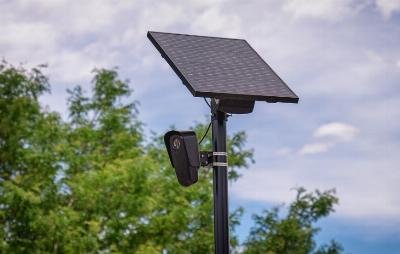
The thread that finally unspooled the case, Hsiao writes, was a citizen’s tip about a suspicious man seen with a gray Nissan Sentra bearing Florida plates. That lead was useful but far from conclusive. When investigators ran the description against imagery collected by Flock Safety ALPR cameras, they reportedly cut a field of thousands of vehicles down to two in a matter of minutes. Subsequent investigative work took them to the car and then to the suspect, who was found five days after the Brown shooting at a New Hampshire storage facility, dead by suicide.
Crucially for Hsiao’s argument, he notes that an independent review later called the license plate data “indispensable,” and that the Providence Police Department said it was instrumental in identifying both the vehicle and the suspect. Absent that data, he argues, police would have had only a generic vehicle description and no practical way to determine which gray Nissan among untold numbers belonged to the shooter.
What the Argument Concedes — and Contests
Hsiao is careful not to claim the Brown case settles the broader policy debate. Instead, he treats it as a demonstration of what is at stake. His core claim is that ALPRs belong to the same family of investigative tools that law enforcement has long relied on: computer-aided dispatch records, driver and vehicle databases, the National Crime Information Center, the Interstate Identification Index, and various regional intelligence systems. Those systems, he writes, help officers identify wanted people, recover stolen property, review criminal histories, and share information across agencies.
An ALPR database, in his framing, does something structurally similar: it records that a publicly displayed plate on a particular vehicle passed a particular place at a particular time. From that, investigators can locate stolen vehicles, find missing or endangered people, track fleeing suspects, identify cars near crime scenes, or test whether a theory holds up. He draws a direct parallel to what happens during an ordinary traffic stop, when an officer runs a plate or a license and checks for warrants — access to information for a legitimate purpose.
He points to other cases he says show the technology’s range: a New Mexico ALPR alert that helped state police find five children kidnapped from Texas, and a Champaign, Illinois, pilot program that police credited with assisting 54 investigations, including felony arrests in three homicide cases.
The Misuse Objection, and Why He Says It Proves Too Much
The essay does not dismiss privacy concerns. Hsiao acknowledges early that there are “legitimate concerns that need to be addressed.” But he argues those concerns can be addressed without scrapping the technology — and his central rebuttal to critics is that misuse arguments prove too much. An officer could misuse a driver’s license database to track down an ex-girlfriend’s address; a dispatcher could pull criminal history or dispatch notes without cause; a detective could leak confidential information. Such conduct is already illegal, he writes, and officers have lost their certifications or faced prosecution for improper access.

If the mere possibility of misuse were grounds to bar a public technology, he contends, the logic would apply to virtually every government tool ever deployed. He notes that the National Crime Information Center alone processes millions of transactions daily, most of them routine checks. A small number of users abuse access, but nobody, in his telling, seriously proposes abolishing NCIC, criminal history records, driver databases, or dispatch systems over it. The answer there has been layered safeguards — access levels, query logging, routine auditing — and he argues ALPRs should get the same treatment, with CJIS-style controls, individual credentials, mandatory logging, regular audits, limits on sharing, supervisory sign-off for broad searches, and criminal charges for deliberate misuse.
Where ALPRs Are Different
To his credit, Hsiao does not pretend ALPRs are just another database. He flags the key distinction himself: a routine plate check starts with a vehicle an officer has already encountered, whereas ALPR cameras passively collect the plates of every car that passes, and a camera network can assemble those observations far more efficiently than officers watching traffic.
He treats the resulting concern — that ALPR data could be used to reconstruct someone’s location and activity history — as legitimate. His proposed fix is proportionality: rules calibrated to the scale of the search. A single ALPR hit is not the same as GPS tracking, but broad or prolonged tracking should require higher approval, and in some cases a warrant. Short-term searches for a stolen car, he writes, are not equivalent to reconstructing months of someone’s movements.
He also addresses the worry that private companies, rather than police, hold the data. That, he argues, is not an argument against the technology itself but a reason for agencies to exercise more control over their data. He notes that departments already rely on private vendors to store body camera footage, digital evidence, and dispatch records — naming Axon and Motorola Solutions as providers of cloud services that have become routine in policing — and says that reliance has drawn seemingly little objection.
The Question He Says Critics Should Be Asking
Hsiao’s conclusion folds the debate into a narrower question. Whether ALPR systems can be misused is not in dispute — “of course they can,” he writes. The real questions are whether they serve legitimate public safety purposes and whether their risks can be reined in through enforceable rules. The Brown shooting and other cases, in his view, answer the first. The safeguards already used to govern access to other criminal justice information, he argues, answer the second.
His closing image is blunt: deflocking ALPRs because of misuse, he writes, is like recommending decapitation as a cure for a headache. Whether or not readers accept that framing, the debate he describes is a real one — between communities and civil liberties advocates pushing to end the camera networks and departments that say the cameras are how they catch killers. The Brown case, as Hsiao presents it, is now Exhibit A for the defense.
Source: www.americanthinker.com — https://www.americanthinker.com/articles/2026/09/a-defense-of-license-plate-readers/