
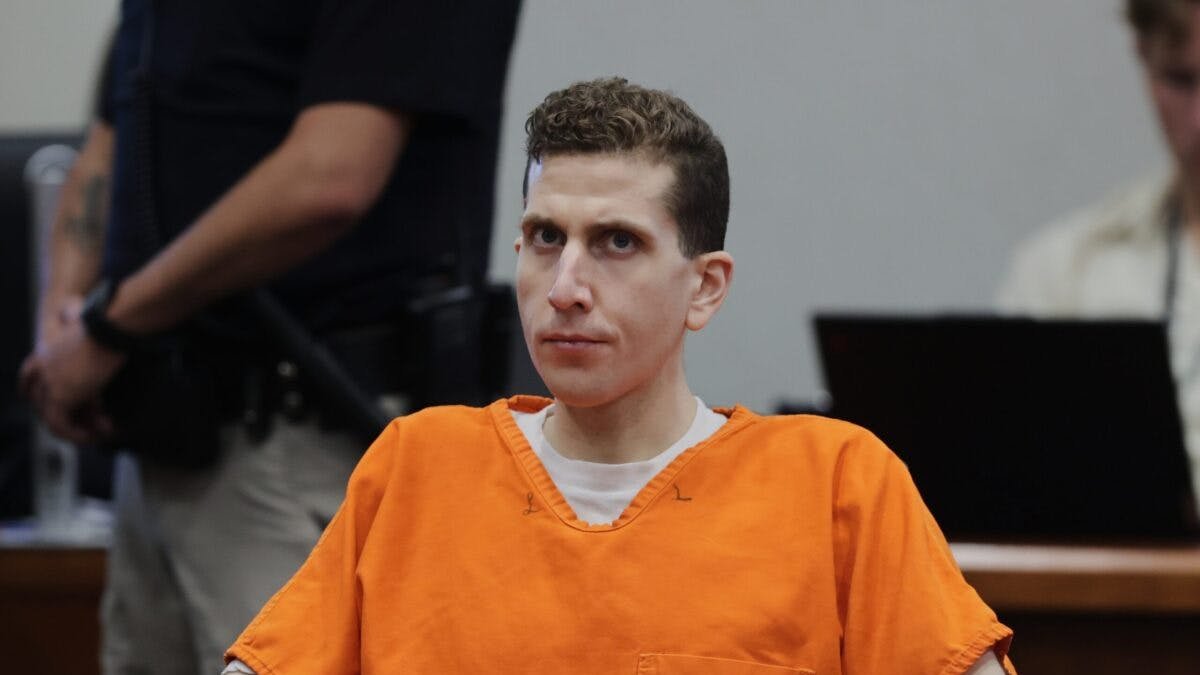
Bryan Kohberger, the man sentenced to life in prison for the 2022 murders of four University of Idaho students, will return to court next summer as he attempts to undo the guilty plea that put him behind bars.
Judge Steven Hippler, who accepted Kohberger’s guilty plea and later imposed the sentence, has scheduled a status conference for June 3, 2027, to consider Kohberger’s petition for post-conviction relief. The court has also reserved June 17 for a potential evidentiary hearing.
Kohberger, 31, is currently serving four consecutive life sentences without the possibility of parole for the murders of Madison Mogen, Kaylee Goncalves, Xana Kernodle, and Ethan Chapin, plus an additional 10 years for the burglary that preceded the killings.
But roughly one year after standing in court and admitting to the crimes, Kohberger has reversed course. In a handwritten petition filed in July 2026, he now claims he is innocent and argues that ineffective assistance from his own attorneys led him to falsely confess.
Claim of Coerced Plea
Kohberger’s petition specifically targets the conduct of his court-appointed lead attorney, Anne Taylor, one of only a handful of Idaho litigators certified to represent defendants in death penalty cases. He alleges that his guilty plea was not entered “knowingly or voluntarily” because it was “induced by unkept promises” and “because of threats asserted by [his] legal counsel.”
The exact nature of those alleged threats or broken promises remains unclear. According to ABC News, Kohberger also claims there was information withheld from him prior to the plea agreement that could have changed his decision.
Prosecutors have already filed a response to the petition, along with a motion to dismiss it in its entirety. Kohberger’s current attorneys have not yet filed a reply.
The Guilty Plea and Aftermath
Kohberger entered his guilty plea on July 2, 2025, just weeks before his trial was slated to begin. The day before, he signed a written factual basis document in which he took full responsibility for the murders, describing his actions as “willful, unlawful, deliberate, with premeditation, and with malice aforethought.”
That plea ended what had been a high-profile and deeply painful chapter for the victims’ families and the Moscow, Idaho community. The case drew national attention from the moment four college students were found stabbed to death in an off-campus rental home in November 2022.
Kohberger’s arrest came weeks later, and he was extradited from Pennsylvania to Idaho to face charges. The case moved slowly through pretrial motions, with frequent hearings and legal battles over evidence, gag orders, and jury selection protocols.

His decision to plead guilty in the summer of 2025 appeared to bring the case to a decisive close. Judge Hippler accepted the plea, and sentencing followed. But Kohberger’s new petition injects fresh uncertainty into the case, and his claim of innocence has reopened wounds for the families who had begun to move forward.
Legal Standards for Post-Conviction Relief
Post-conviction relief petitions are a standard—but difficult—path for defendants who claim their convictions were constitutionally flawed. To succeed, a petitioner must typically show that their attorney’s performance fell below an objective standard of reasonableness and that this deficiency prejudiced the outcome.
Ineffective assistance of counsel is a common claim, but courts are generally skeptical of post-plea allegations that a defendant was coerced or misled, especially when the plea was entered on the record with a written factual basis.
In Kohberger’s case, the signed factual basis document—in which he explicitly acknowledged his guilt and the deliberate nature of his actions—could pose a significant hurdle. Prosecutors will likely point to that document as evidence that the plea was knowing and voluntary.
But Kohberger’s petition alleges that the document itself was the product of attorney pressure and unfulfilled promises, a claim that would require an evidentiary hearing to explore. The court has reserved June 17, 2027, for exactly that kind of hearing, should Judge Hippler decide it is warranted.

The status conference in June will give both sides a chance to lay out their arguments and for the judge to determine next steps. Until then, Kohberger will remain in custody.
What’s Next
The case now hinges on how Judge Hippler views the petition. If he finds that Kohberger has raised a colorable claim, he could order an evidentiary hearing where Taylor herself might be called to testify about her interactions with her client.
If, on the other hand, Hippler determines that Kohberger’s petition fails to state a claim or is barred by procedural rules, he could dismiss it without a hearing, keeping the guilty plea and sentences intact.
Given the stakes—four life sentences without parole—Kohberger has every incentive to fight. And for the families of Madison, Kaylee, Xana, and Ethan, the coming months will bring another round of legal uncertainty and emotional turmoil.
The June 2027 hearings are still more than a year away, but the court’s decision to schedule them suggests that Kohberger’s petition has at least cleared an initial procedural review. Whether it survives full adversarial testing remains to be seen.
Source: www.dailywire.com — https://www.dailywire.com/news/bryan-kohberger-heads-back-to-court-in-bid-to-undo-murder-confession