
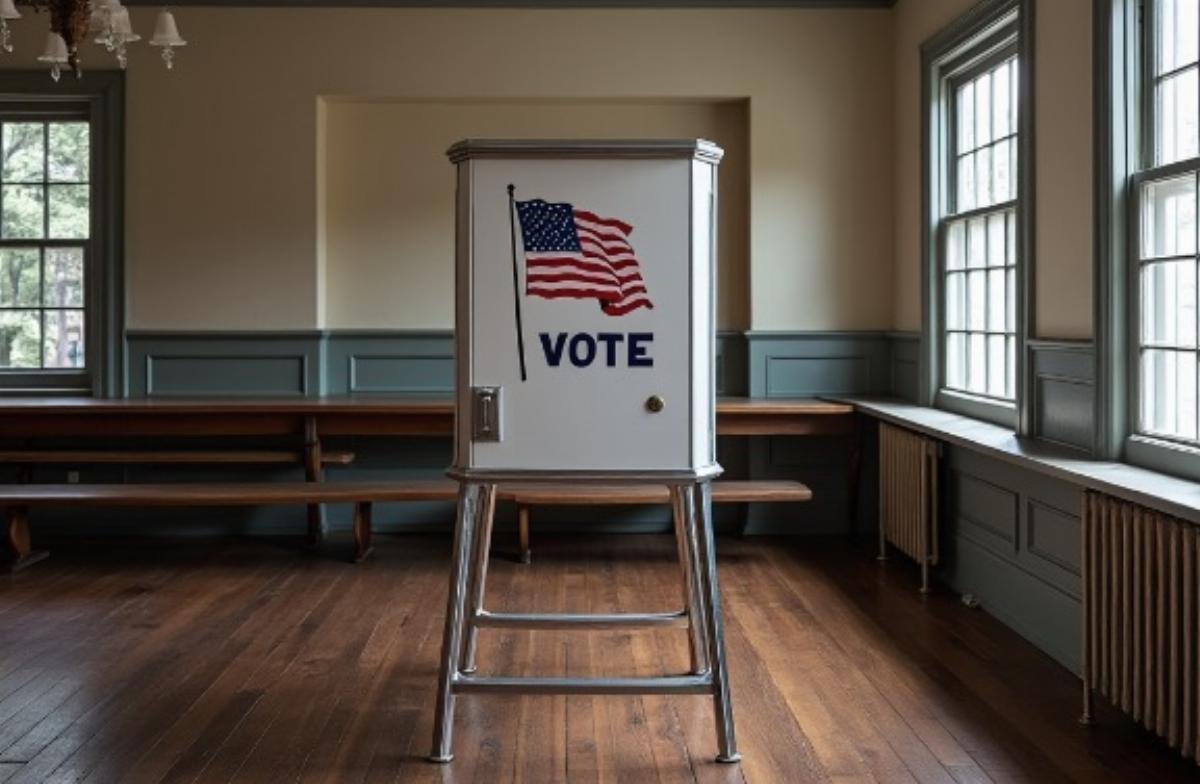
There’s a moment at every California polling place that tends to make you pause, according to a new analysis from American Thinker. An election worker slides a piece of paper across the counter, the voter signs in the designated area, and that’s the entire transaction. By comparison, boarding a domestic flight, picking up a prescription, or opening a bank account all demand a more rigorous identity check.
This November, Proposition 39 aims to close that gap. As described by American Thinker columnist Evander Knoxley, the measure is straightforward: it would require a government-issued ID at the polls, require the last four digits of an ID number for mail ballots, and add citizenship-verification requirements built on information the state already collects. It would also mandate public reporting on how well those verification processes work, so the requirements don’t exist only on paper.
Bringing California in line with a national standard
The measure doesn’t attempt to reinvent election administration. Instead, Knoxley argues, it brings California in line with a standard already embraced by 36 other states — most of which require a photo ID. That framing is central to the campaign’s pitch: this is not radical innovation; it’s catching up to a norm that already exists across most of the country and in almost every other facet of American life.
Opponents have called the measure voter suppression, but Knoxley contends that argument loses much of its force because of a specific provision in Prop 39: the state would be required to issue a free voter ID card to anyone who needs one. Without a cost barrier or extra bureaucratic hoops, the suppression argument becomes harder to sustain, the analysis suggests.
It’s worth noting that California already requires ID to register to vote. What the state has historically not required, Knoxley writes, is verification that the person showing up at the polls months or years later is the same person who filled out that original registration form. That, he argues, is the specific gap Prop 39 closes — and it does so without making ID harder to obtain, which has been a legitimate criticism of approaches in a few other states.
The citizenship question
The citizenship component follows the same logic. Only U.S. citizens can vote in California elections, and that is not a new requirement introduced by Prop 39. It’s a preexisting law. The measure simply adds a verification and reporting requirement, so citizenship is checked with the same rigor as the rest of the registration process. Knoxley points out that nobody objects to showing ID at the DMV, and questions whether there’s a principled reason to treat the ballot box any differently.
Critics of the measure have correctly noted, Knoxley acknowledges, that documented cases of ballot fraud and forged signatures are rare in California. He attributes that to a well-designed system — and argues that’s precisely the outcome Prop 39 supporters want to preserve. A system built on trusting signatures, he writes, doesn’t generate that kind of confidence; it fosters a constant undercurrent of cynicism that surfaces when an election is close.
A business owner’s perspective
The piece highlights Kyle McClay, a Huntington Beach entrepreneur who has spent more than 20 years building and running businesses in California. McClay sees the value of Prop 39 in straightforward institutional terms. “I’ve seen how basic accountability protects institutions and the people who rely on them,” McClay told American Thinker. “Prop 39 is not radical. It is the minimum standard every serious state already accepts.”
McClay framed the measure’s passage as essential for Californians to trust their own election results and expressed willingness to volunteer with the Republican Party of Orange County to help get it across the finish line.
The Orange County connection
The fight is not abstract in Orange County, Knoxley notes. Huntington Beach has spent two years in court with Sacramento defending its own local voter ID ordinance — a dispute that the column describes as a preview of the question Prop 39 asks of the entire state. Voters on both sides of the aisle in Huntington Beach and throughout Orange County, he writes, can be confident that voting yes on the measure will accomplish what that lawsuit has set out to do.
Knoxley’s conclusion is that California doesn’t need to revolutionize its elections to meet the standard 36 other states already accept. Prop 39, he argues, accomplishes that alignment without leaving a single eligible voter behind — and gives voters a reason to trust the count when the polls close.
Source: www.americanthinker.com — https://www.americanthinker.com/blog/2026/08/california-finally-asks-voters-to-prove-who-they-are/