
It’s a question that has haunted art lovers for centuries: Can we separate the art from the artist?
The Daily Wire’s Emily Hangestad takes up that thorny issue in a new essay for its Upstream culture section, arguing that while some creators’ transgressions are too great to overlook, great art can still be appreciated on its own terms.
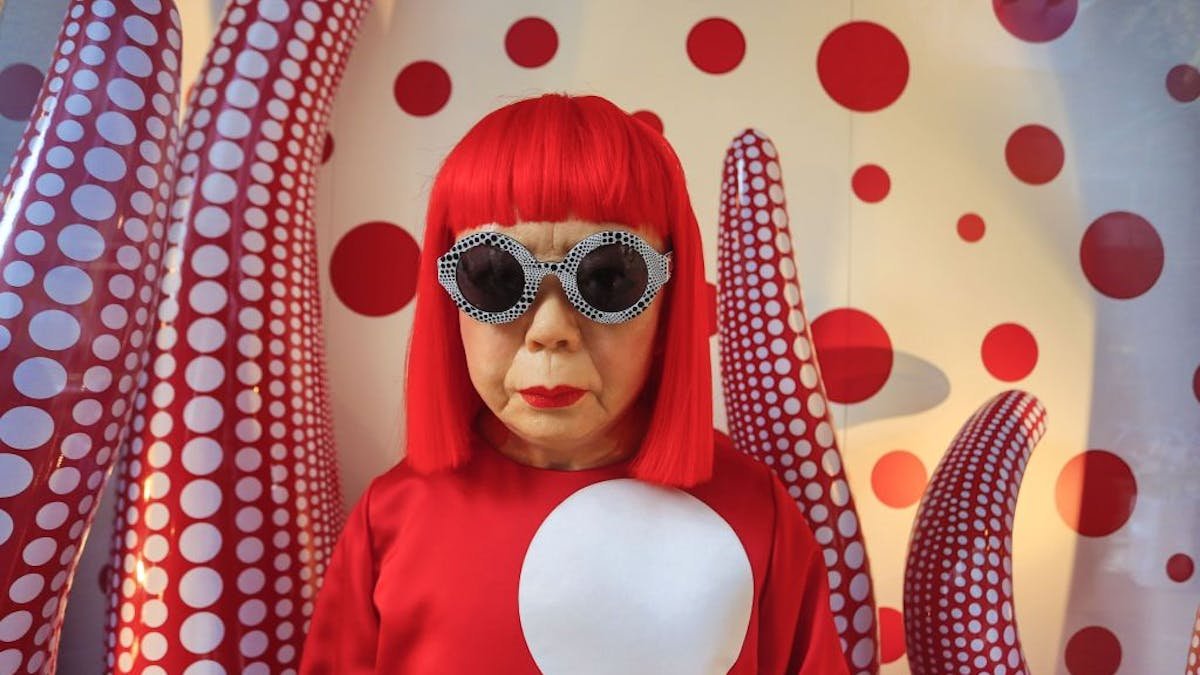
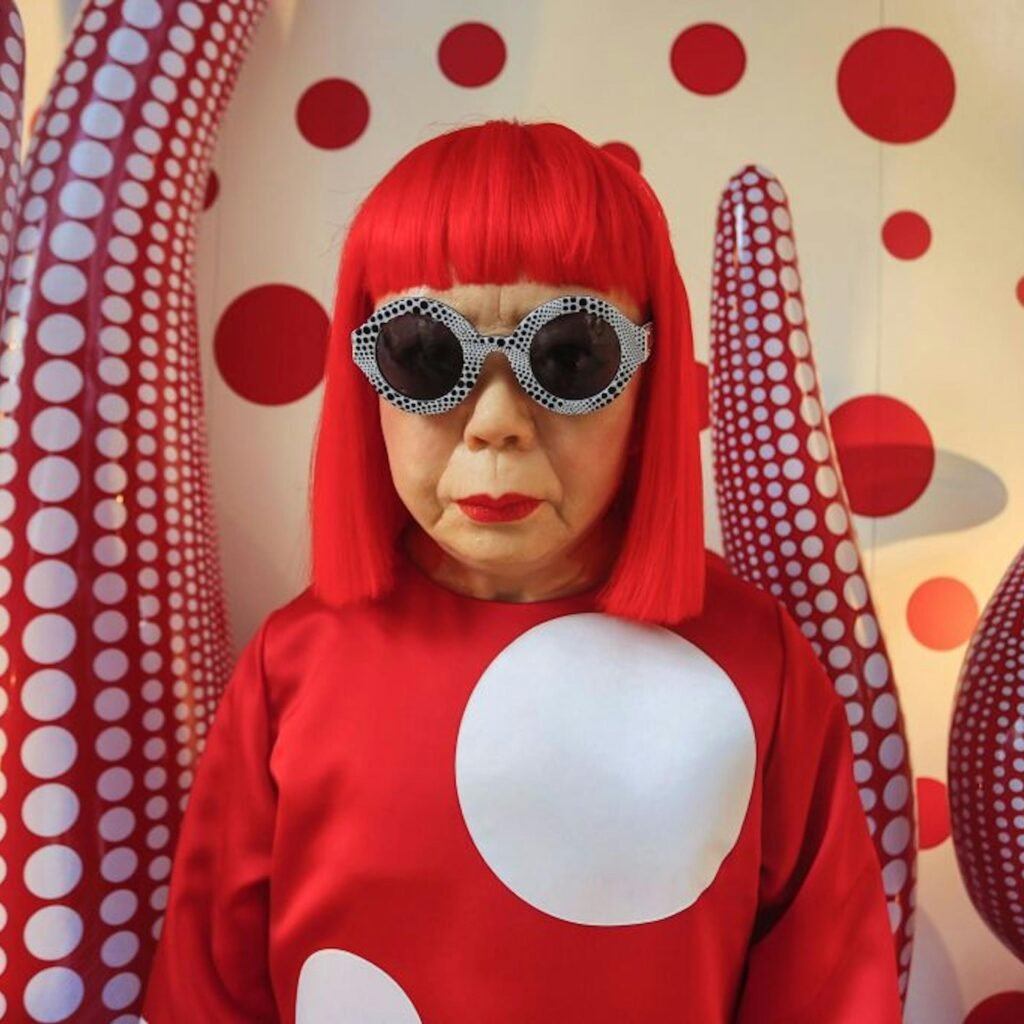
Hangestad points to a recent loss in the art world, Japanese pop artist Yayoi Kusama, who died at age 97. Kusama was known for her polka-dot installations and provocative phallic motifs in the 1960s. But her legacy is complicated by passages in her 2002 autobiography, where she made racially charged remarks about her New York City neighborhood, calling residents “exotic” and describing “black people shooting each other” and homeless people sleeping nearby. She later apologized.
Kusama battled hallucinations, severe depression and OCD, and Hangestad describes visiting her immersive exhibit at The Broad in Los Angeles, where visitors covered themselves in polka-dot stickers. “Maybe that’s how Kusama saw all of us: as ‘exotic’ creatures,” Hangestad muses.
The art world is littered with similar moral contradictions, Hangestad notes. Caravaggio painted masterpieces like “Narcissus” but also killed a man in a duel. Picasso gave us “Guernica” but drove several of his muses to suicide. Van Gogh lopped off his own ear, yet produced “Starry Night.”
“I think it’s okay to separate the art from the artist, or the product from the truth about the person who made it,” Hangestad writes, noting that even self-proclaimed progressives who swear off Chick-fil-A over its perceived anti-LGBTQ stance often sneak a chicken sandwich anyway.
Fashion’s Tormented Genius
Hangestad also wades into the recent contretemps surrounding British fashion designer John Galliano. Despite being honored by Vogue’s Anna Wintour at the 2027 Met Gala, Galliano’s name and exhibit were scrubbed after online backlash erupted over his past anti-Semitic remarks. An insider claimed Wintour believed “his genius outweighed his appalling behavior.”
Galliano had apologized for his outbursts, claiming he was on drugs at the time. But despite the controversy, Hangestad admits, “his clothing designs are still stunning.”

Michael Jackson, Kanye, and the Line We Draw
The music world offers perhaps the most extreme example of separating art from artist, with Michael Jackson’s legacy shadowed by allegations of child sexual abuse — allegations he maintained were false. Yet Hangestad argues that his hits like “Billie Jean” and “Thriller” transcend his personal demons.
“MJ transcended his own trauma to create something bigger than himself,” she writes, suggesting fans can hold the artist accountable while still enjoying his music. She notes that the biopic “Michael” passed $1 billion in global box office sales, proving many fans are willing to do just that.
But there are limits. Hangestad points to Kanye West, whose music she still loves — “I’ll do anything for ‘Stronger’ and ‘Gold Digger’ at the gym” — but whose recent anti-Semitic tirades have tested that separation. And then there’s Adolf Hitler, whose watercolor paintings sit in a climate-controlled Army vault, never displayed because his evil overshadowed any artistic merit.
“The art must be unequivocally greater than the transgressions of its creator,” Hangestad suggests, “otherwise we end up torturing ourselves.”

An Alternative View: Art as Redemption
But perhaps there’s a more nuanced approach. Hangestad quotes Australian songwriter Nick Cave, who argues we shouldn’t try to separate the art from the artist at all.
“I think we can look at a piece of art as the transformed or redeemed aspect of an artist, and marvel at the miraculous journey that the work of art has taken to arrive at the better part of the artist’s nature,” Cave wrote. “Perhaps beauty can be measured by the distance it has travelled to come into being.”
In the end, Hangestad lands on a somewhat hopeful note: “Maybe the proper response isn’t separating the art from the artist at all. Maybe it’s recognizing the humanity it took to create something beautiful.”
This article is adapted from a piece that originally appeared on The Daily Wire’s Upstream section.
Source: www.dailywire.com — https://www.dailywire.com/news/is-it-wrong-to-love-great-art-made-by-terrible-people