
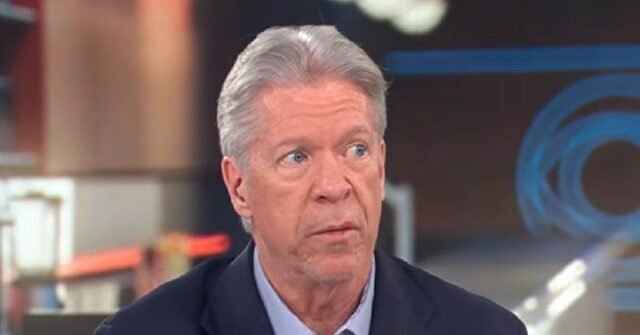
A pointed exchange on CBS’s “The Takeout” has crystallized one of the central questions hanging over the upcoming election: Are Democrats running on a defined policy platform, or are they primarily positioning themselves as opposition to the current administration?
Major Garrett, CBS News Chief Washington Correspondent and host of the podcast, put the question directly to Rep. Suzan DelBene during Thursday’s broadcast, revealing what he sees as a messaging gap in Democratic campaign strategy.
The Direct Challenge
“Is this going to be an election on Tuesday night that people are going to be describing as a check on Trump’s power, or an endorsement of a specific Democratic agenda?” Garrett asked the Washington state congresswoman. Then he added the kicker: “Because I don’t hear much about the agenda. I hear a lot about checking Trump’s power.”
The observation from Garrett, a veteran political journalist known for his sharp analysis of both parties, cuts to the heart of a complaint that has dogged Democratic candidates in recent election cycles. Critics have long argued that the party’s messaging often focuses more heavily on opposing the former president than articulating what Democrats themselves would do with power.
DelBene’s Response
Representative DelBene pushed back against the characterization, attempting to frame Democratic messaging as both oppositional and aspirational. “I think this is going to be a vote to end the disastrous policies of this administration and a vote for folks who are going to fight for their communities to build a strong future,” she told Garrett.
The congresswoman went on to outline what she described as affirmative positions Democrats are campaigning on. “So, yes, it is rejecting what has happened from this administration, what Republicans have done, but it is also a vote for folks who are going to stand up for a bright future, who are going to stand up to lower costs, who are going to stand up for healthcare that has been gutted across this country, who are going to stand up against a war that never had any plan or strategy.”
A Familiar Democratic Dilemma
The exchange highlights a strategic tension that Democratic strategists have grappled with for years. When facing a highly polarizing opponent or administration, how much should campaigns focus on contrast versus presenting their own detailed policy proposals?
Some political analysts argue that running primarily as the opposition party can be effective in mobilizing base voters who are already motivated by their opposition to the other side. But it can also leave persuadable voters unclear about what they’re voting for, rather than just what they’re voting against.
Garrett’s observation suggests that at least from his vantage point covering campaigns and conducting interviews, the balance has tilted heavily toward the oppositional messaging. For a journalist who spends his days interviewing candidates and analyzing campaign communications, the fact that he “doesn’t hear much about the agenda” is itself newsworthy commentary on Democratic messaging strategy.
The Healthcare and Cost-of-Living Pitch
In her response, DelBene did attempt to point to specific policy areas where Democrats claim to offer alternatives. She mentioned lowering costs, protecting healthcare access, and opposing what she characterized as poorly planned military strategy. These are concrete policy domains, though Garrett’s question implied he hasn’t been hearing these themes emphasized with the same volume or clarity as anti-Trump messaging.
The reference to healthcare being “gutted across this country” appears to allude to Republican efforts to reshape or dismantle parts of the Affordable Care Act, while the “lower costs” message reflects Democratic attempts to address inflation and everyday economic pressures that consistently rank high in voter concerns.
Timing and Stakes
The conversation came just days before an election, making the timing particularly significant. If a senior journalist covering politics for one of the major broadcast networks says he’s not hearing much about a party’s agenda with days to go before voters head to the polls, that’s potentially a red flag for campaign strategists.
The question of whether voters will ultimately cast ballots primarily to check presidential power or to endorse a specific alternative vision has major implications for how any post-election mandate would be interpreted. A win framed primarily as opposition could provide less political capital for advancing affirmative legislation than a win understood as an endorsement of specific policy proposals.
Media Scrutiny and Campaign Messaging
The exchange also demonstrates how journalists themselves can become part of the campaign narrative. Garrett wasn’t simply asking DelBene to describe Democratic policies; he was explicitly noting that in his professional capacity monitoring political communications, he perceives an imbalance in what messages are getting through.
Whether that perception is shared by voters themselves, or whether it reflects what messages break through to political journalists versus everyday Americans consuming news in different ways, is an open question. But for Democrats hoping to win over persuadable voters, having a CBS News correspondent suggest their agenda isn’t coming through clearly represents a messaging challenge they’ll need to address.
As candidates make their final pitches before Election Day, Garrett’s blunt question serves as a reminder that being against something may not be enough if voters are also looking for something to vote for.
Source: www.breitbart.com — https://www.breitbart.com/clips/2026/10/30/cbss-garrett-i-dont-hear-much-about-the-agenda-for-dems/