
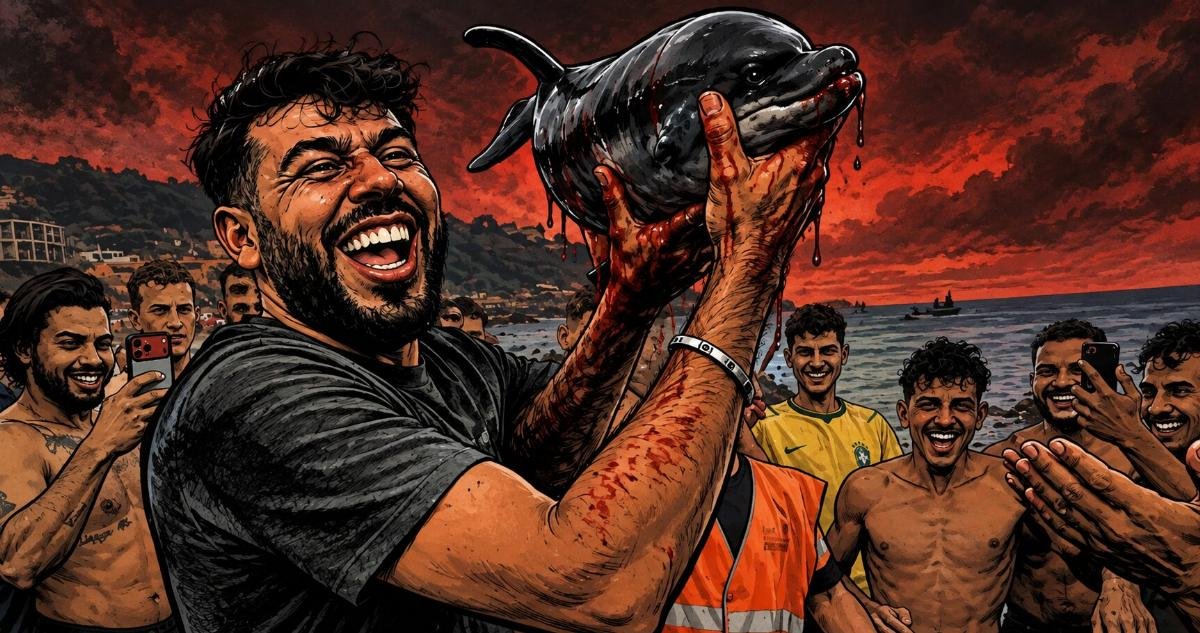
An incident on a beach in the Spanish enclave of Ceuta has ignited a firestorm of condemnation after an environmental organization reported that a group of migrants pulled an infant dolphin from the shallows and beat it to death with a stick.
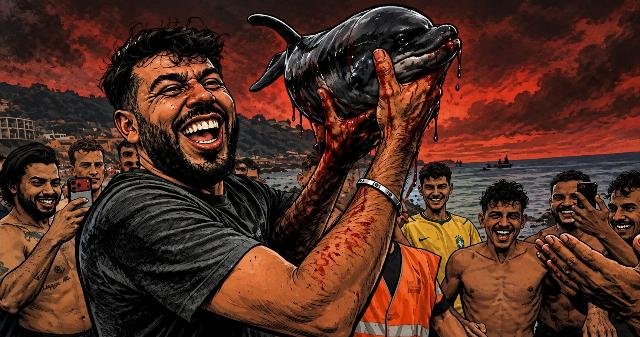
According to Remix News, the group DAUBMA (Defense of Urban Trees, Biodiversity, and the Environment) filed a complaint with the Spanish Civil Guard. The complaint alleges that the dolphin calf was swimming in shallow water when it was hunted down and brought to shore by migrants, emerging “alive [but] disoriented.” The group says the migrants then struck the animal repeatedly with a stick until it died, after which they cheered and paraded the corpse as if it were a trophy.
A social media post cited by American Thinker showed an image of the animal and a message reading, “The illegal migrants in Ceuta pulled a baby dolphin out of the sea today and clubbed it to death for fear fun. Get them out of Europe immediately.”
DAUBMA is calling for the event to be investigated as a criminal offense. Whether any charges will follow remains to be seen. In an opinion piece for American Thinker, writer Olivia Murray predicted that “there won’t be any justice for this little ocean soul.”
The response and its critics
The episode has quickly become a flashpoint in ongoing debates about immigration, cultural values, and animal welfare. Murray frames the incident as emblematic of a clash between Western conservation ethics and behaviors she attributes to “third-worlders,” arguing that “environmental conservation and third-worldism are diametrically opposed interests.” Her piece is a strongly worded commentary that has drawn both support and criticism, with some readers objecting to the generalization and others applauding the frankness.
The outrage is not confined to any single outlet. Comments across social media have expressed horror at the cruelty described, while others have used the incident to call for stricter immigration enforcement in Europe. Human rights advocates warn that characterizing all migrants as inherently cruel or anti-environment is both inaccurate and harmful, noting that countless migrants come from cultures with deep traditions of animal care and environmental stewardship.
An ecologist who studies dolphin behavior, speaking on condition of anonymity, noted that dolphin calves normally stay with their mothers for three to six years. “For a calf to be alone and in shallow water suggests either the mother was not nearby or was lost—something that could have happened for a variety of reasons, including natural causes or human activity,” he said. “But there is no excuse for intentional killing, regardless of the circumstances.”
Context of cruelty and conservation
This incident comes amid broader conversations about wildlife interactions and human responsibility. Dolphin species around the world face threats from habitat loss, entanglement in fishing gear, and intentional harm. In Spain, as in many countries, dolphins are protected under national and European Union law, and killing one is potentially a criminal offense.
In her commentary, Murray contrasts the reported killing with what she sees as the West’s care for stranded marine life. She recounts a story from the book Peaceful Kingdom: Random Acts of Kindness by Animals about Pelorus Jack, a famous dolphin who guided ships through a treacherous strait in New Zealand from 1880 to the early 1900s. According to the tale, after being shot by a passenger on the ship Penguin, Pelorus Jack later refused to aid that vessel—and the Penguin sank in 1909 with all 75 people aboard. The anecdote, Murray says, illustrates the intelligence and perhaps even the moral nature of dolphins.

Whether or not one subscribes to such lore, the scientific consensus is clear: dolphins are highly intelligent, social, and sentient animals. Studies have shown they possess self-awareness, exhibit complex communication, and display behaviors that suggest empathy. Such findings fuel public outrage when individual dolphins are harmed—whether by accident or, as in this case, by deliberate violence.
The Ceuta case also raises questions about the rule of law and access to justice for animals. In many Western jurisdictions, animal cruelty statutes are enforced, but in crowded migrant encampments, enforcement can be spotty, and language and legal barriers may hinder prosecutions. Murray’s column suggests a likelihood of impunity, a fear echoed by some legal experts who note that incidents in immigration hotspots often go unpunished due to jurisdictional complexities.
Political and social undercurrents
The timing is also noteworthy. Ceuta and its sister enclave Melilla have long been flashpoints in European migration debates, with thousands of migrants attempting to cross from Morocco into Spain each year. This incident has been seized upon by anti-immigration commentators as evidence of what they call inherent cultural incompatibilities. Murray’s piece, which frames the dolphin killing as an indictment of “third-world values,” has become a rallying point for such voices.
Counterpoints come from those who argue that cruelty to animals is not a cultural trait but a human failing that exists in all societies. They point to cases of animal abuse in Europe and the Americas to underscore that no single group has a monopoly on either kindness or cruelty. The key, they argue, is not to stereotype but to enforce laws and educate communities—both native and newcomer—about the intrinsic value of wildlife.
For now, the dolphin calf is dead, and the migrants, according to eyewitness accounts reported by DAUBMA, are still on the beach. The Civil Guard has not publicly confirmed an investigation, and neither the migrants nor their legal representatives have commented. The incident has nonetheless left a mark on the public consciousness, serving as a grim reminder of the tensions that surface when migration, culture, and conservation collide.
As one social media user put it, “Our disappointment is immeasurable, and our day is ruined.” But for the environmental group’s legal efforts, the hope is that justice—even if delayed—will eventually come.
Source: www.americanthinker.com — https://www.americanthinker.com/blog/2026/09/migrants-in-ceuta-catch-an-infant-dolphin-and-beat-it-to-death-because-it-s-fun-for-them/