
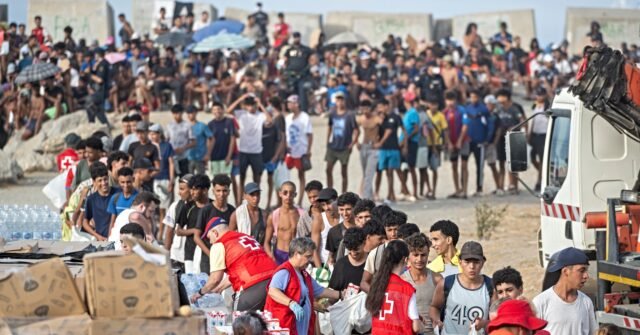
Healthcare authorities in Ceuta, Spain’s autonomous city on the North African coast, have documented five cases of HIV among migrants who arrived during a mass border crossing in late July, according to a report released Friday by the city’s Technical Committee for Public Health Coordination.
The committee, which has maintained continuous epidemiological surveillance since the surge began three months ago, also confirmed two cases of Hepatitis C and one case of Hepatitis B among the migrant population, El Pueblo de Ceuta reported, citing the committee’s latest assessment dated October 27.
The document was submitted by Julián Domínguez, head of Preventive Medicine at Ceuta University Hospital, the city’s primary healthcare facility. The health surveillance data draws from the city’s public health monitoring system and distinguishes between cases detected among migrants and those among legal residents.
No New Local Infections Documented
According to the report, none of the five HIV cases among migrants were identified during the most recent monitoring period of October 21-27. Notably, the committee has not documented any new HIV cases among Ceuta’s established resident population since the late July influx began, contrasting with the five cases confirmed among recent arrivals.
The mass arrival placed immediate and sustained pressure on Ceuta’s healthcare infrastructure, a strain that authorities say remains largely unaddressed three months after the initial crossing. The exclave’s medical facilities continue to operate under conditions that one nursing official recently characterized as “structural exhaustion.”
Tuberculosis and Other Diseases Tracked
Beyond HIV, the committee’s epidemiological monitoring has identified 13 documented cases of Tuberculosis among migrants who entered in late July, including two cases confirmed during the most recent reporting week. An additional six tuberculosis cases have been recorded among the non-migrant population, with one of those confirmed in recent days.
The reportable disease list also includes 13 cases of chickenpox and one case of monkeypox among the migrant population. The report indicated no new monkeypox cases during the most recent monitoring period.
During the initial days of the July influx, Spanish Health Minister Mónica García from the country’s Socialist government drew controversy when she stated that claiming migrants brought diseases would constitute a “xenophobic” act. She did acknowledge at the time, however, that tuberculosis cases had been confirmed among arrivals.
Emergency Facilities Overwhelmed
The numerical impact on Ceuta’s healthcare system has been substantial. Since late July, Ceuta University Hospital’s emergency department has recorded 25,971 visits, with 5,667 of those presenting at least one identified medical syndrome, according to data compiled through October 27.
During the most recent week analyzed in the report, the hospital logged 1,784 emergency room visits, of which 365 involved at least one identified syndrome requiring medical attention.
Healthcare facilities outside the hospital’s emergency departments, including other clinics and care centers, have handled more than 13,300 additional visits since the mass arrival began. This surge has compounded strain on the exclave’s already stretched medical resources.
Rosa María Fuentes, head of the Ceuta College of Nursing, reportedly described the situation last week as one of “structural exhaustion,” pointing to oversaturated facilities and overworked medical personnel struggling to maintain care standards under unprecedented demand.
Ongoing Crisis Management
The Technical Committee for Public Health Coordination continues its epidemiological monitoring to assess the health consequences of the July influx. The committee’s surveillance efforts focus on tracking communicable diseases and managing public health risks as the city’s healthcare system attempts to accommodate the increased demand.
Ceuta, along with Melilla, comprises Spain’s two autonomous cities located on the North African mainland, bordering Morocco. Both enclaves have historically experienced periodic surges in migration attempts due to their position as Europe’s only land borders with Africa.
The July mass crossing represented one of the most significant challenges to Ceuta’s infrastructure in recent years, with effects continuing to reverberate through the city’s social services, particularly healthcare, three months after the initial event.
Source: www.breitbart.com — https://www.breitbart.com/europe/2026/10/30/report-ceuta-confirms-5-hiv-cases-related-to-mass-migrant-invasion/