
Conservatives are pointing to fresh polling data that shows Americans — and Republicans in particular — are placing a renewed premium on marriage, and some are arguing that the late Charlie Kirk’s pro-family message helped spark the shift.
According to a new Gallup survey cited by the Institute for Family Studies, roughly four in 10 Americans now say it is “very important” that couples who have a child together are married. That marks a 10-point increase over the past six years. Among Republicans, the jump is even sharper: 58% now hold that view, a 22-point rise over the same period. Independents saw a 9-point increase, while Democrats moved up just 3 points.
The numbers, highlighted in a Daily Wire piece by sociologist Brad Wilcox, suggest that public opinion on marriage has rebounded to levels not seen since 2013 — but Wilcox argues there is still significant room for growth if conservatives lean into the cause.
Kirk’s Influence on the Marriage Debate
Wilcox, a senior fellow and director of the Get Married Initiative at the Institute for Family Studies, as well as a professor at the University of Virginia, credits a constellation of right-leaning voices for driving the trend. He specifically names the Institute for Family Studies, the American Enterprise Institute, the Daily Wire, and figures like Isabel Brown and Ben Shapiro for spotlighting the value of marriage. He also points to encouragement from figures like Vice President J.D. Vance, who has urged young Americans to “fall in love, get married, and start a family.”

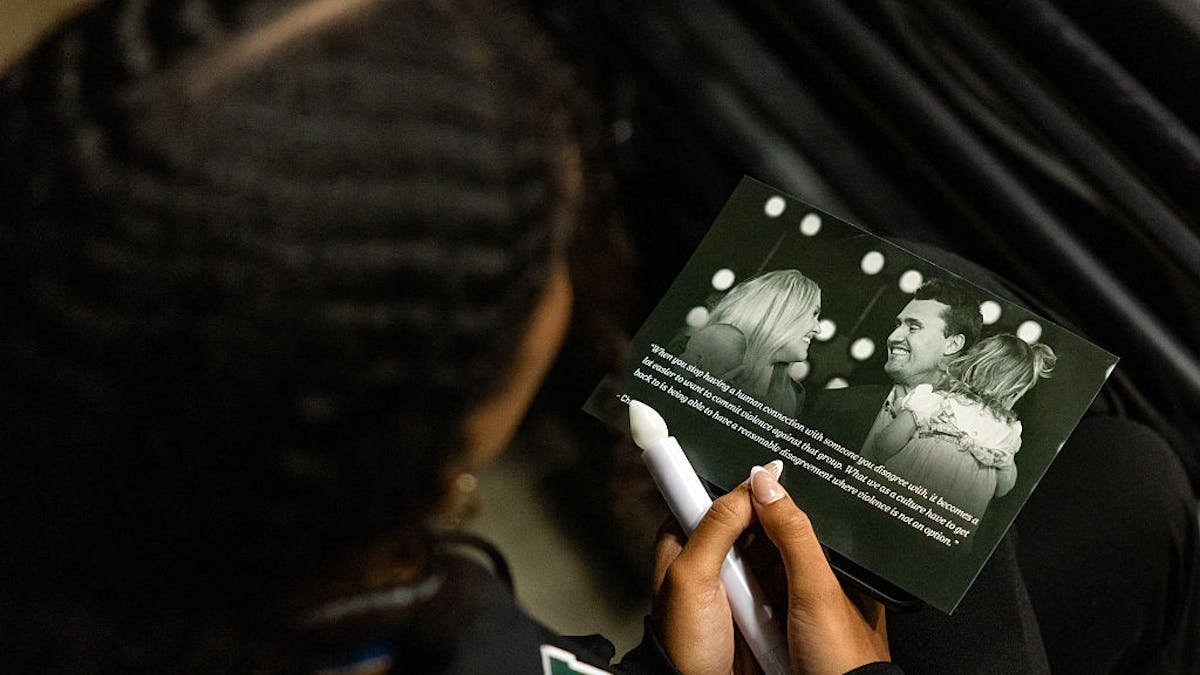
But Wilcox reserves special praise for Charlie Kirk, the conservative activist and Turning Point USA founder who was killed just days before the publication of the piece. Kirk, Wilcox argues, was uniquely influential in making marriage and family formation a priority for younger conservatives.
Kirk was known for telling followers to “Get married. Have children. Build a legacy. Pass down your values. Pursue the eternal. Seek true joy.” In one of his final media appearances, on Laura Ingraham’s Fox News show, Kirk addressed declining marriage and fertility rates and suggested that young women were being steered toward “careerism and consumerism” at the expense of family life. “Having children is more important than having a good career,” Kirk said. “My kids matter more than how many social media followers I have.”
Wilcox says Kirk was also a vocal advocate for research showing that married men and women report significantly higher levels of happiness than their single and childless peers — a message that clearly resonated with Republican audiences.
Marriage Data Tells a Broader Story
Beyond the polling shift, Wilcox points to a substantial body of research indicating that marriage correlates with a range of positive outcomes for adults and children. Married men and women, he writes, tend to be happier and more fulfilled, and marriage is linked to better health outcomes and greater life expectancy. Marriage also serves as a stabilizing force for men, encouraging them to focus on work and personal conduct. Married women, he adds, report feeling safer and having better sex lives than unmarried women.

Children raised in married, stable families, according to the research Wilcox cites, fare better emotionally and academically. They are roughly twice as likely to graduate from college and half as likely to end up in jail or prison. Wilcox says marriage can even help ease the housing shortage by making it easier for couples to pool resources and buy homes.
Wilcox also pushes back against critics like Andrew Tate, who claims most marriages end in divorce. In fact, he notes, divorce rates have declined since 1980, and most marriages today are projected to last a lifetime.
A Rare Point of Unity for the Right
Wilcox argues that the pro-marriage cause is one of the few issues that unites factions across the conservative spectrum, from the classic Right to the new Right. Conservative podcasters, think tankers, lawmakers, church leaders, and intellectuals all recognize the central role marriage plays in family formation and the continuation of civilization, he says.
Data already show that conservatives marry at higher rates than liberals, and young conservatives are more likely than their liberal counterparts to say they want to get married. “Marriage is an important part of the conservative identity, even for those who do not live it out perfectly,” Wilcox writes.

A Call for Policy and Leading by Example
To build on the polling momentum, Wilcox outlines a three-pronged strategy for conservatives: use data to make the case, lead by example, and push for pro-marriage public policy.
On data, he says the numbers overwhelmingly support marriage as a positive force. On leading by example, he argues that every conservative family can model the value of marriage to their extended families, churches, communities, schools, and social networks. He cites the work of his colleague Lyman Stone, which shows that peer culture and celebrity culture both have a measurable impact on fertility rates — and a similar dynamic likely applies to marriage.
Media personalities like Kirk and others at the Daily Wire, Wilcox says, can promote marriage by talking about the power, beauty, and joy of family life and by having strong marriages of their own. “It matters when conservative leaders take a pro-marriage position in their commentary. What goes even further is when they have beautiful families for the public to see.”
On policy, Wilcox suggests conservative lawmakers should consider reforming the tax code to be more family-friendly, expanding family-oriented tax credits, building more starter homes tailored to families, promoting marriage in schools, and incentivizing marriage preparation. Improving men’s economic prospects could also boost marriage rates, he notes, pointing to new marriage maps from the Institute for Family Studies.
Investing in trade school pipelines and manufacturing could improve employment and earnings for men, he writes. He also urges policymakers to address the “vice economy” — gambling apps and marijuana — which he says can undermine men’s stability and marriageability.
Wilcox acknowledges that there is a long road ahead: the current polling numbers are only back to where they were in 2013. But he argues that the direction is encouraging, and that conservatives have a clear opportunity to drive further change.
“The polling data already indicates that conservatives’ efforts to promote marriage in our culture are working,” he writes. “Scholars, media personalities, and political leaders must keep up the fight if we are to rebuild the American family. This is the best way to honor the ‘legacy’ of Charlie Kirk’s all too short but profoundly pro-family life.”
Source: www.dailywire.com — https://www.dailywire.com/news/building-a-legacy-honoring-charlie-kirks-pro-family-mission