
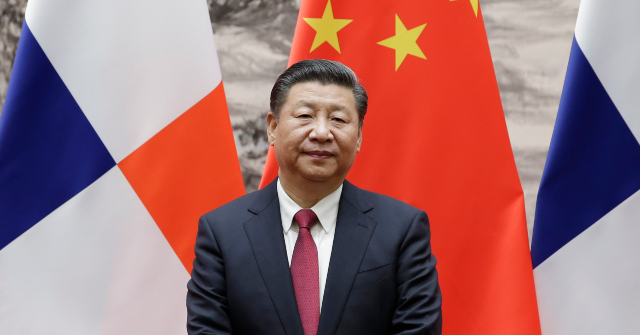
China’s government on Monday pressed Panama to put the “One China Principle” into practice to protect its diplomatic relationship with Beijing, after a majority of Panamanian lawmakers formed a parliamentary friendship group with Taiwan, according to reporting by Breitbart News.
Last week, members of Panama’s National Assembly announced the creation of the “Panama-Taiwan Parliamentary Friendship Group,” aimed at strengthening ties between the two legislatures and exploring opportunities for mutual benefit. The Panamanian side includes 43 of the country’s 71 congressmen — more than half of the nation’s elected lawmakers.
Beijing’s Sharp Response
Chinese Foreign Ministry spokesperson Guo Jiakun addressed the development at a Monday press conference, urging Panama to “honor its commitment” to the One China Principle, which Beijing describes as the political foundation of its relations with the Central American nation. According to the Chinese state-run newspaper Global Times, Guo stressed that China firmly opposes any form of official exchange between countries that maintain diplomatic ties with Beijing and Taiwan, and will “not allow any external force to interfere in China’s internal affairs.”
“There is but one China in the world, and Taiwan is an inalienable part of China’s territory,” Guo said, while warning of “serious consequences” for crossing what Beijing calls the Taiwan question. He also called on the United States to abide by the One China Principle and to “stop sending wrong signals to ‘Taiwan independence.'”
The parliamentary group’s creation appears to have provoked an unusually intense reaction from Chinese officials in Panama. Unnamed Panamanian diplomatic sources told the outlet Infobae last week that Chinese diplomats in the country “went mad” upon learning of the group’s formation. Hours later, the Chinese Embassy in Panama published a lengthy statement accusing the group of violating both the One China Principle and Panama’s own foreign policy. The embassy asserted that the Chinese government is “the only legitimate government that represents all of China,” including Taiwan.
Panama’s Executive Branch Draws a Line
Panamanian President Jose Raul Mulino responded to the controversy on Tuesday with a brief social media post, reiterating that contacts, trips, and exchanges between Panamanian and Taiwanese lawmakers “do not mean that the Executive Branch endorses them.”
“Foreign relations are managed by the executive branch,” Mulino wrote, drawing a distinction between legislative outreach and official government policy.
Panama severed diplomatic ties with Taiwan in 2017 during the administration of then-President Juan Carlos Varela, pivoting toward Beijing and formally embracing the One China framework — which holds that there is only one China in the world and that Taiwan is a province of China rather than a sovereign nation. That shift made Panama one of several countries in the region to switch recognition from Taipei to Beijing in recent years.
Taipei Welcomes the Group
In contrast to Beijing’s condemnation, Taiwan’s government has openly welcomed the new parliamentary body. Foreign Minister Lin Chia-lung, in a video address during the group’s announcement, expressed hope that the working group would deepen legislative cooperation and create mutual benefit and prosperity.
“The Ministry of Foreign Affairs expressed its gratitude for the unwavering support from all sectors of Panamanian society and will continue to maintain close cooperation with the Panamanian Parliament and the Taiwan Friendship Group to actively promote parliamentary diplomacy and deepen the Taiwan-Panamanian partnership,” Taiwan’s Foreign Ministry said last week.
Also weighing in was Rep. Mario Díaz-Balart (R-FL), co-chair of the Congressional Taiwan Caucus, who congratulated both sides on the group’s creation — a gesture that appears to have further rankled Beijing, according to Panamanian outlets cited in the report.
A Diplomatic Tightrope
The episode puts Panama in a delicate position. Its executive branch maintains formal relations with Beijing, while its legislature — where more than half of members have now joined the Taiwan friendship group — is signaling openness to deeper parliamentary engagement with Taipei. Mulino’s carefully worded statement sought to keep those two tracks separate, underscoring that foreign policy remains the prerogative of his administration.
For Beijing, the development is a reminder of the persistent friction it faces as Taiwan seeks to expand its international footprint through legislative and people-to-people channels even without formal diplomatic recognition. China’s warning of “serious consequences” echoes language it has used in similar disputes, though it remains unclear what specific measures, if any, might follow.
The Chinese Embassy’s public rebuke and the reported fury of Chinese diplomats in Panama City suggest the group’s formation touched a nerve in Beijing, which has long treated any official contact between Taiwan and countries that recognize China as a red line. Taiwan’s government, meanwhile, is framing the group as a grassroots expression of parliamentary diplomacy — one it intends to cultivate.
What happens next may depend on whether the friendship group’s activities remain strictly legislative or edge toward the kind of official exchanges Beijing has warned against. For now, Panama’s president has made clear where his government draws the line, even as a majority of his country’s lawmakers chart a different course.
Source: www.breitbart.com — https://www.breitbart.com/asia/2026/09/14/china-tells-panama-to-uphold-one-china-principle-after-lawmakers-form-friendship-group-with-taiwan/